
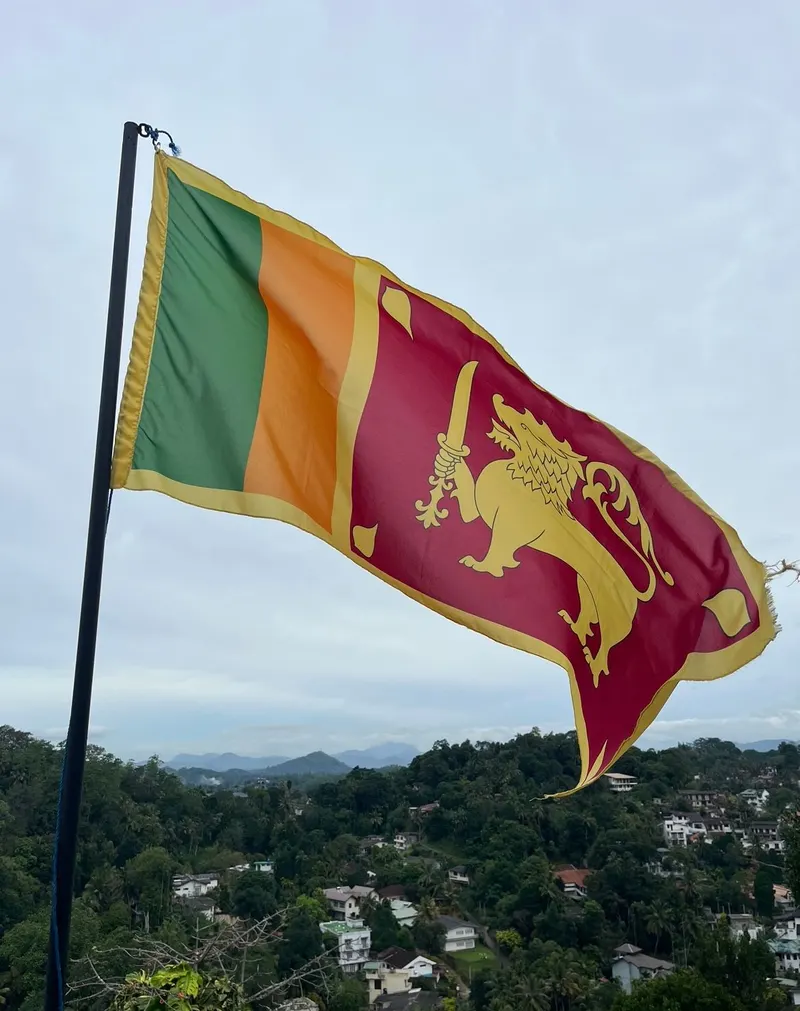

Why Sri Lanka?
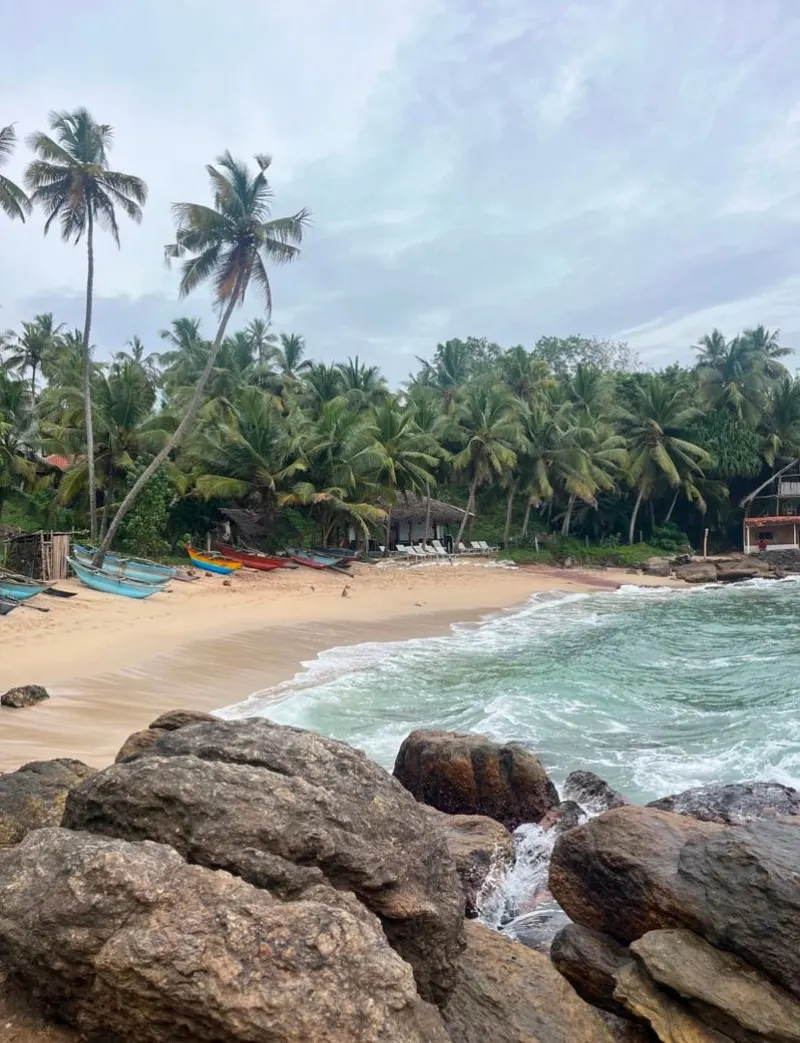
Sandy beaches lined with palm trees
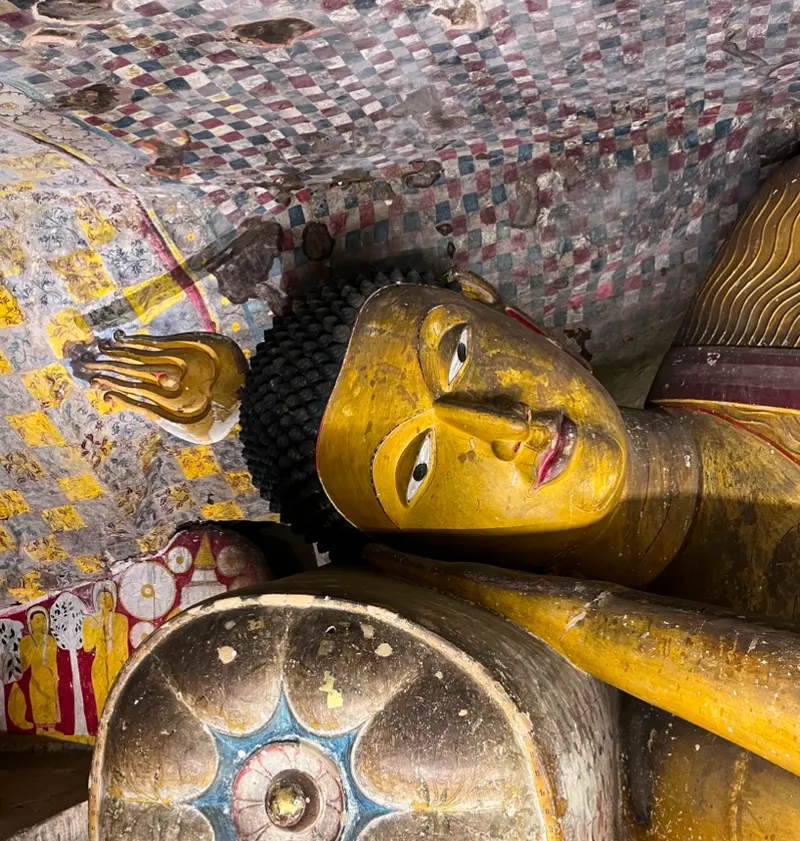
Ancient temples carved into the rock
There is no doubt that the Teardrop Island is a hidden treasure waiting to be discovered. From the moment I stepped off the plane, I could feel the tropical breeze and the warmth of its people. Sri Lanka has countless places to explore, and it felt incredibly safe for any type of traveler. So if you’re wondering whether you should visit, my advice is simple: start packing now.
It is such a complete destination: kilometric sandy beaches lined with coconut trees, a scenic train ride through the highlands, breathtaking hikes that seem to take you straight to heaven, and once-in-a-lifetime experiences like going on safari in one of its more than 26 national parks or swimming with turtles.
These are just some of the things I experienced in only seven days, and trust me, it’s completely doable. The key is planning well, so it never feels rushed. However, this itinerary is not for everyone: there’s a lot of hiking and a fair amount of backpacking, so it’s not the best choice for people who aren’t physically fit, families with babies, or those traveling with large suitcases (those make local trains/buses and tuk-tuks harder).
7-Day Itinerary: The Best of Sri Lanka Without Rushing
Day 1. Arrival in Colombo and heading straight to Sigiriya
Upon arrival in Colombo, we went straight from the airport to Sigiriya, as we arrived late at night and decided to leave Colombo for the end of the trip to save time. If you have time to explore Sigiriya that same day, it’s a great way to tick it off your list. If not, don’t worry. We managed to cover (almost) all the main spots in the Cultural Triangle in just one day and survived to tell the tale!
For details on journey costs, see: How Much Should You Budget for a Week in Sri Lanka?
Day 2. The Cultural Triangle: Sigiriya, Polonnaruwa & Dambulla
The next morning, we hired a private driver to take us to Lion’s Rock in Sigiriya, Polonnaruwa, and Dambulla. He was incredibly nice and professional, picking us up directly from our hotel and dropping us off at Dambulla station at the end of the day. The total cost for both of us was 17,000 LKR (around 55 USD). (I can share his contact if you’re interested! Alternatively, you can ask your hotel to arrange a driver. They might offer you a better deal.)
I highly recommend visiting Lion’s Rock first thing in the morning. We went just after sunrise, and there were no crowds yet. The entrance fee is 35 USD, but in my opinion, it’s worth every penny. Climbing all those steps can be a bit challenging, especially if it’s sunny, but we were lucky to have a cloudy, cool morning. The final stretch can be tricky if you’re afraid of heights, but the views from the top are absolutely breathtaking. On your way down, you can admire some amazingly preserved frescoes painted directly on the rock.
Some travelers opt for Pidurangala Rock instead because it’s cheaper (1,000 LKR / ~3 USD per person), but I can only recommend Lion’s Rock for its UNESCO World Heritage status. Seeing this fortress firsthand really makes you wonder how ancient civilizations managed to construct such a marvel back in the 5th century.
Note: If you have extra time, I do recommend hiking Pidurangala Rock as well. It offers incredible close-up views of Sigiriya Rock. But if you’re on a tight schedule like I was, hiking one rock should be more than enough.
Afterwards, our driver took us to Polonnaruwa, about one hour away (depending on traffic). The entrance fee is 30 USD per person, which includes both the museum and access to all the different sites in this ancient city, a former capital of Sri Lanka.
Many people choose to rent bikes or hire a local guide, but neither is mandatory. While the museum is interesting, I’d suggest prioritizing the archaeological sites if you’re short on time. We explored at our own pace, with the driver taking us from one stop to another (they are relatively close, but cycling under the sun can be exhausting). We spent around three hours visiting the ruins, an incredibly fascinating place where you can truly appreciate the grandeur of this former empire.
From there, we drove to Dambulla, about two hours away. On the way, we stopped for lunch at Benthota Bake House, a great local spot with cheap and tasty food. When in doubt, go for the veggie rice. It’s always delicious and easy on the stomach.
I wasn’t sure what to expect from Dambulla, probably because I hadn’t heard much about it, but it truly surprised me. The entrance fee is much cheaper than other sites in the Cultural Triangle, yet the rock caves with their ancient wall paintings and statues are absolutely mesmerizing. The way these artworks have been preserved for centuries beneath the rock is astonishing. Right next to the temple complex, you can also visit the Golden Temple. While not as historically significant, it’s still worth a quick stop.
Dambulla's beautiful caves
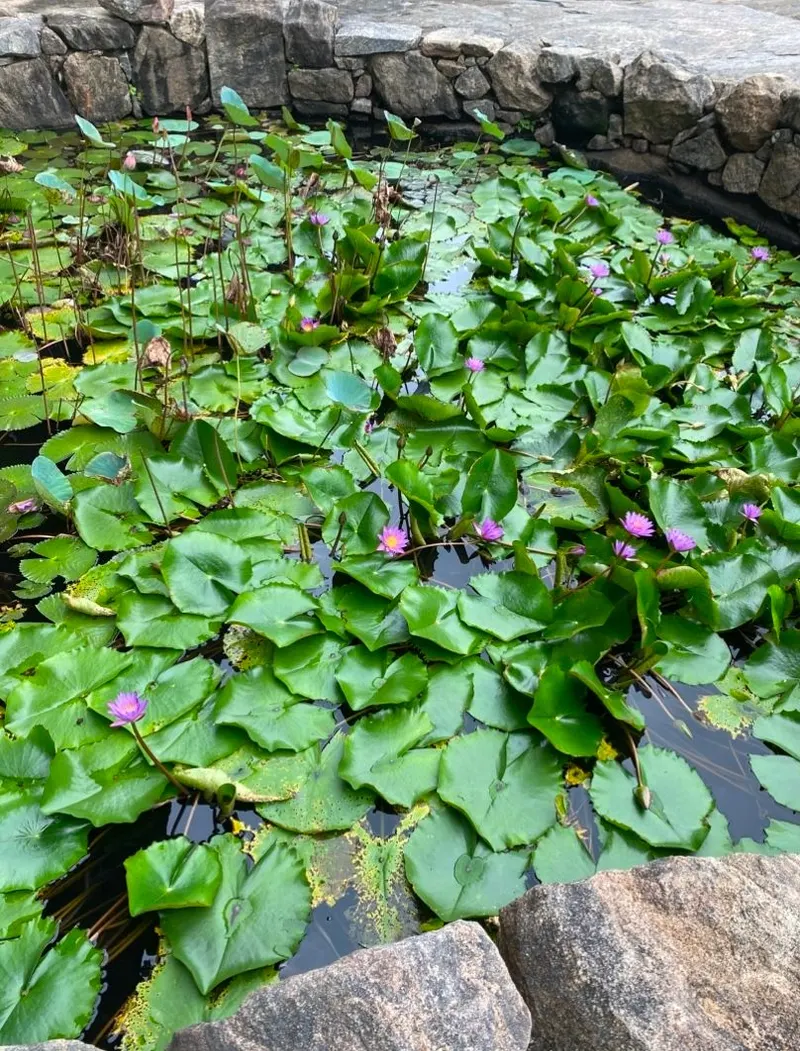
Beautiful water lilies in Dambulla
From Dambulla, we took a local bus to Kandy. Buses run so frequently that it’s not even worth checking schedules online. Just flag one down and make sure there’s space to sit. The ride cost us around 200–300 LKR each (less than 1 USD in 2025) for a three-hour journey. And trust me, taking a local bus in Sri Lanka is an experience in itself. It felt like a party bus with music blasting from the speakers, disco lights, and constant honking. Locals are incredibly courteous, often offering their seats to tourists with big backpacks. If you prefer more comfort, AC buses are available at a slightly higher price, but they don’t run as frequently.
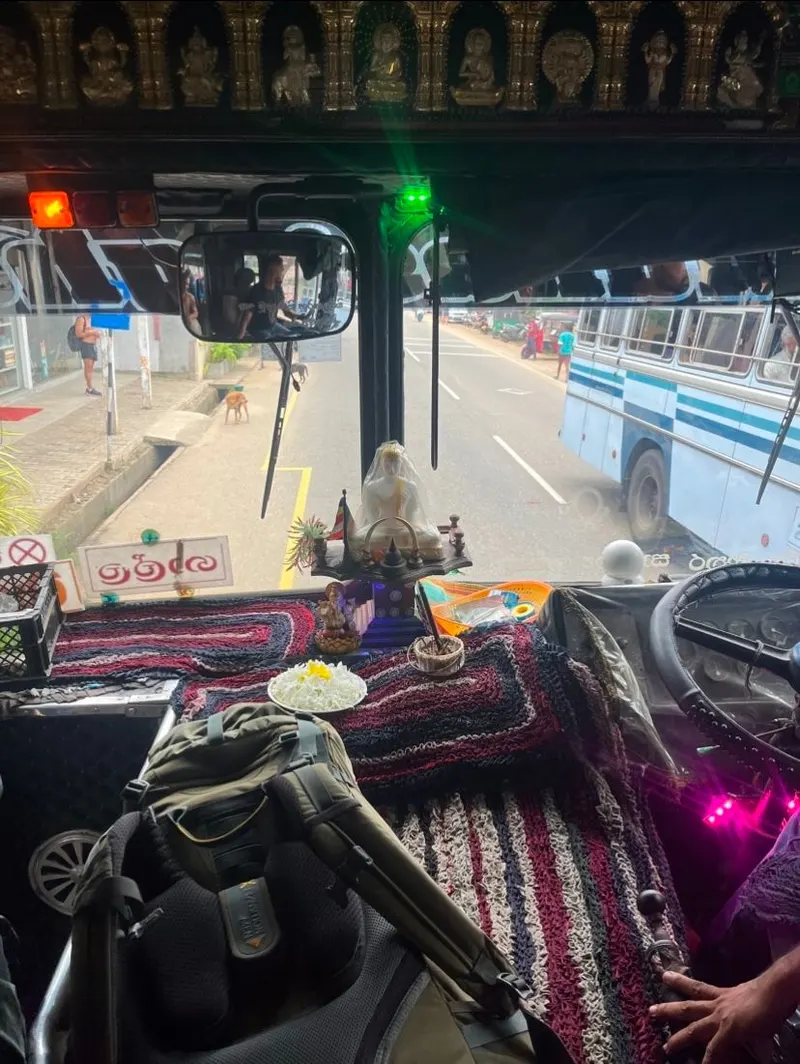
Mini "temples" inside every bus in Sri Lanka
Day 3. Kandy & the scenic train to Ella
I wish we had more time to explore Kandy, as the city has so much to offer. However, we were on a tight schedule, so we booked a private guided tour by car through our hotel for just 2,000 LKR for both of us (less than 7 USD). If you’re interested, I can share the contact of our guide. He was super nice, spoke amazingly good English, and really went the extra mile to show us his beautiful city.
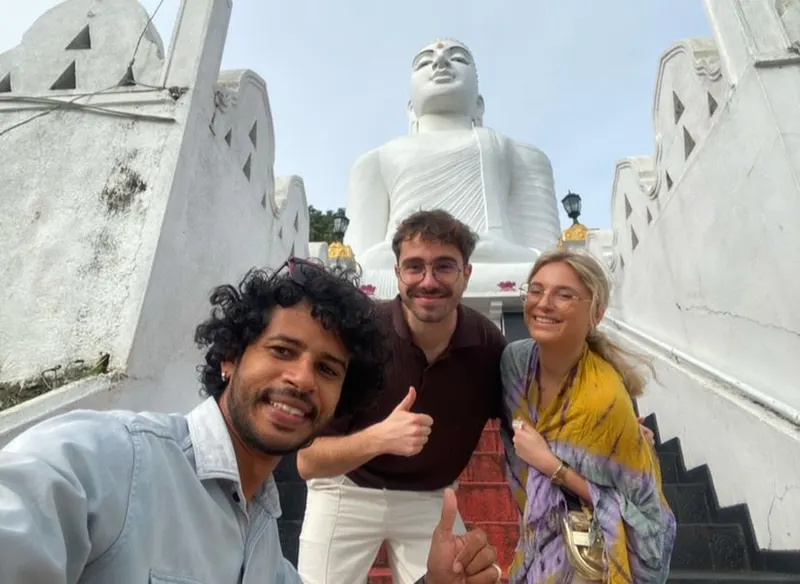
Vishwa, the best guide in Kandy
Our guide took us to Sri Maha Bodhi Viharaya and Asgiri Maha Seya, as well as a scenic viewpoint. We learned a lot about Buddhism and the cultural significance of Kandy. But the highlight of our visit was attending a puja at the Temple of the Tooth. We were incredibly lucky to witness this ceremony, where locals dress up and gather at the temple to make flower offerings to Buddha. If possible, I highly recommend timing your visit so you can experience this event. Saturdays are particularly special. Entrance to the temple is 6 USD for foreigners.
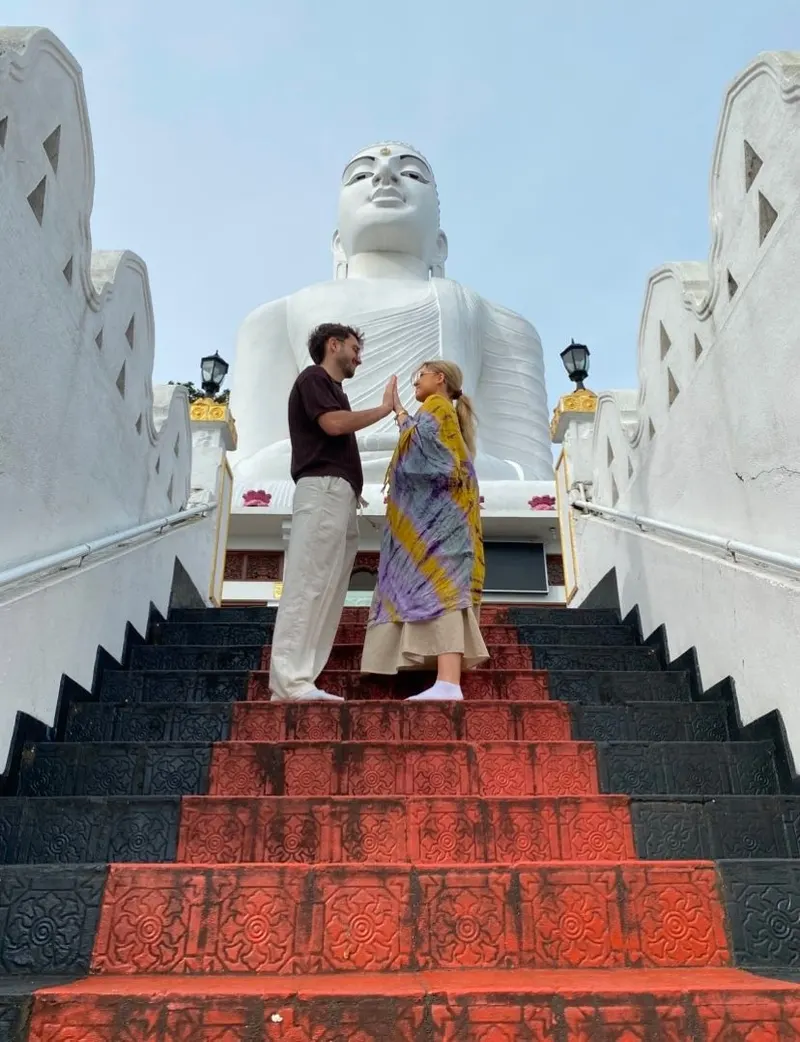
Sri Maha Bodhi Viharaya
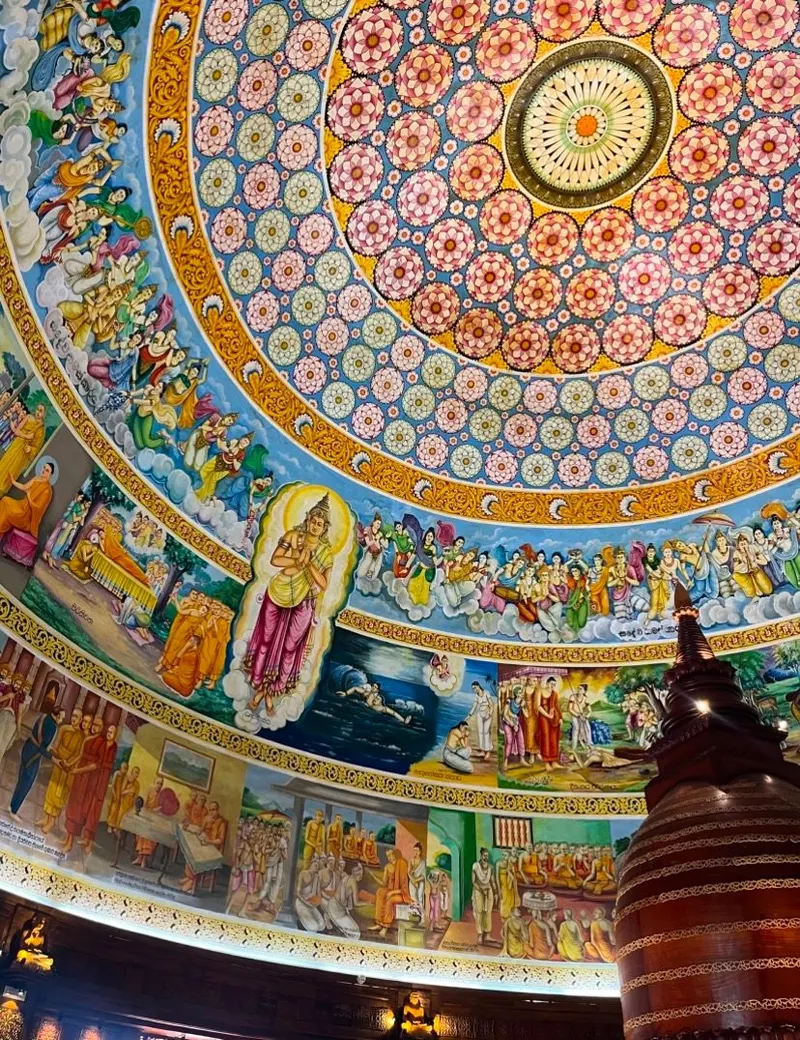
Asgiri Maha Seya
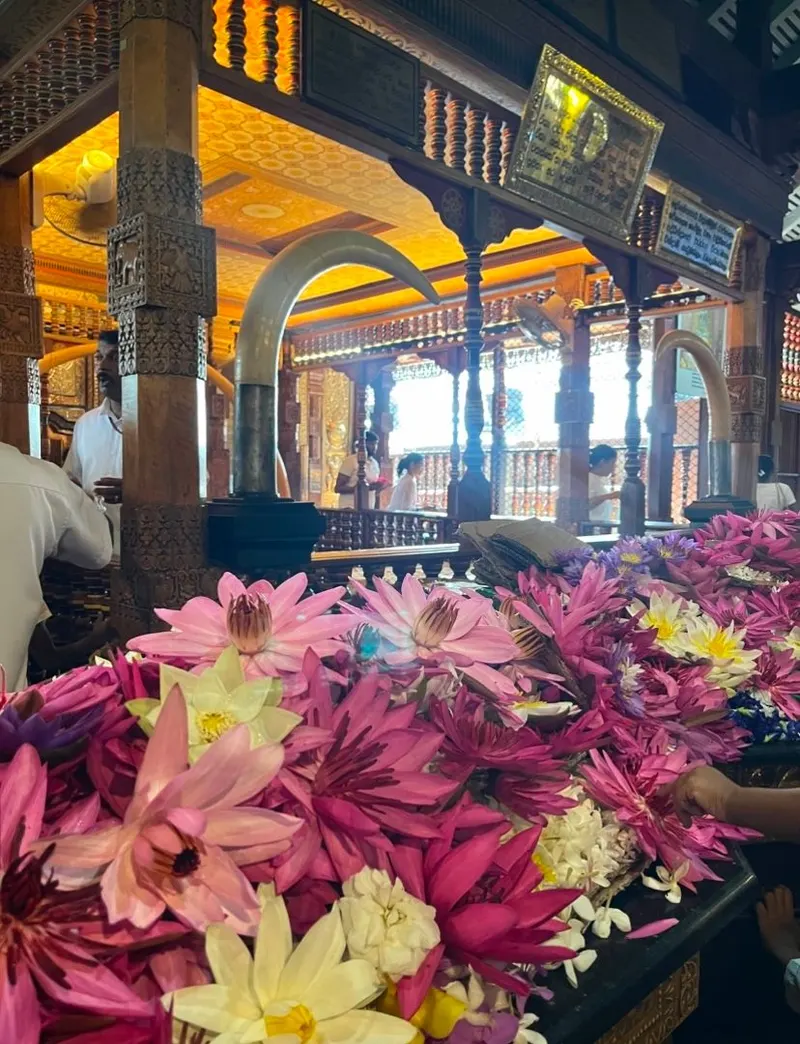
Flower offerings during Puja
That same day, we took the 11 AM train to Ella, which I highly recommend booking in advance. We managed to get 3rd class reserved tickets for 10 USD each. The cheapest tickets are sold on the government website but sell out quickly, as local agencies buy them to resell at higher prices. A good alternative is to ask your hotel to book tickets for you at least a month in advance.
Tip: Always have a Plan B: if you buy overpriced tickets online, get ones with 24-hour cancellation, so you can cancel them if you find something cheaper (which is what we did).
Train delays are common, so don’t plan much else for that day. Ours was delayed by one hour at departure, and at some points along the route, it was running nearly three hours late. However, this ride is spectacular, so it’s worth every second.
For the best experience, choose 2nd or 3rd class. You can stick your head out of the windows and doors, getting those Instagram-perfect shots. First-class has AC, but unfortunately, you can’t open the windows to fully enjoy the views. There’s no “best side” to sit on, and in our case, we didn’t get to choose our exact seats. However, fellow passengers, both locals and tourists, were incredibly friendly, often switching seats so everyone could take photos.
Vendors hop on and off the train, selling delicious local snacks. I highly recommend trying the samosas. Though slightly spicy for my taste, they were absolutely delicious. At one point, the locals even started singing traditional songs and cheering every time we went through a tunnel, making the journey even more memorable.
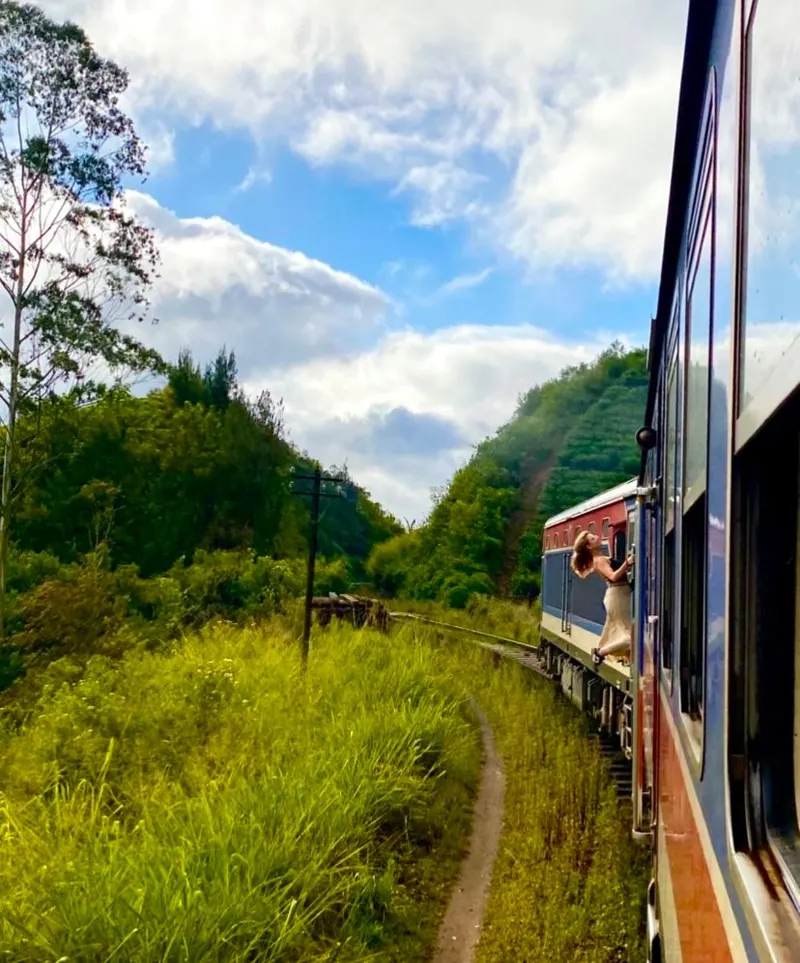
Train to Ella
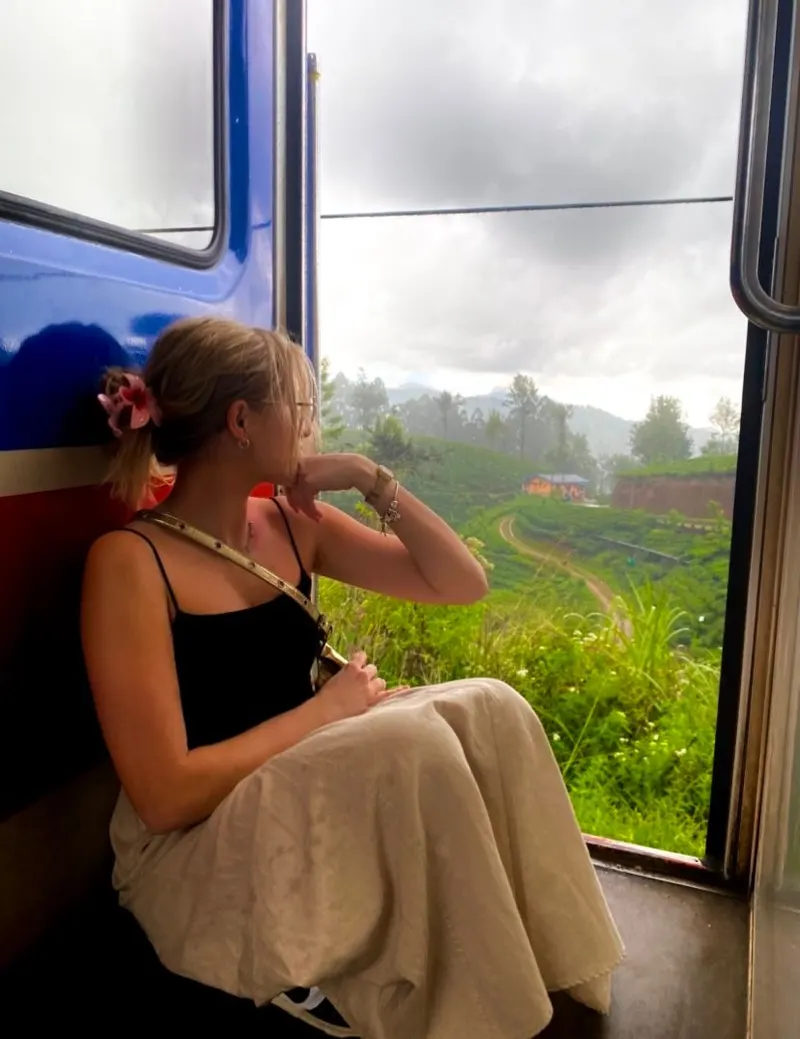
Views from Ella train
After 6–7 hours, we arrived in Ella, a charming town full of bars and restaurants near the train station. Be prepared. Ella is pricier than other places in Sri Lanka due to its popularity. Also, PickMe (Sri Lanka’s Uber equivalent) doesn’t work well here, so you’ll need to bargain with tuk-tuk drivers the old-school way.
Day 4. Ella: Little Adam’s Peak, Nine Arch Bridge & Yala Safari
I suggest booking your accommodation near Little Adam’s Peak. This is an amazing trail that has nothing to envy from the original Adam’s Peak, or Sri Pada, as the locals call it. The hike is relatively easy, and there are actually several peaks along the way, each offering spectacular panoramic views of the surrounding landscapes. The entire hike, including the ascent and descent, took us approximately one hour.
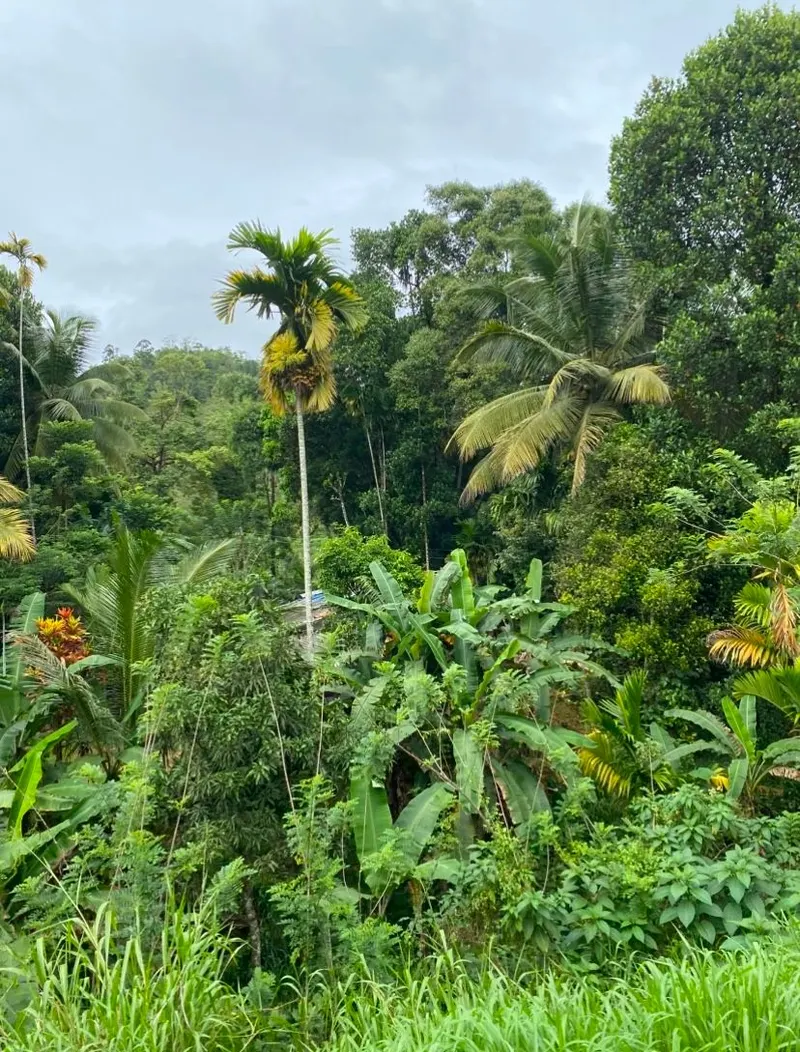
Typical Sri Lankan Highlands landscape
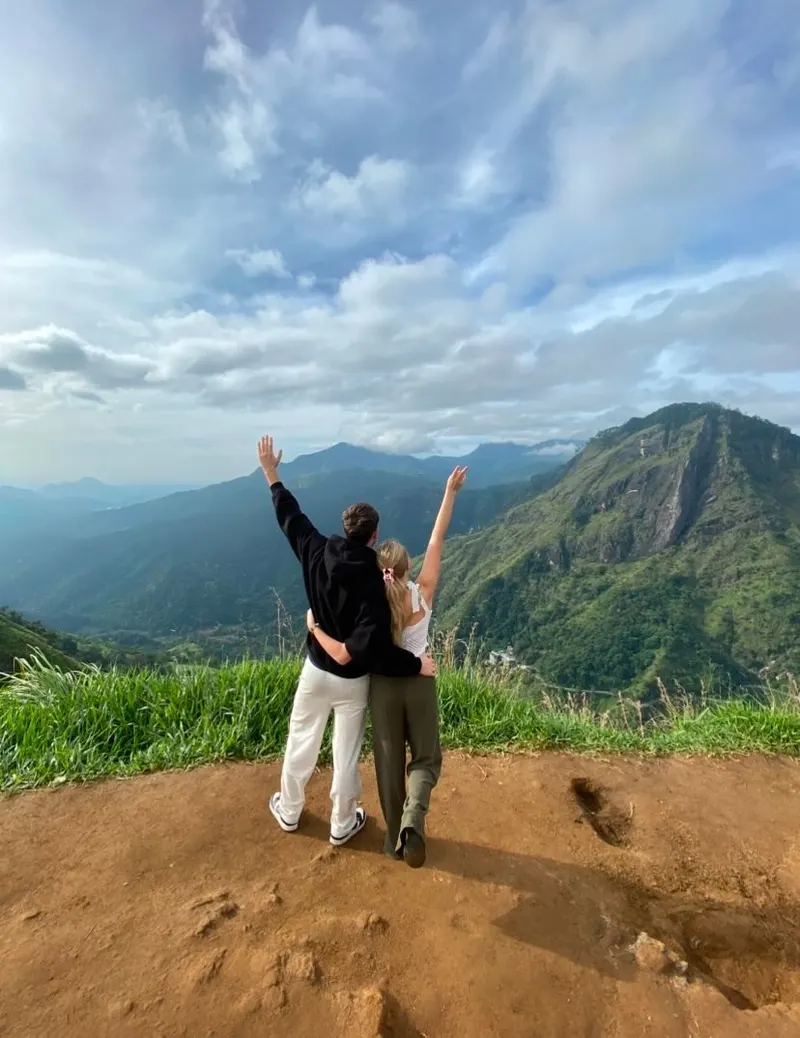
Top of Adam's Peak
On your way down, I highly recommend following the signs after the zipline venue (a great stop if you’re up for an adrenaline rush and willing to spend 30 USD). This path leads directly to the famous Nine Arch Bridge, another must-see in Ella. Some people get there early to time their visit with a train passing over the bridge, but after learning how unpredictable train schedules can be in Sri Lanka the previous day, we decided not to bother. It’s always full of people anyway, but if you walk around, you can still find a good spot to take in the breathtaking scenery and snap some great pictures.
If we had more time, we would have also visited the Ravana Falls, but we decided to leave it for next time.
A great way to optimize your time is to book an excursion from Ella to any beach town, making a stop for a safari along the way. We chose Yala National Park because we had read it had the highest biodiversity among all of Sri Lanka’s parks. We were not disappointed. Even though we didn’t get to see leopards in the end, we saw a variety of exotic birds, deer, and of course, elephants, an absolutely magical experience. 10/10 would recommend.
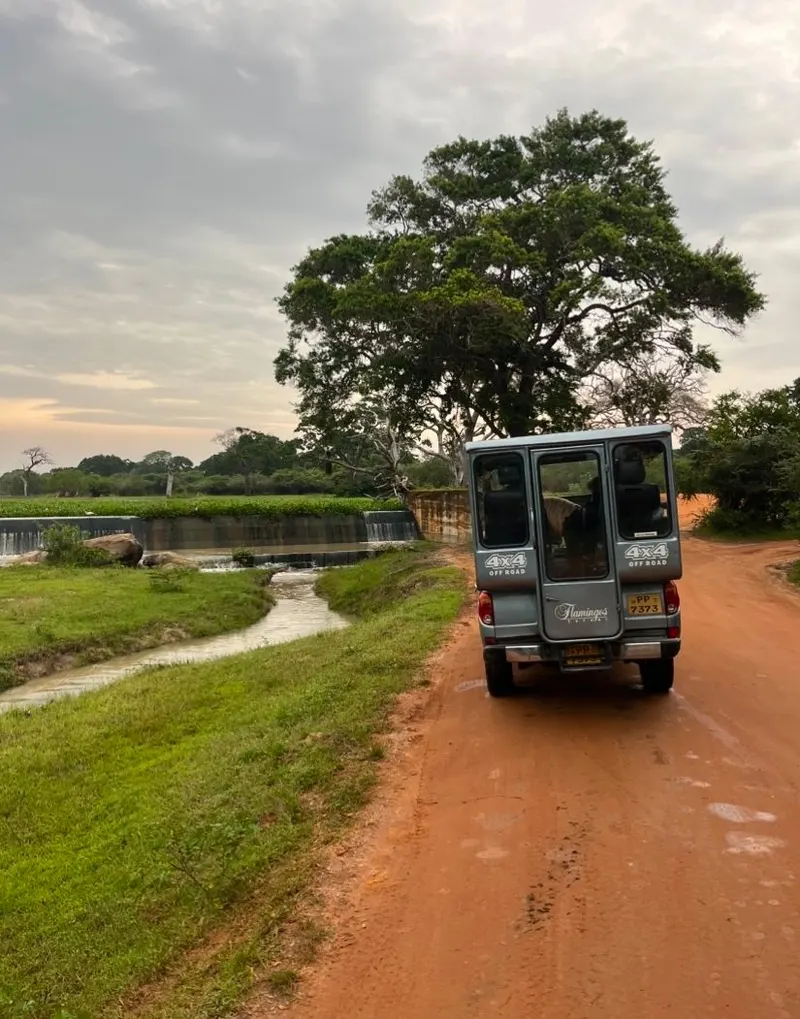
Yala Safari
After the safari, our driver dropped us off at our first beach destination, Goyambokka Beach.
Day 5. Beach hopping: Goyambokka, Pallikaduwa & Silent Beach
We chose Goyambokka as our first beach stop because we wanted to enjoy some tranquility after our packed itinerary. We weren’t looking for a super touristy beach town. We just wanted to be as close to the coast as possible after our Yala safari, while still having easy access to the beaches we planned to visit in the following days.
Located not far from the famous beach town of Tangalle, Goyambokka is much more laid-back, yet it still offers plenty of charming hotels, villas, and stunning beaches within walking distance. After an amazing breakfast, we spent the day exploring the different beaches in the area: Pallikaduwa Beach, Goyambokka Beach, and our absolute favorite, Silent Beach.
Rocky Point Beach
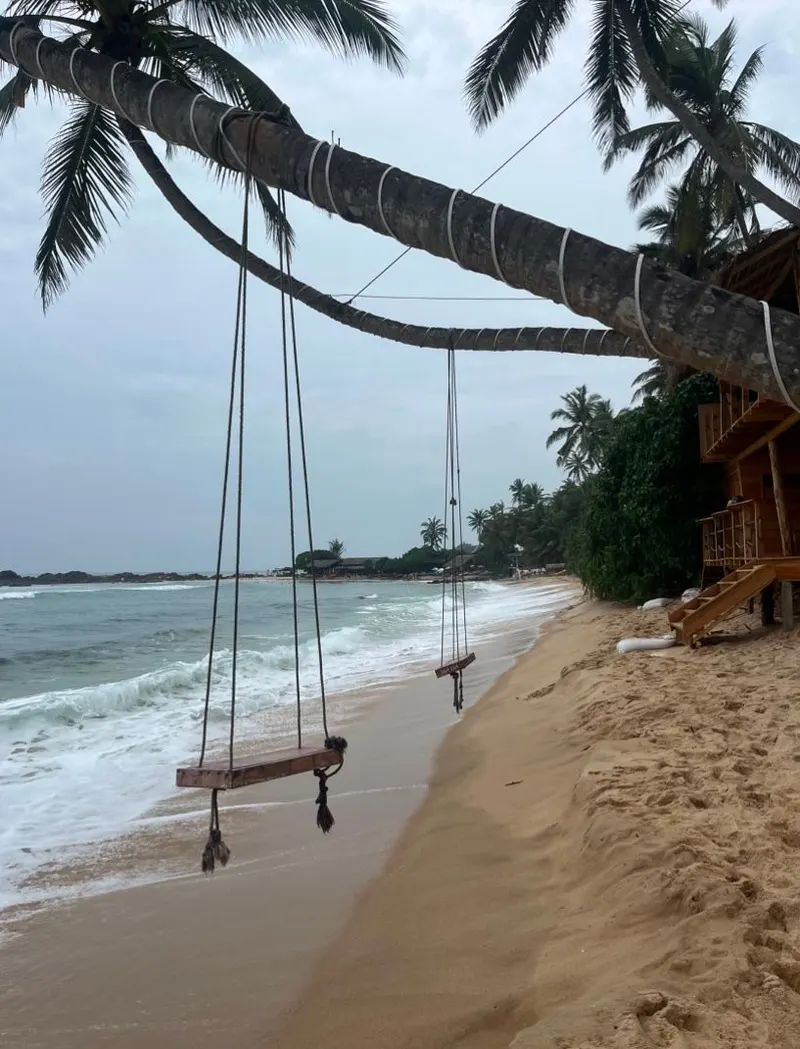
Swing on Silent Beach
If you’re into surfing, you might want to stop by Unakuruwa Beach, which is really close to Silent Beach. The conditions here are perfect for beginners, and you can even take surf lessons if you’re interested.
In the evening, we caught a bus to Mirissa. It’s super easy: just hop on any bus heading toward Matara, then transfer to a bus going to Galle. The southern Sri Lankan bus network is incredibly convenient, as most routes pass through the main beach towns. Plus, it’s by far the cheapest and most time-efficient way to explore this part of the island. Each ride shouldn’t cost you more than 400 LKR (less than $1.50 USD).
Day 6. Mirissa or Unawatuna: whale watching & beach time
Mirissa is perhaps the most touristy beach town in southern Sri Lanka. While some travelers tend to avoid such places, I didn’t find it overcrowded, and I actually think it’s a great stop because of the wide range of activities it offers.
Here are some must-dos in Mirissa:
- Whale watching – One of the most famous activities in the area.
- Parrot Rock – A great viewpoint you can climb when the tide is low.
- Turtle Beach – Bring your own goggles (no need to rent any) and spot sea turtles swimming near the shore. Just remember: don’t touch them and respect their habitat!
- Food scene – Enjoy the amazing Sri Lankan cuisine in one of Mirissa’s many trendy restaurants.
- If you’re into surfing, Weligama is just a short tuk-tuk or bus ride away and is known for having some of the best waves in Sri Lanka. Definitely worth the trip!
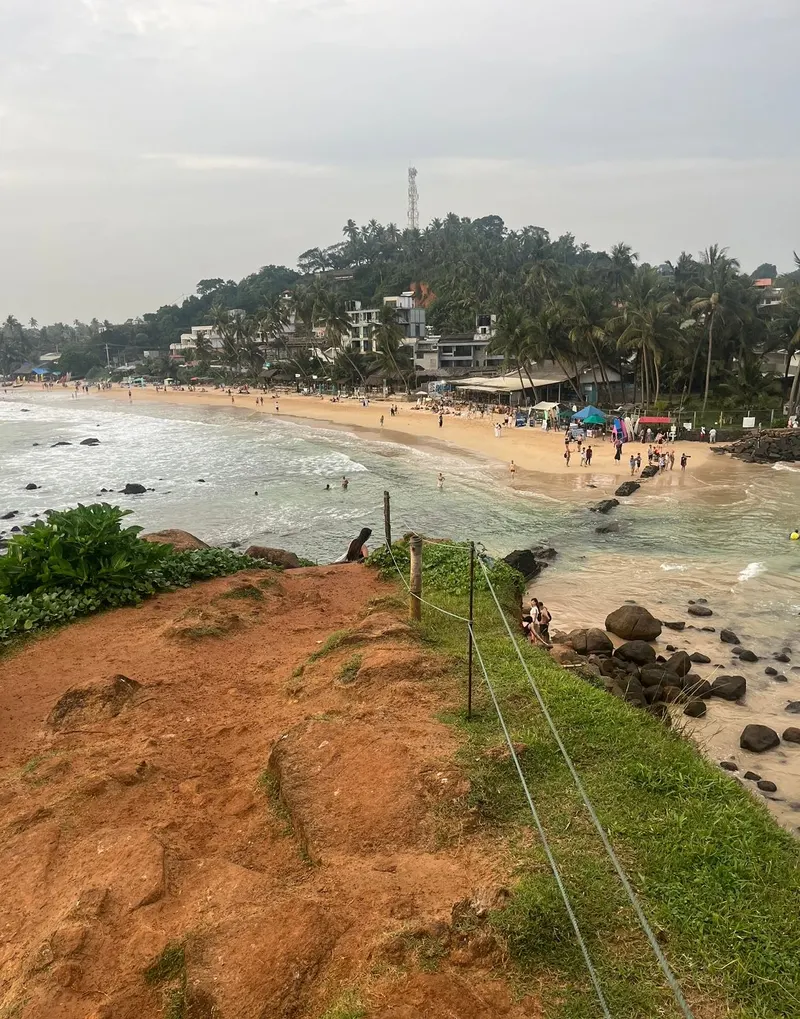
Views from Parrot Rock
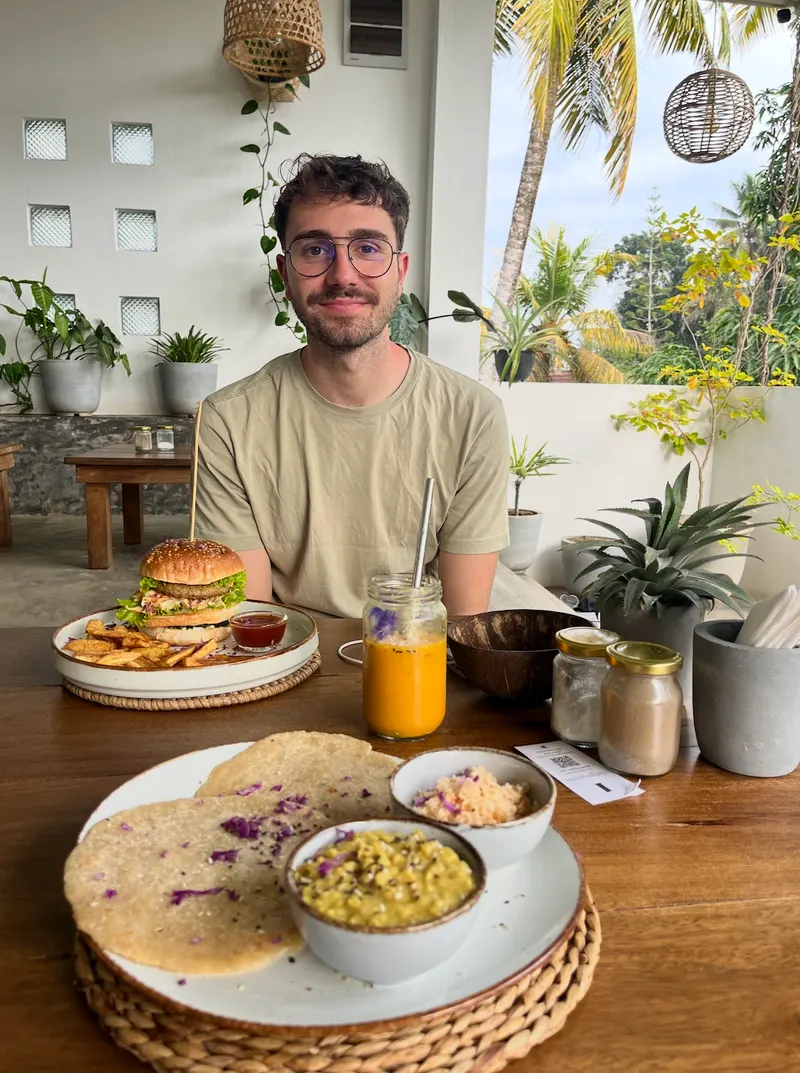
Delicious lunch at Mango Mama
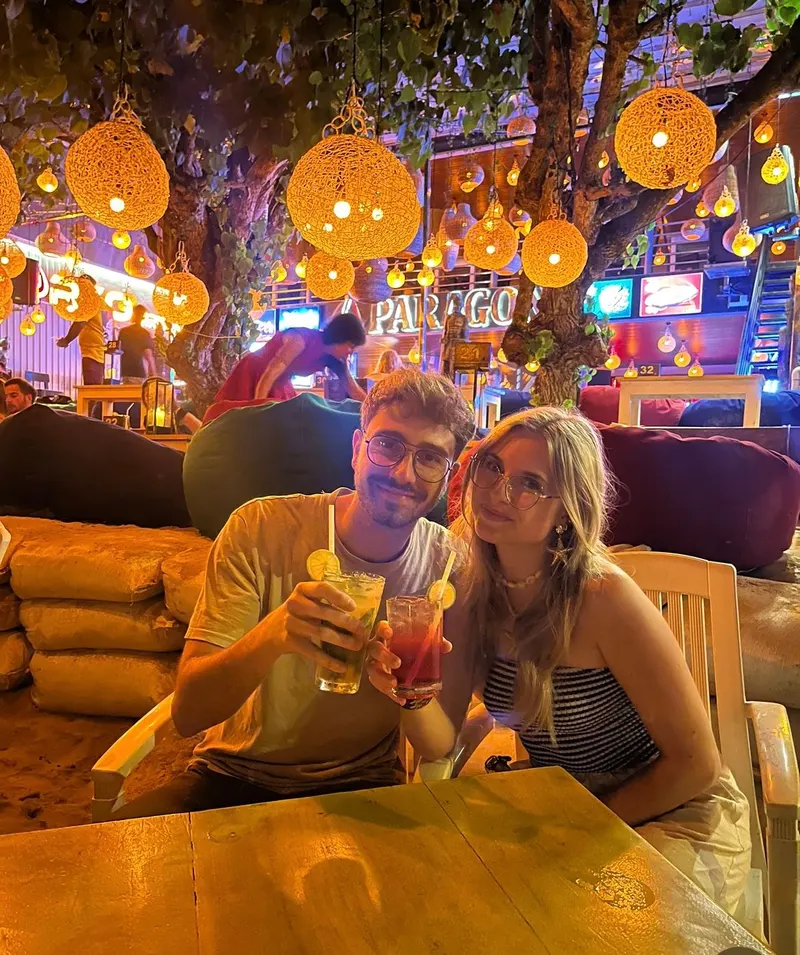
Nightlife in Mirissa
Day 7. Galle Fort & return to Colombo
Galle Fort is an absolute must-see in Sri Lanka. It stands out from every other city in the region, offering a unique blend of colonial history and local tradition. As you wander through its charming streets, you’ll notice beautifully preserved Dutch-era architecture, cozy boutique hotels, trendy cafés, and plenty of souvenir shops.
My advice: Forget the map and just explore. Let yourself get lost in the fort’s atmospheric alleys, stumble upon hidden courtyards, and soak in the rich history at every turn.
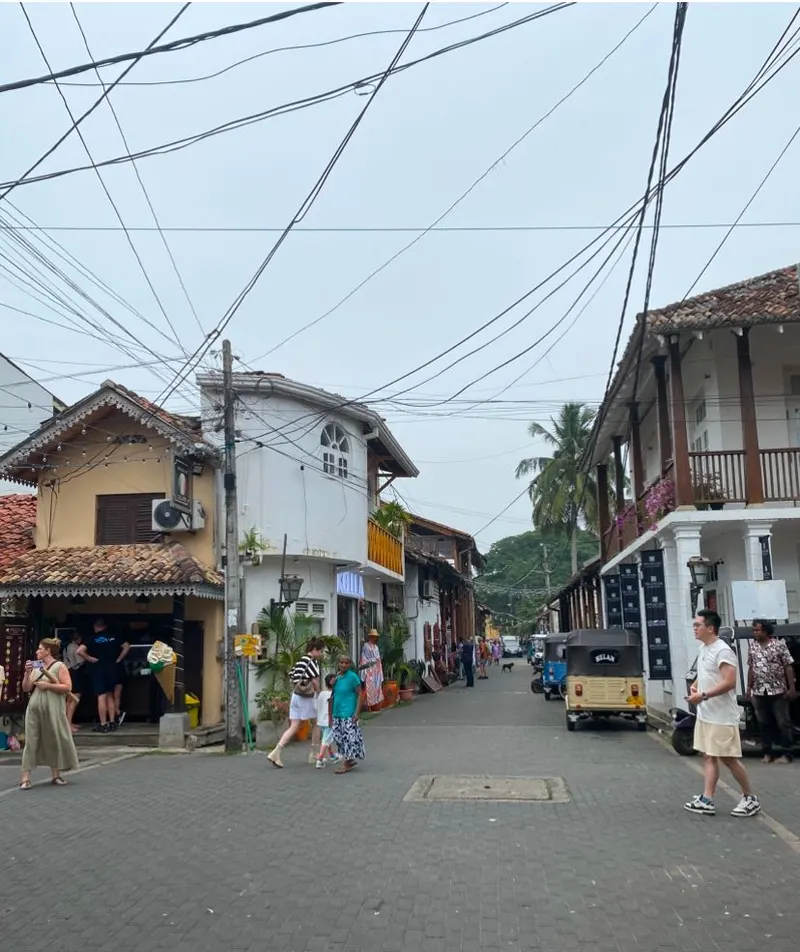
Colonial architecture in Galle
Getting to Colombo
After visiting Galle, you have two main options to reach Colombo:
- Express bus to Makumbura, then another bus to Colombo.
- Train from Galle to Colombo Fort, a scenic option if you enjoy train rides.
Colombo – A City of Contrasts
We didn’t enjoy Colombo as much as the rest of our trip, maybe because our adventure was coming to an end or simply because the city is busy and chaotic. A few tips:
- Be wary of scammers who might approach you with fake “Hindu ceremonies” or other tourist traps.
- Avoid getting into tuk-tuks with strangers, always negotiate the price beforehand.
- Despite the city’s intensity, we managed to see the main attractions in a few hours, though it was exhausting since they’re quite spread out. A good option is to hire a tuk-tuk driver for a few hours to take you around.
Places worth visiting:
- Fort Area – Stunning colonial-style government buildings and a great place for a historical walk.
- Jami-ul-Alfar Mosque – One of the most iconic and colorful buildings in Colombo.
- Galle Face Green – Perfect for escaping the chaos and enjoying the sea breeze.
- Viharamahadevi Park – A peaceful green space if you need a break from the city’s rush.
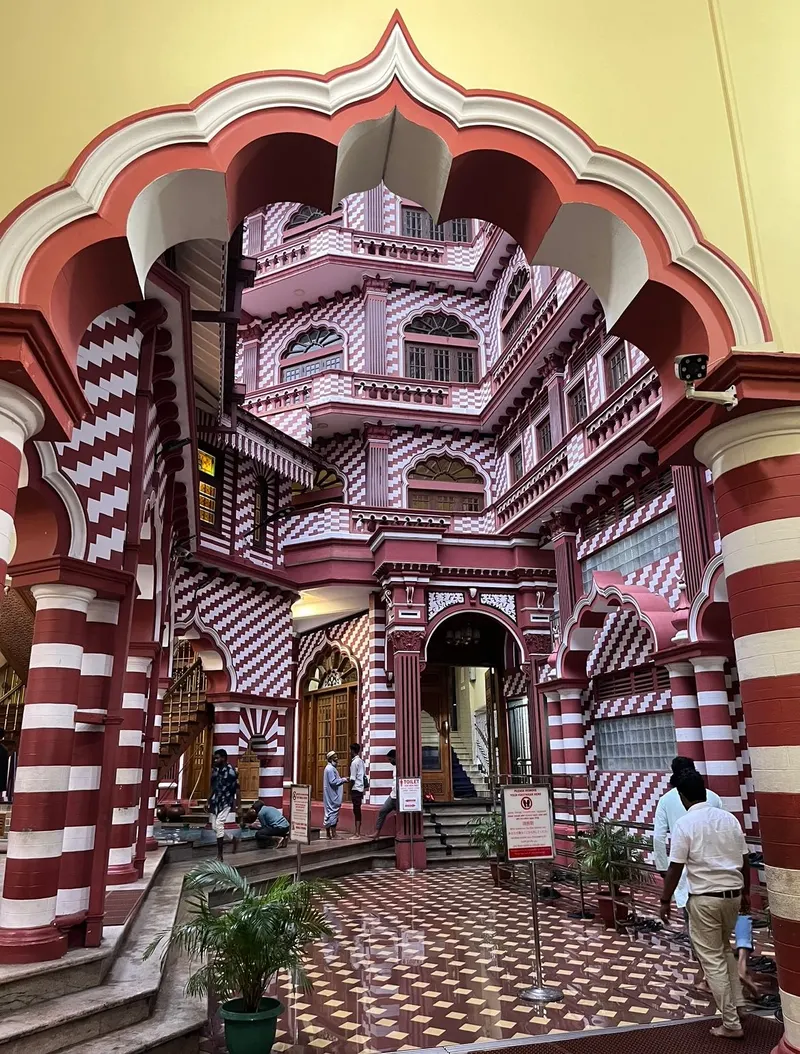
Jami Ul-Alfar Mosque
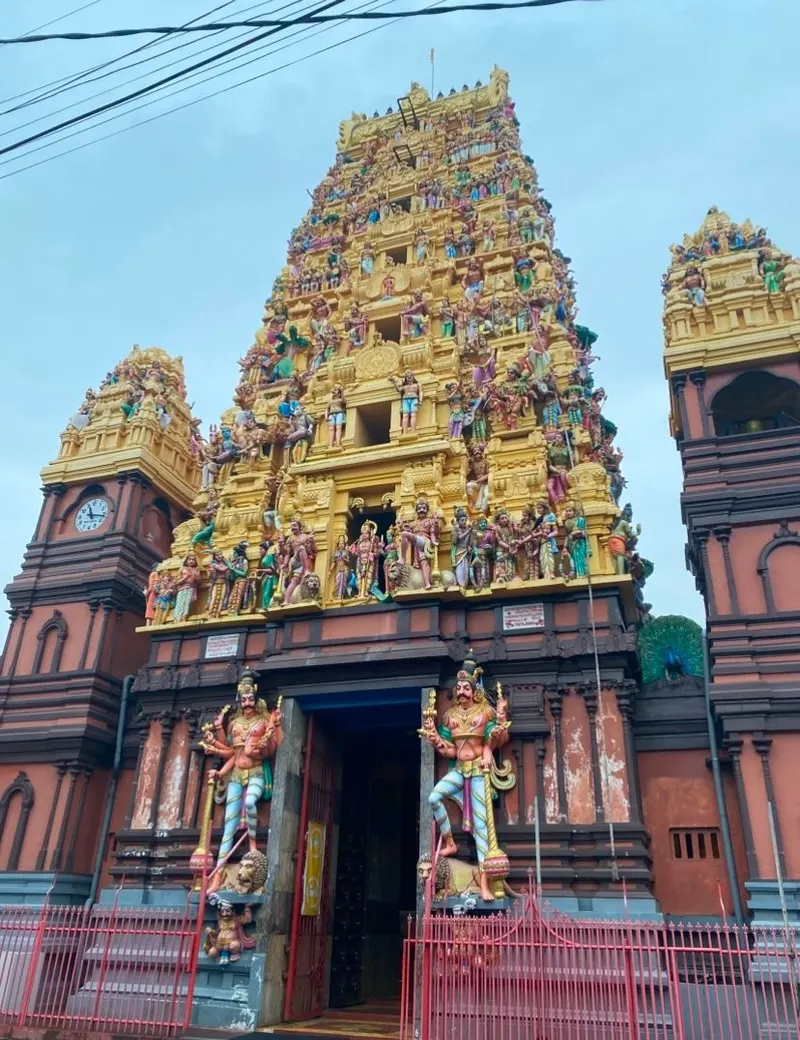
Hindu temple in Colombo
Places to visit if you have more time
Jaffna And The North – What’s Unique About It?
Next time we’re in Sri Lanka, we’ll definitely explore the north, especially because we’re so curious about the unique Tamil culture there. Jaffna offers a completely different vibe from the rest of the island. Highlights like the Nallur Kandaswamy Kovil temple and Jaffna Fort give you a sense of the region’s history and charm. Plus, it’s much quieter, so if you’re looking to escape the crowds and immerse yourself in local culture, this is a great destination.
Trincomalee – Beaches, Temples, and Whale Watching
I’ve heard so many great things about Trincomalee, and next time in Sri Lanka, I’ll definitely include a stopover there. It’s especially convenient if you’re traveling in the right season (March to August), because that’s the best time for whale watching. It’s also a great place to visit right after the Cultural Triangle, given its proximity. You can relax on beaches like Uppuveli and Nilaveli, explore the Koneswaram Temple, and if you’re lucky, catch a glimpse of blue and sperm whales in the wild.
Anuradhapura – Exploring Sri Lanka’s Ancient Capital
Anuradhapura is another place we didn’t get to visit due to time constraints, but I’ve heard it’s absolutely majestic. It’s a must-see if you have more time in the Cultural Triangle. The sacred ruins, like the Sri Maha Bodhi tree and the Ruwanwelisaya Stupa, make it a peaceful yet awe-inspiring destination for anyone interested in history and spirituality.
Nuwara Eliya – The Little England of Sri Lanka
Nuwara Eliya is a place we definitely want to explore next time. Known for its cool climate and colonial charm, it’s often called “Little England” due to its British-era buildings and scenic gardens. The area is famous for its tea plantations, and if you enjoy hiking, the views of Horton Plains National Park and World’s End are incredible. It’s a perfect escape from the tropical heat, and the tea tours are a must for any visitor to Sri Lanka.
Practical advice & travel tips
Best Time to Visit Sri Lanka – Monsoon Seasons and Ideal Months
Sri Lanka is a tropical island, and like many other places, its weather is subject to change, especially with the effects of climate change. We traveled mid-January, and while we expected good weather, we quickly realized that it’s never guaranteed. We experienced constant rain throughout our trip, so be prepared for anything. Always carry a rain poncho with you, just in case of an unexpected downpour.
However, planning your trip to coincide with the ideal seasons can help reduce the chances of encountering bad weather:
- South and west coasts (Colombo, Galle, Mirissa): November to April
- East coast (Trincomalee, Arugam Bay): April to October
Sri Lanka has two main monsoon seasons:
- Southwest monsoon: May to September
- Northeast monsoon: October to January
Visiting during the optimal season for each region increases your chances of better weather and a more enjoyable trip.
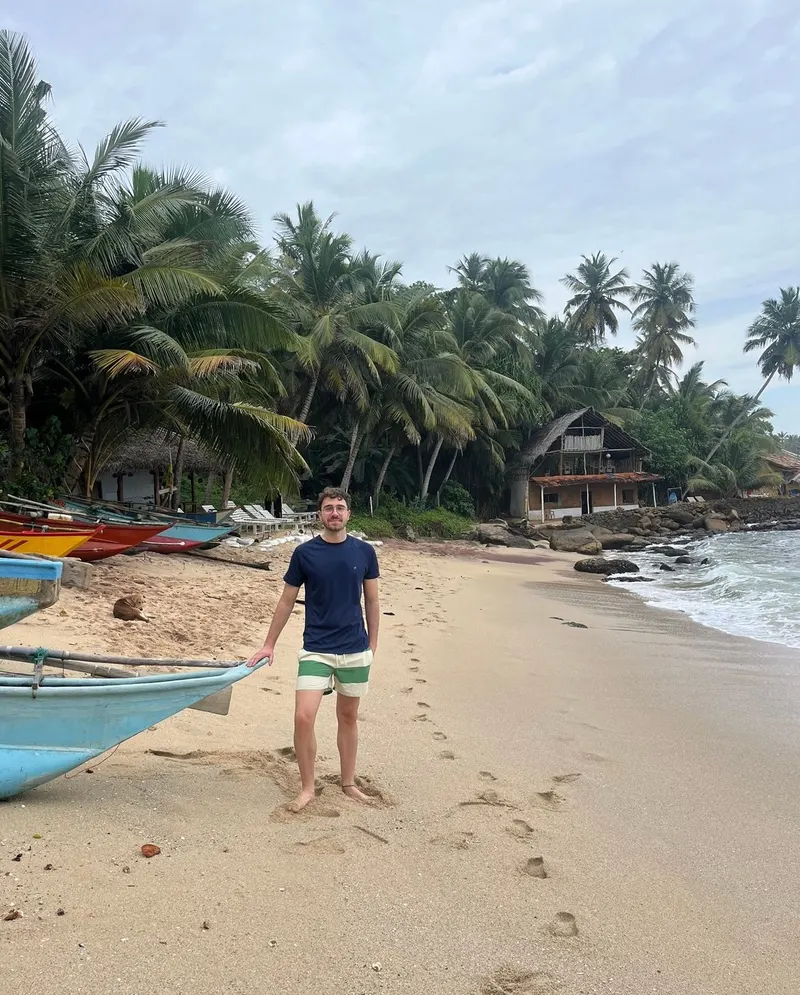
Cloudy day in January 2025
How to Get Around Sri Lanka – Tuk-tuks, Trains, Buses, Private Drivers
- We mainly used PickMe for tuk-tuks, which is popular and reliable, especially in Colombo and Galle.
- In places like Ella, where PickMe didn’t work, we bargained with tuk-tuk drivers the old-school way.
- For the Cultural Triangle, we hired a private driver, the quickest and most convenient option between Sigiriya, Anuradhapura, and Polonnaruwa.
- The train ride from Kandy to Ella is a must-do for stunning views.
- For short distances, buses are super cheap and an experience in themselves – loud music, honking, and disco lights!
How Much Should You Budget for a Week in Sri Lanka?
Sri Lanka offers options for all budgets:
- Backpacker: 30–50 USD/day (basic guesthouses, local meals, transport)
- Mid-range: 60–100 USD/day (nicer hotels, restaurant meals, tours)
- Luxury: 150–250 USD/day (high-end hotels, private transport, curated experiences)
Example costs from our trip:
- Colombo → Sigiriya transfer for two people: 15,000 LKR (~50 USD)
- Major attraction fees: Lion’s Rock, Polonnaruwa, etc., can be pricey
Total for a week: ~210–700 USD, depending on travel style and activities.
Money-saving tips:
- Always barter with tuk-tuk drivers or market vendors
- Check estimated fares on apps like Uber or PickMe to avoid overcharging
- Plan for entrance fees to major attractions in your budget
Is Sri Lanka Safe?
Sri Lanka is very safe to travel in. We traveled as a pair and never felt unsafe.
- Solo travelers, both men and women, seemed comfortable exploring alone.
- Locals are welcoming, and crime against tourists is rare.
- Basic precautions: watch belongings in crowded areas and avoid isolated streets at night.
Scams to watch out for:
- Tuk-tuk drivers overcharging or taking you to shops for commissions
- Overly friendly locals offering “special deals”
With a bit of common sense, Sri Lanka is easy and enjoyable to travel through.
Health & packing
Must-Have Items for Different Regions
For the beaches, you’ll want to pack swimwear, sunscreen, a hat, and sunglasses to protect yourself from the sun. A quick-drying towel is also a good idea for beach days. If you plan to explore the mountains, bring a light jacket for the cooler weather and sturdy walking shoes for the trails. Don’t forget insect repellent, as the area can have mosquitoes, especially near forests and lakes. Snorkeling goggles are also a great addition, so you won’t have to buy or rent them locally and can enjoy seeing the turtles for free. When visiting temples, be sure to wear modest clothing that covers your shoulders and knees. A sarong or long pants for women is ideal, while men should wear long pants and a shirt with sleeves. Closed shoes are also a good choice for temple visits.
Essential Medications and Vaccinations
Before heading to Sri Lanka, make sure you’re up to date on routine vaccinations. In addition, vaccines for Hepatitis A and B, Typhoid, and possibly Rabies are recommended, especially if you plan to visit remote areas. As for medications, a small first-aid kit is useful, including things like band-aids, pain relievers, and anti-diarrhea pills. It’s also important to bring your prescription medications if you take any. Sunscreen and insect repellent will be essential throughout your trip, and if advised by your doctor, consider carrying anti-malaria medication.
In addition to the vaccinations and medications mentioned, I personally visited an International Vaccination Center before my trip. They provided me with invaluable information about the recommended vaccines, general health tips, and specific precautions I should follow during my stay in Sri Lanka. It’s definitely worth checking with your local vaccination center, as they can offer tailored advice. Also, be sure to verify whether your insurance covers you in Sri Lanka: if not, I highly recommend purchasing travel insurance to ensure you’re covered for any emergencies or unexpected situations that might arise.
Money matters: How to Handle Payments in Sri Lanka
Cash or Card?
Sri Lanka is mostly a cash-based society, especially when you venture away from major cities. While you might find a few larger hotels, restaurants, or shops in places like Colombo or Galle that accept cards, the majority of businesses, especially in smaller towns or rural areas, rely on cash. This is true for tuk-tuks, local buses, guesthouses, and family-run restaurants. When we stayed at local guesthouses, we found that they were always cash-only, and that was the case at most of the places we visited.
I also noticed that many places are willing to accept US dollars, particularly in tourist-heavy spots, but paying in Sri Lankan Rupees (LKR) is always a better deal when it comes to exchange rates. I stuck with the local currency throughout the trip, which ensured that I was getting the best possible value for my money.
ATMs – Are they reliable?
ATMs in Sri Lanka are generally reliable, and I always withdrew money at People’s Bank ATMs without issues. However, not all ATMs accept international cards, so it’s best to stick to major banks and check for compatibility before withdrawing.
In smaller towns and rural areas, ATMs can be scarce or may not work with foreign cards. To avoid issues, withdraw enough cash in larger towns before heading to remote areas. Planning ahead ensured I never ran out of money when I needed it most.
Where I stayed: recommended guesthouses
Throughout our trip, we chose to stay in guesthouses rather than hotels, not just for the affordability but because it’s part of the experience. The hospitality of the locals made each stay memorable, and in many cases, these guesthouses surpassed hotels in comfort and service. Here are the places I booked, all of which I highly recommend:
‣ Sigiriya – Hidden Lake Cottages
Nestled in nature, these cozy cottages with a pool were the perfect retreat after exploring the Cultural Triangle. The breakfast was exceptional, and the hosts were incredibly kind and attentive, always going the extra mile to ensure we were comfortable.
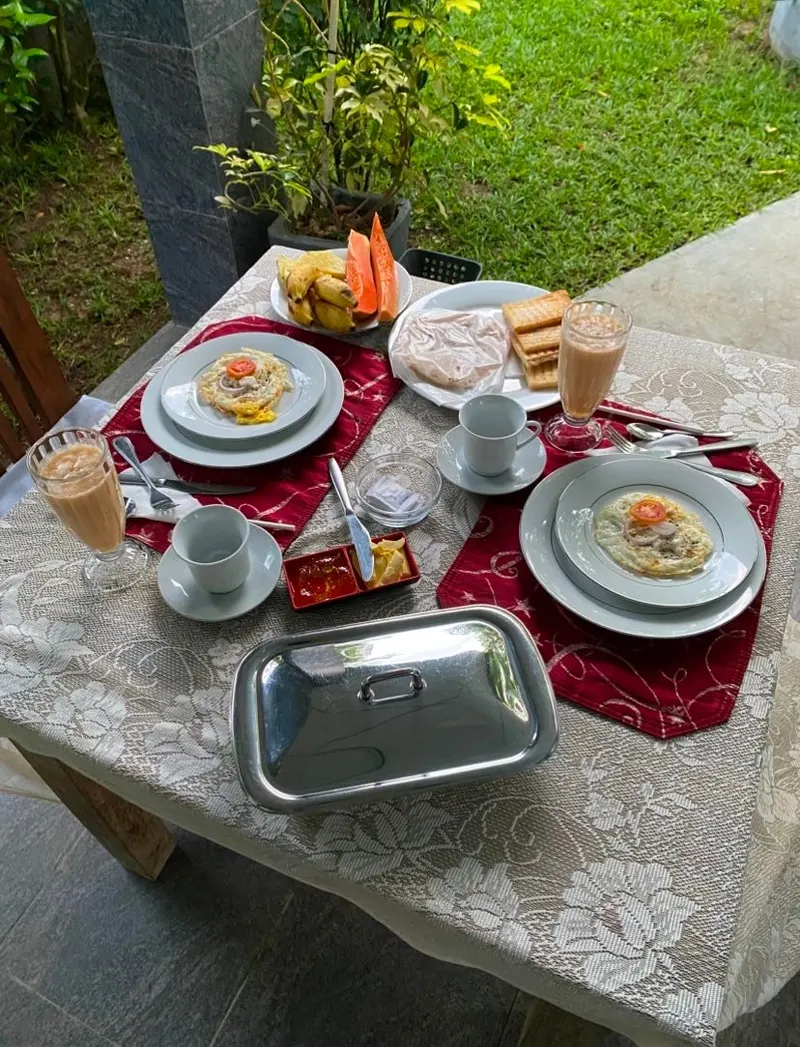
Typical Sri Lankan breakfast
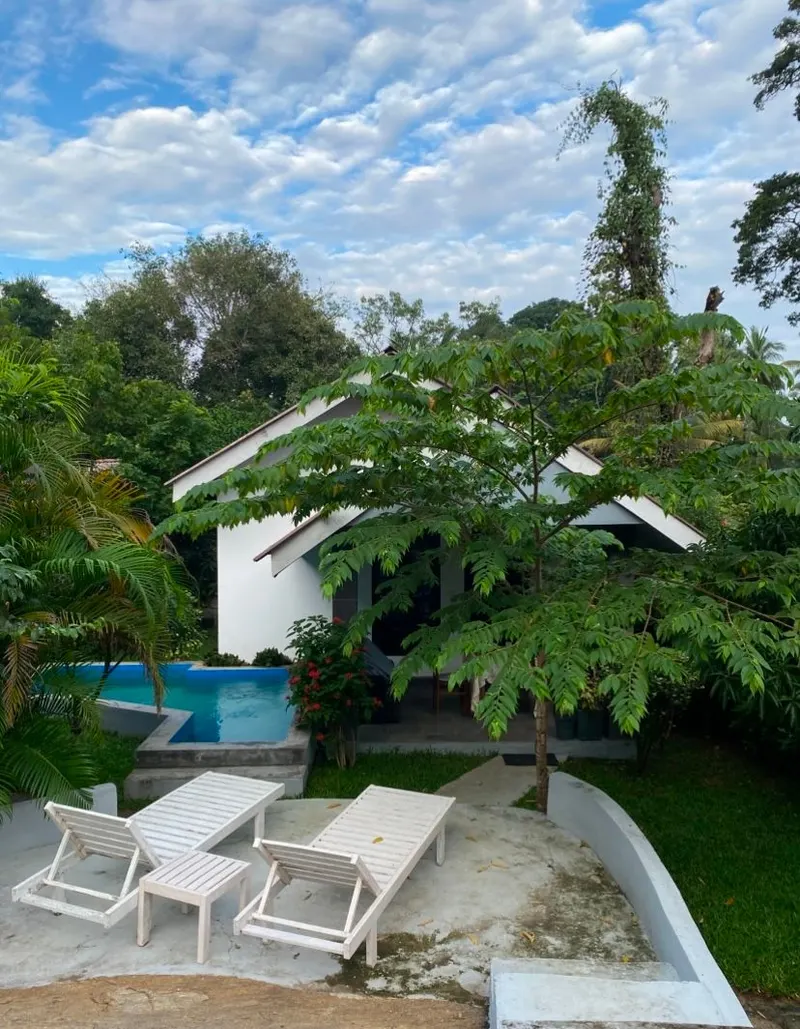
Hidden Lake Guesthouse in Sigiriya
‣ Kandy – The Castle by Don Louis
A budget-friendly yet charming stay with a pool and stunning views from one of the hills surrounding Kandy. The hotel staff was incredibly welcoming and made our time there extra special. Waking up to the misty hills was an unforgettable experience.
‣ Ella – Spice Lodge
This was the best-equipped room of the entire trip, with a level of comfort that was well worth the slightly higher price compared to other guesthouses. The breakfast was fantastic, and the host was beyond helpful. The location is unbeatable: just a short walk from the starting points of both Adam’s Peak and the Nine Arches Bridge, yet away from the noisy center of Ella.
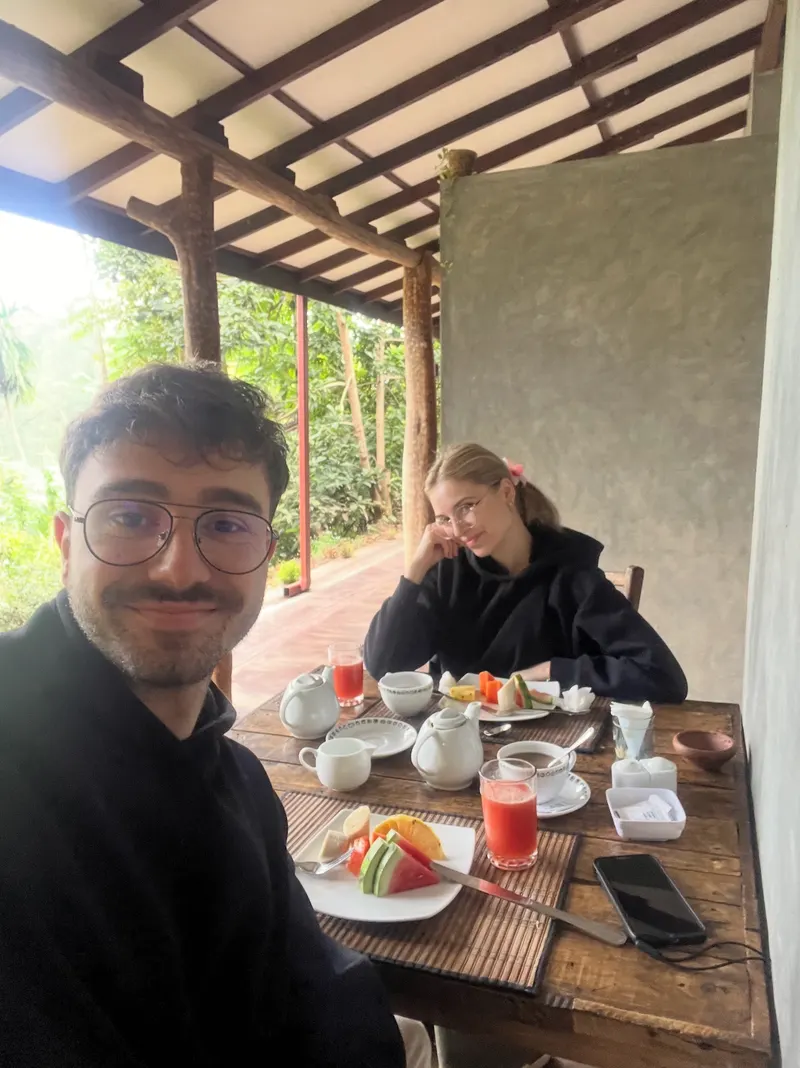
Delicious breakfast with views at Spice Lodge
‣ Goyambokka – Goyambokka Guesthouse
A great value-for-money stay close to several beautiful beaches. The guesthouse also has a pool and air-conditioned rooms, making it a great choice for a relaxing break on the coast.
‣ Mirissa – Mango Tree House
A well-maintained guesthouse with its own pool, offering a peaceful stay just a short walk from the beach. It’s not beachfront, but I actually preferred the location because it was close to supermarkets and great restaurants. The host was also very welcoming and helpful.
‣ Galle – Windy Garden Villa
Instead of staying inside Galle Fort, where prices are significantly higher, we opted for this guesthouse just outside the fort area. The value for money here is unbeatable: private pool, well-equipped rooms, and generous breakfasts. The family that runs it was incredibly friendly and made us feel right at home.
Every single one of these guesthouses offered something special, and the hospitality of the Sri Lankan people is truly one of the best takeaways from this trip.
Final thoughts
Sri Lanka is compact but endlessly diverse: beaches, mountains, wildlife, trains, and warm people. With good planning, a one-week itinerary can cover the highlights without feeling rushed: just pack light and be ready for adventure.