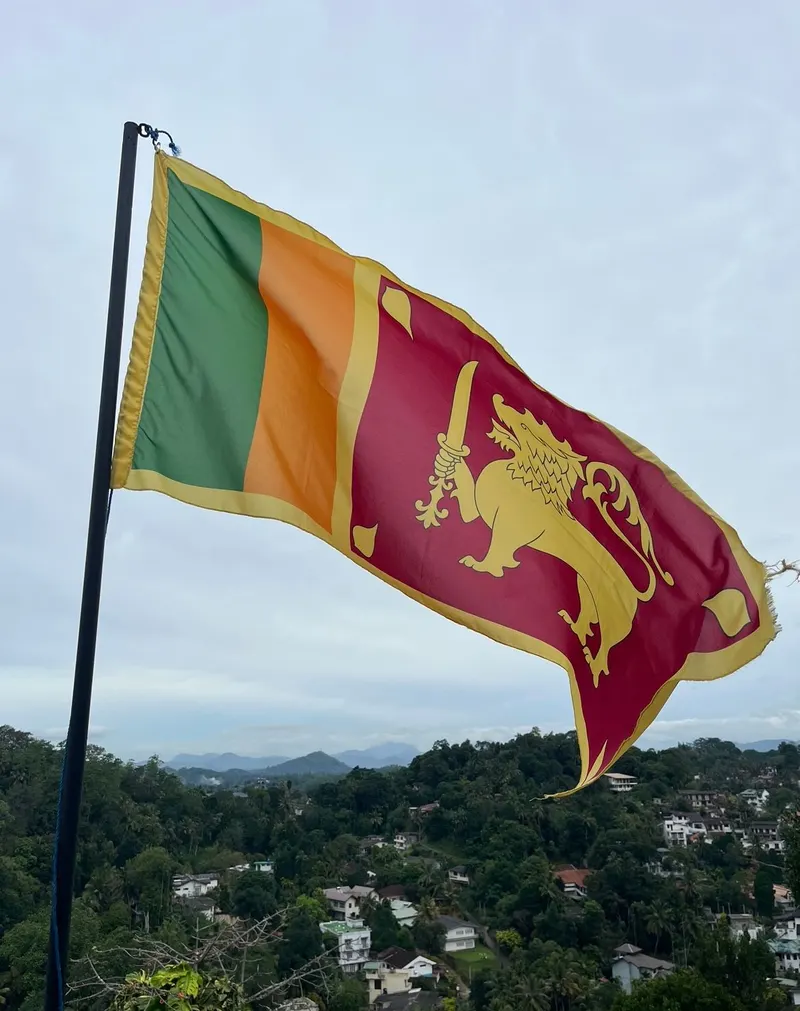


Our trip to India was pretty short but intense. We decided to spend 4 days exploring the famous Golden Triangle after our incredible adventure in Sri Lanka. Since we had a layover in New Delhi, we figured we might as well make the most of it and visit one of India’s most iconic travel routes.
Why You Need a Local Guide
Our guide Harshid is based in Delhi, but he was willing to accompany us throughout the entire trip. He went far and beyond, showing us his culture and explaining everything about this beautiful part of India and its amazing cuisine. This is exactly what I’d recommend on your first visit to the Golden Triangle. It’s just much easier to have someone who is knowledgeable and who you can trust to navigate the crowds, language barriers, and cultural nuances.
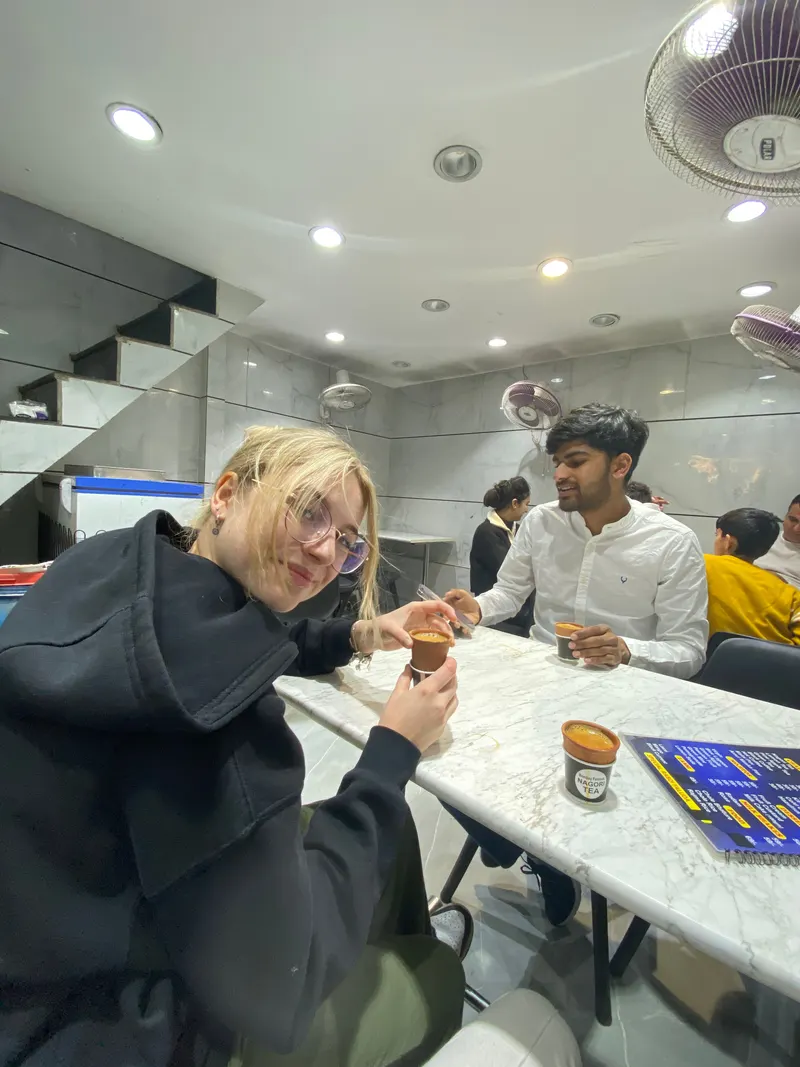
Sharing chai with Harshid, our incredible guide
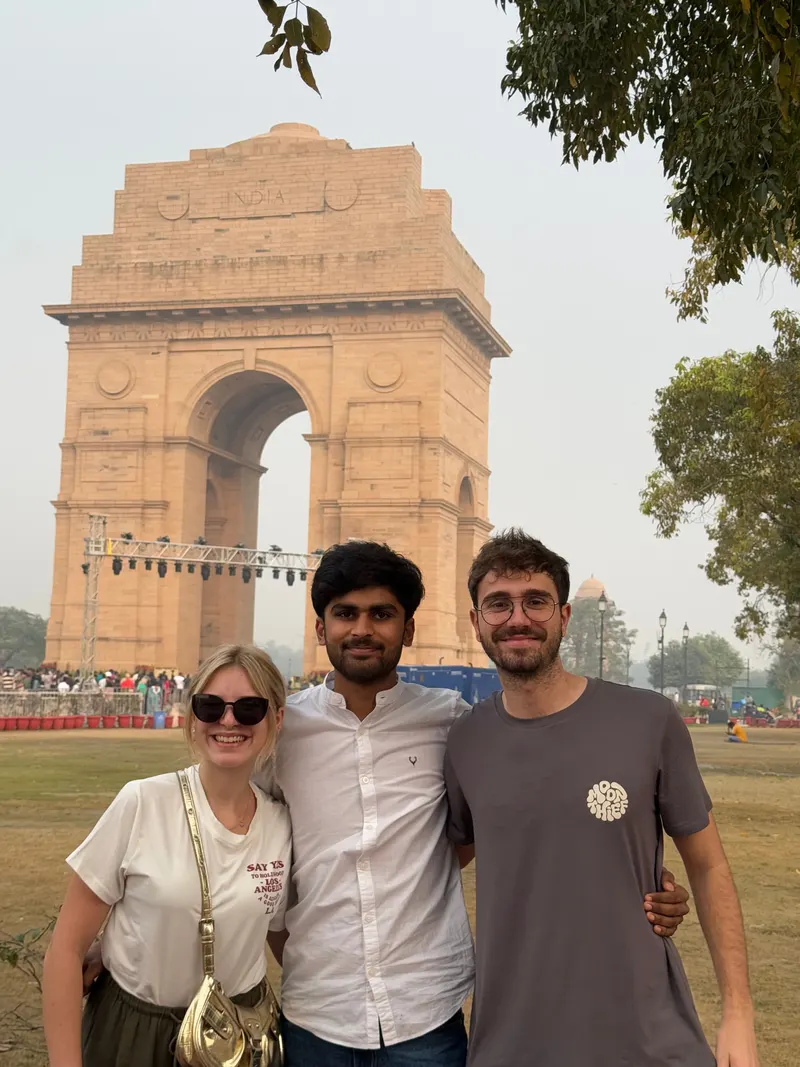
Exploring Delhi's iconic India Gate together
Day 1: Delhi to Agra - The Taj Mahal
Our driver picked us up at Delhi airport exactly as we had arranged several months before. Then, we headed straight to our first stop: Agra. We visited India in January, so it wasn’t unbearably hot: in fact, it was even chilly in the mornings, and we needed a light jacket. The temperature was definitely very pleasant for sightseeing. However, beware that this time of year there’s usually a lot of fog and smog, especially near big urban areas. The whole drive to Agra was very overcast and visibility was limited.
By the time we reached the Taj Mahal at 10 AM, the sky had already cleared a bit, so we could truly enjoy this marvel in full detail. Going in with a local who is knowledgeable about everything just makes things so much easier. There were huge crowds at the local entrance, but there was almost nobody at the tourist entrance, so we made our way in fairly quickly.
Inside the Taj Mahal
There are certain rules you need to follow while inside the complex. You can purchase an entrance ticket with or without access to enter the Taj Mahal itself. Our guide told us there wasn’t much to see inside and that it wasn’t worth the extra money. We paid anyway, and I’d say it’s absolutely worth spending just a few extra dollars to see the inside. You never know when you’re coming back, and it’s such a unique experience to actually step inside this world wonder.
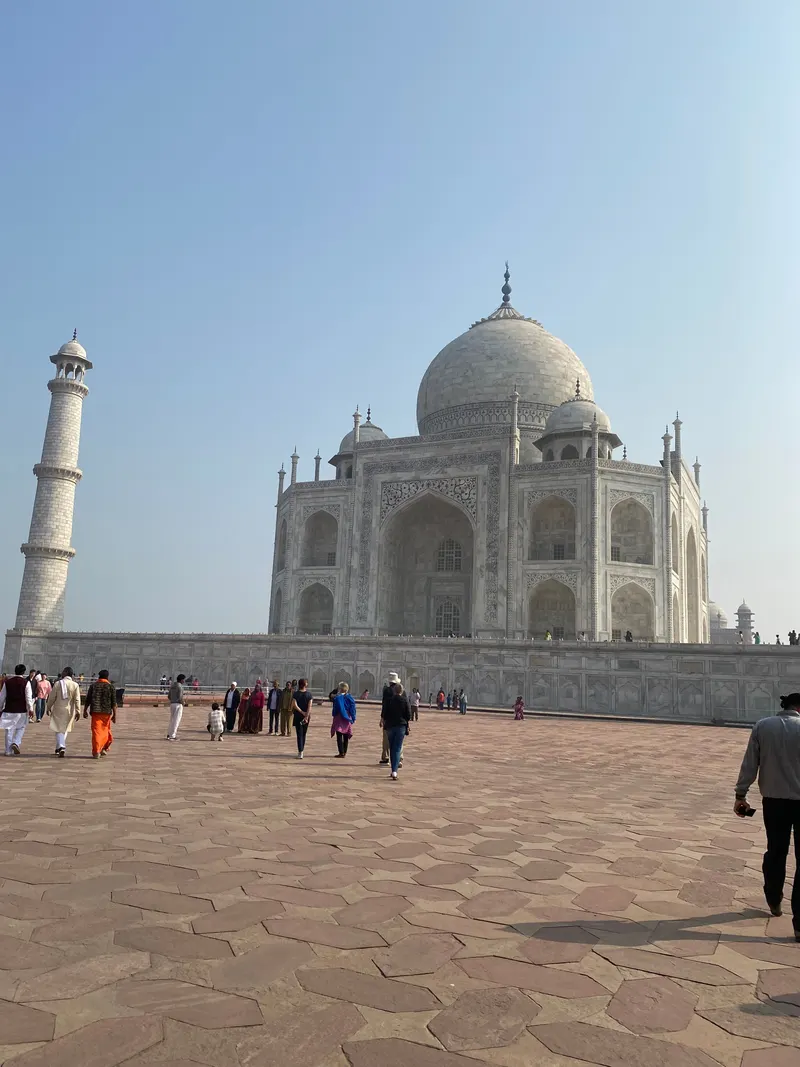
First glimpse of the breathtaking Taj Mahal
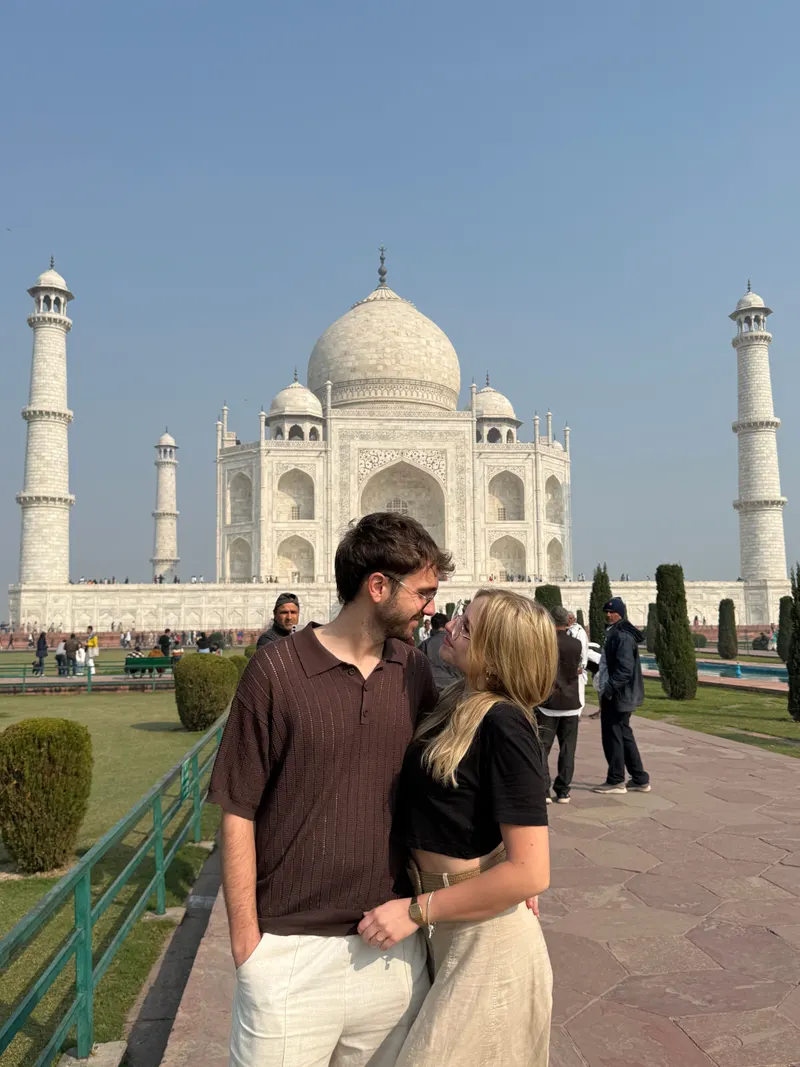
Taking in the grandeur of this architectural masterpiece
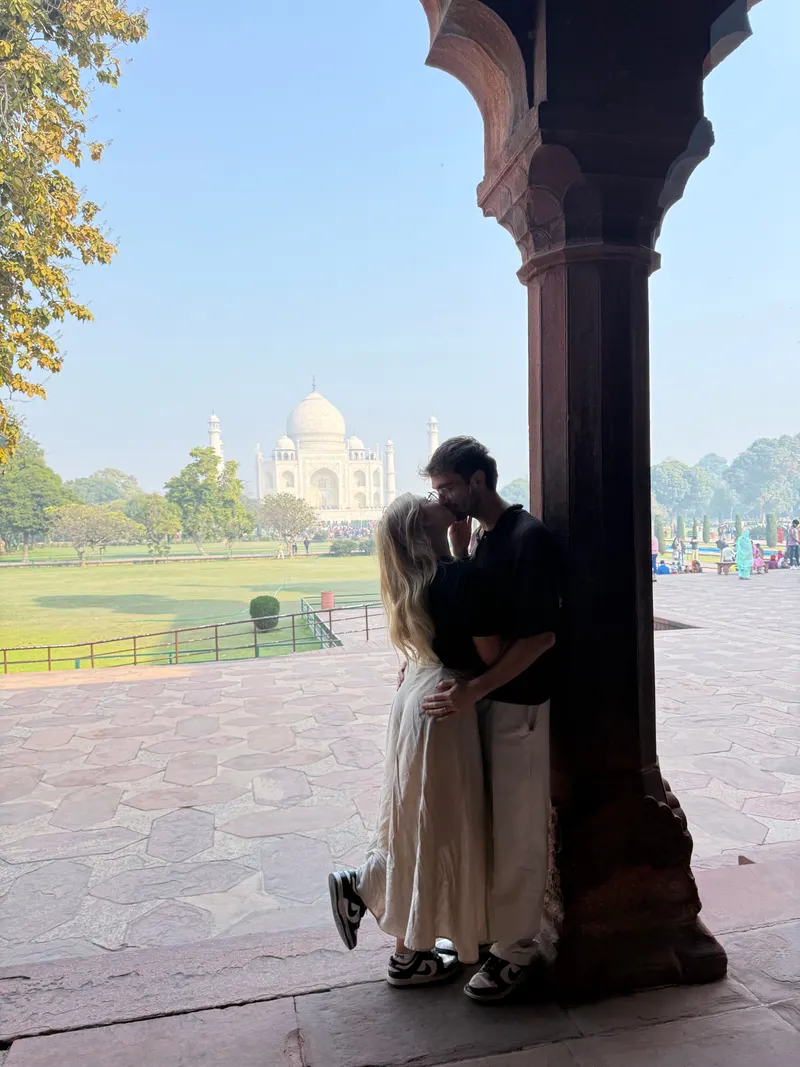
A romantic moment at the world's greatest monument to love
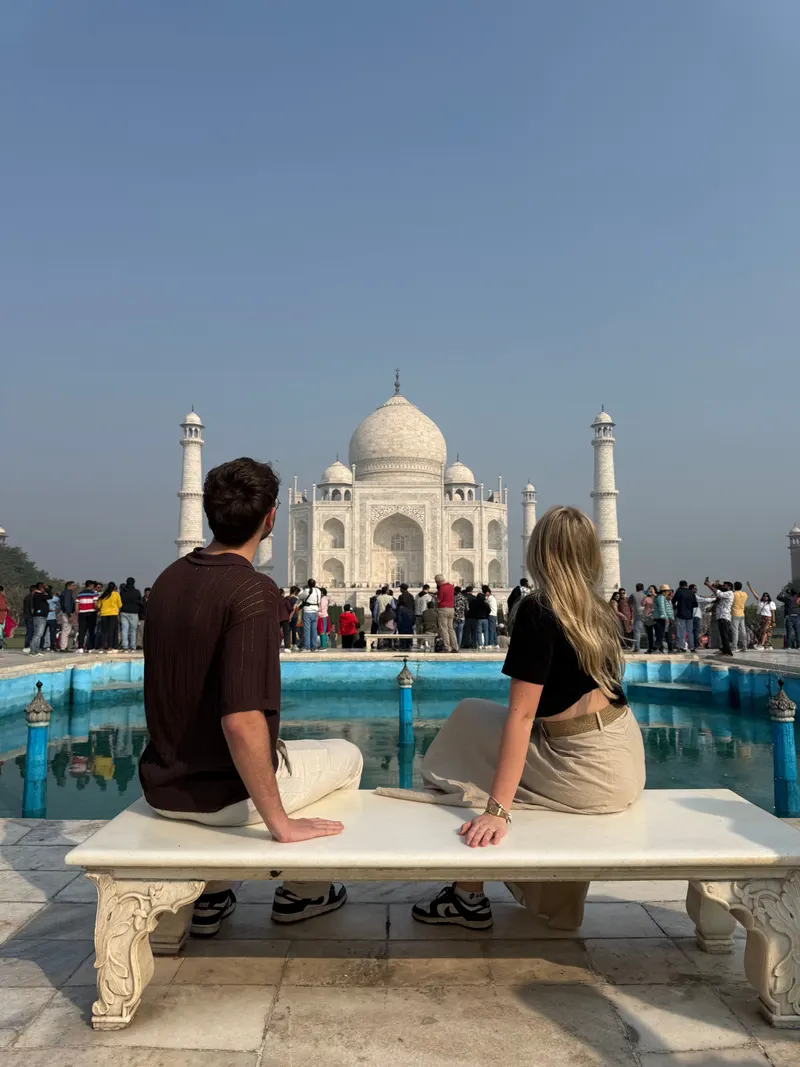
The famous Princess Diana bench photo spot
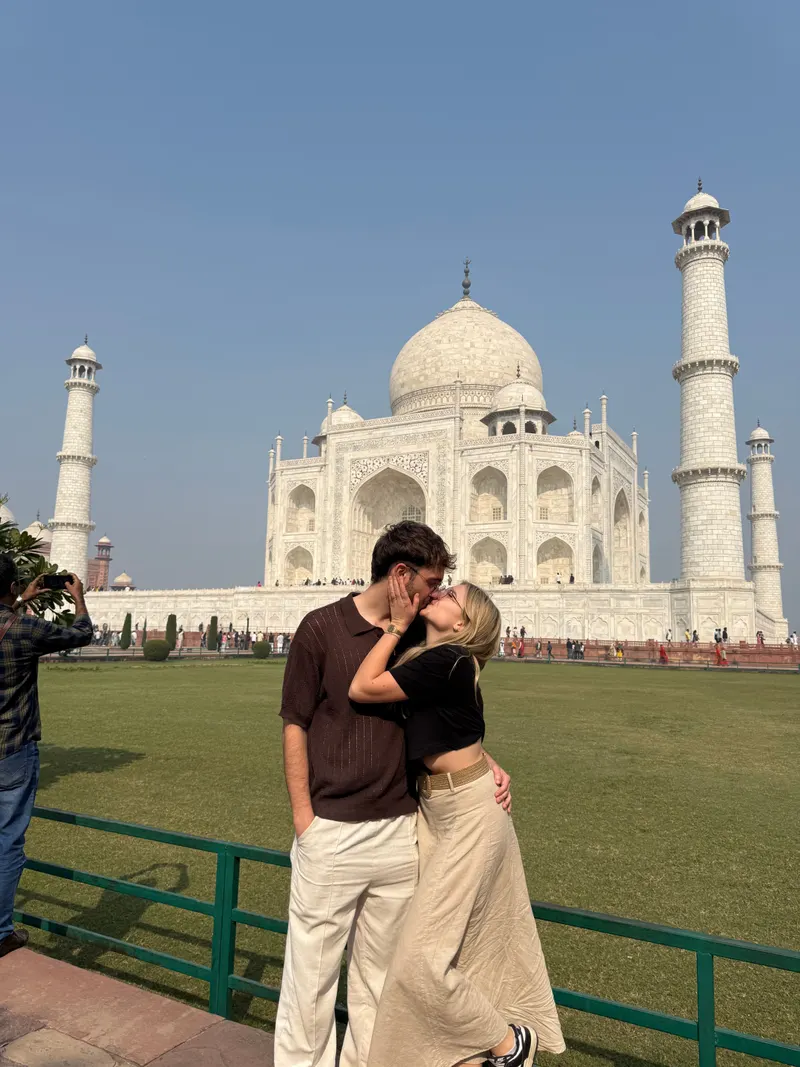
The Taj Mahal, a symbol of eternal love
We spent approximately 2-3 hours just walking around and marveling at this astonishing monument and its beautiful water fountains. We took countless pictures, and even the locals seemed really interested in us. Many of them were asking us for pictures, and some were just directly taking pictures of us without consent. It can feel a little bit overwhelming, but it’s all part of the experience.
What We Skipped in Agra
We didn’t have much time because we needed to head to Jaipur that same day, but if you find yourself with more flexibility, it would be nice to stay in Agra and see the Baby Taj (Itmad-ud-Daulah) or the impressive Agra Fort. We saved these for next time because we wanted to prioritize spending more time at the Taj Mahal. This is truly what we came for in the first place.
The city feels a little bit chaotic, and there’s a huge contrast between the haves and have-nots, just like in Delhi. But the Taj Mahal alone makes it all worthwhile.
En Route to Jaipur: Hidden Gems
There’s a lot of driving between all these cities, about 4 hours from Agra to Jaipur, but the highways are pretty good and reliable, unless cows decide to cross the road (which happens more often than you’d think!).
On the way to Jaipur, we stopped to see Chand Baori.
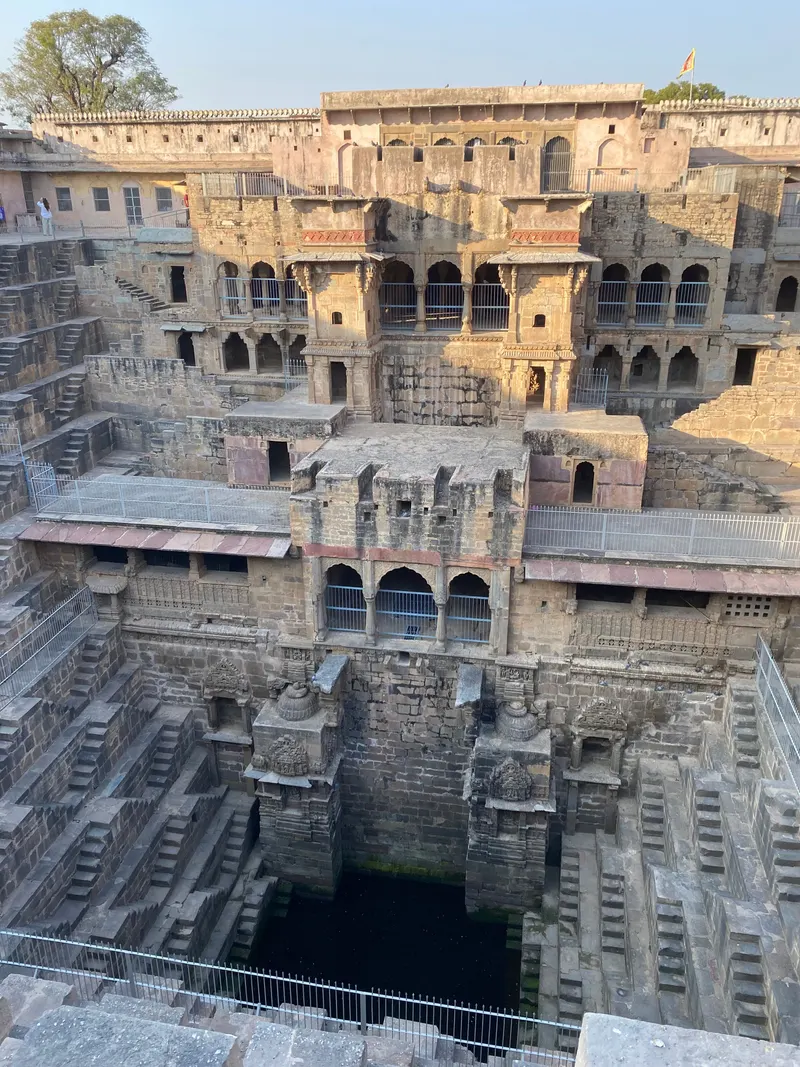
The mesmerizing Chand Baori, one of India's deepest stepwells
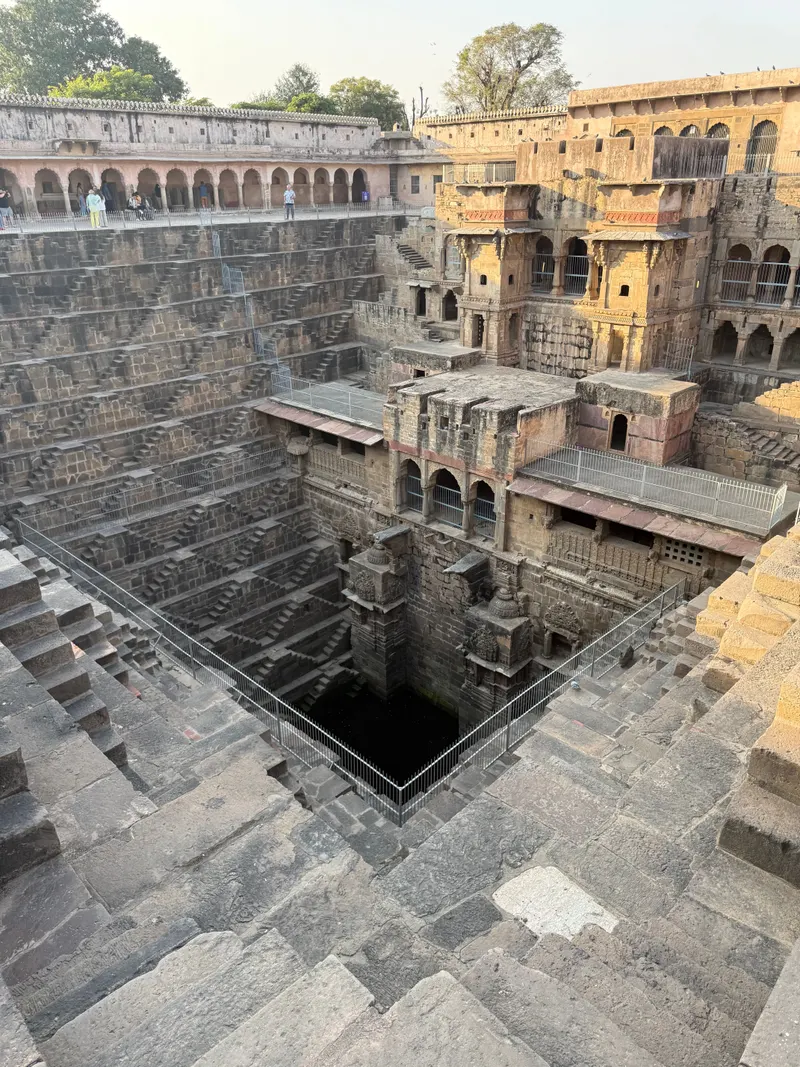
Ancient stepwell architecture
Chand Baori is an ancient stepwell with 3,500 narrow steps arranged in perfect symmetry over 13 stories. It’s one of the deepest and most impressive stepwells in India, and it was featured in the movie “The Dark Knight Rises.” The geometric precision is absolutely mind-blowing.
We also visited the Harshat Mata Temple, a beautiful Hindu temple located right next to Chand Baori. This peaceful temple is dedicated to the goddess of joy and happiness, and it’s a wonderful place to experience local spirituality away from the crowds.
After 2 more hours of driving, we reached Jaipur, where we would spend the entire following day exploring the Pink City.
Day 2-3: Jaipur - The Pink City
Jaipur was packed with interesting attractions to visit. It seemed like a much more structured city and genuinely more beautiful than Agra, but I wouldn’t have planned it otherwise. You definitely need to visit all three cities to experience the Golden Triangle properly.
Why Jaipur Feels Different
Jaipur just feels different from anywhere else. It’s the capital of the Rajasthan region, which is more arid and has a completely different culture and cuisine. India is so incredibly diverse! Famous for its pink-colored walls painted for the visit of a British royal (Prince Albert in 1876), you can definitely feel that Jaipur is unique compared to everything you’ve seen before. The city becomes even more vibrant during the golden hour, so make sure to spend at least one night here to witness the magical sunset glow on those pink walls.
Morning: Hawa Mahal and Jal Mahal
We started the day with a photo stop in front of the beautiful Hawa Mahal (Palace of Winds). This five-story palace was built in 1799 and features 953 small windows called jharokhas, decorated with intricate latticework. It was designed so that royal women could observe street festivals while remaining unseen from the outside.
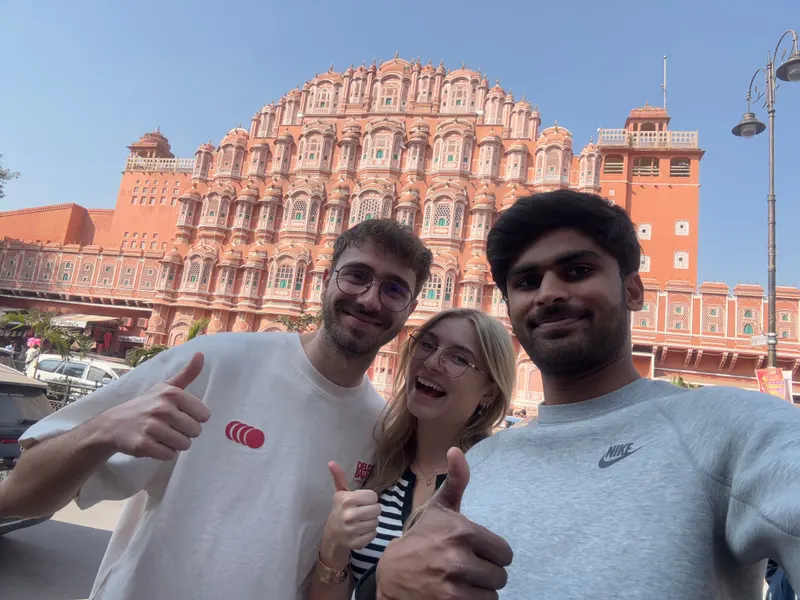
Posing with Harshid in front of the iconic Hawa Mahal
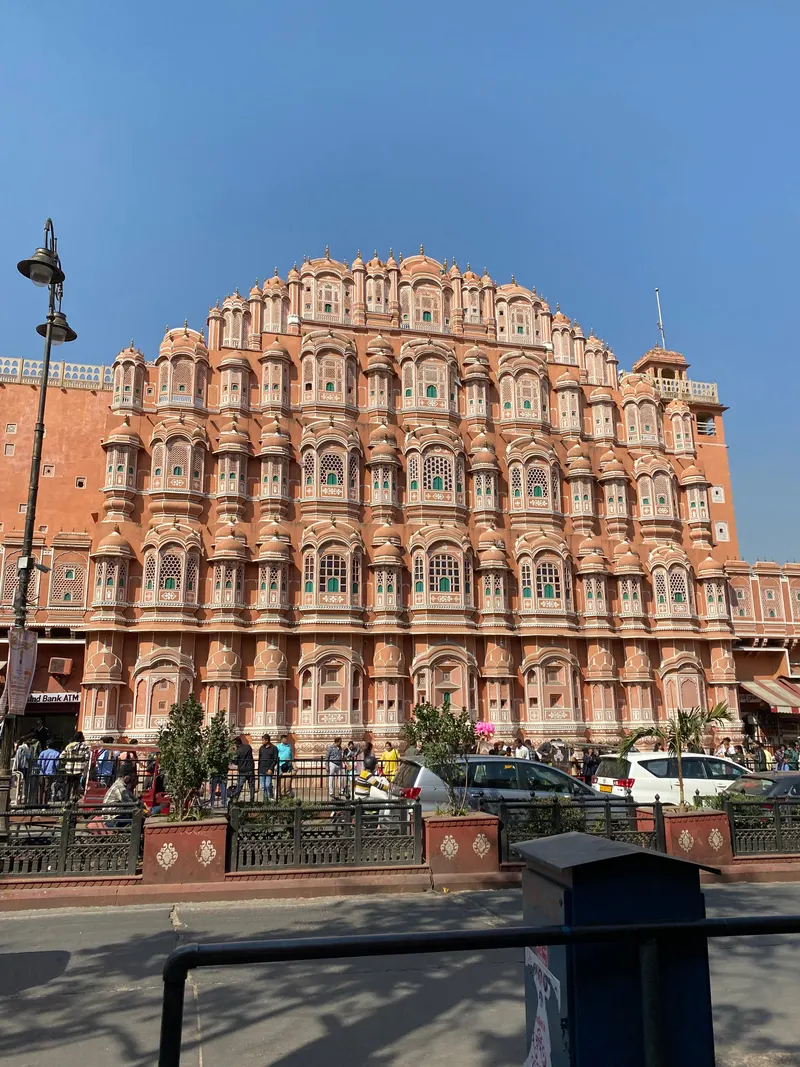
The stunning Palace of Winds with its 953 windows
Then we stopped for a little walk and photo break at the Jal Mahal (Water Palace). This architectural beauty appears to float on Man Sagar Lake and is particularly stunning during sunrise and sunset. While you can’t go inside, the views from the lakeside are spectacular, especially with the Aravalli hills in the background.
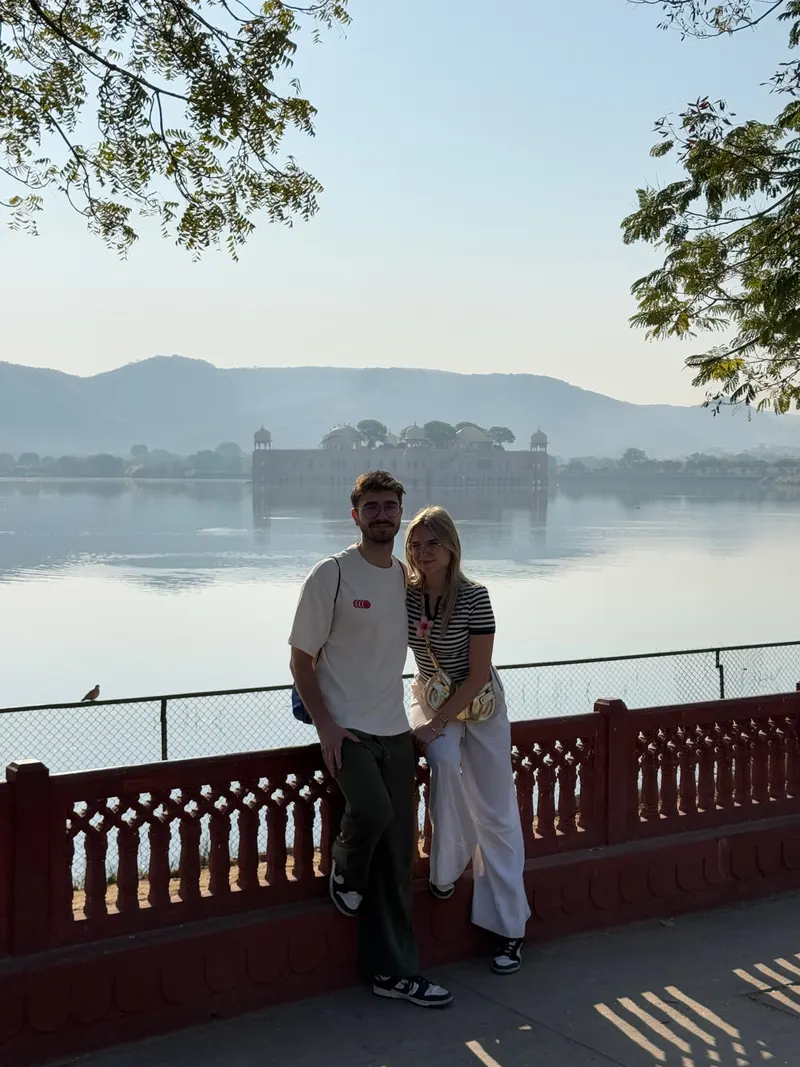
The Water Palace floating serenely on Man Sagar Lake
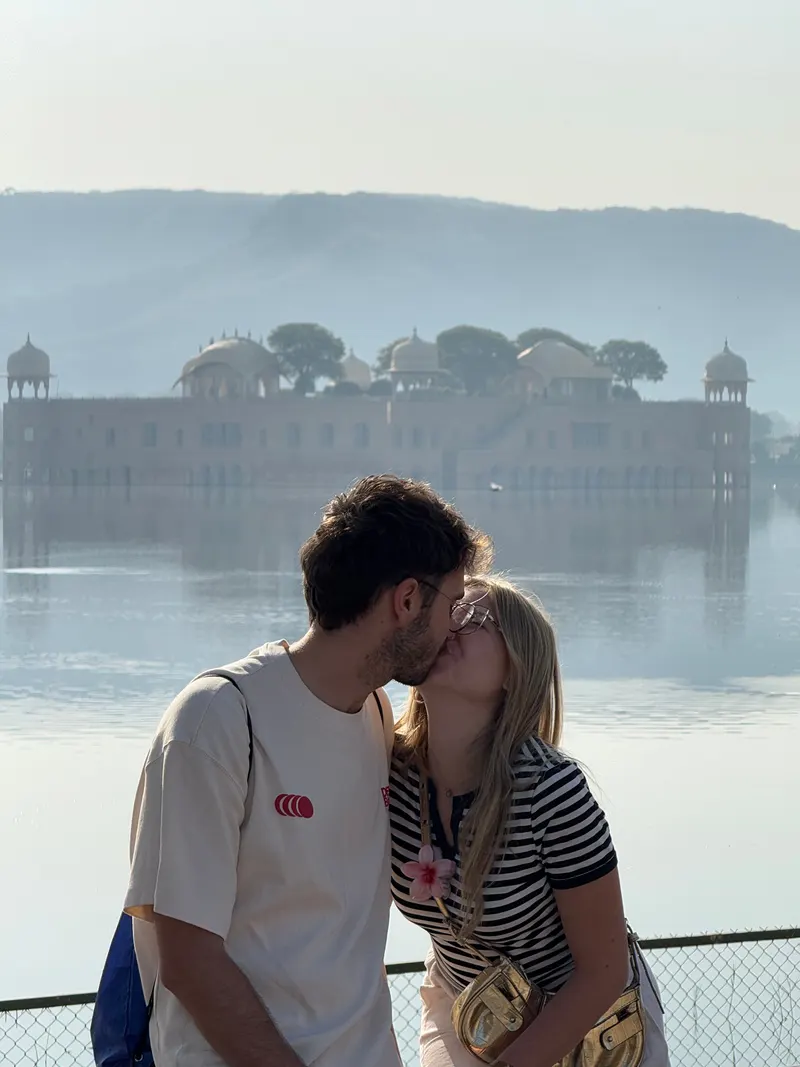
Romantic moment at the Jal Mahal
City Palace and Jantar Mantar
Next, we visited the City Palace, which still serves as the residence of Jaipur’s royal family. This sprawling complex showcases a beautiful blend of Rajasthani and Mughal architecture, with museums displaying royal costumes, weapons, and artifacts that offer a glimpse into the opulent lifestyle of maharajas.
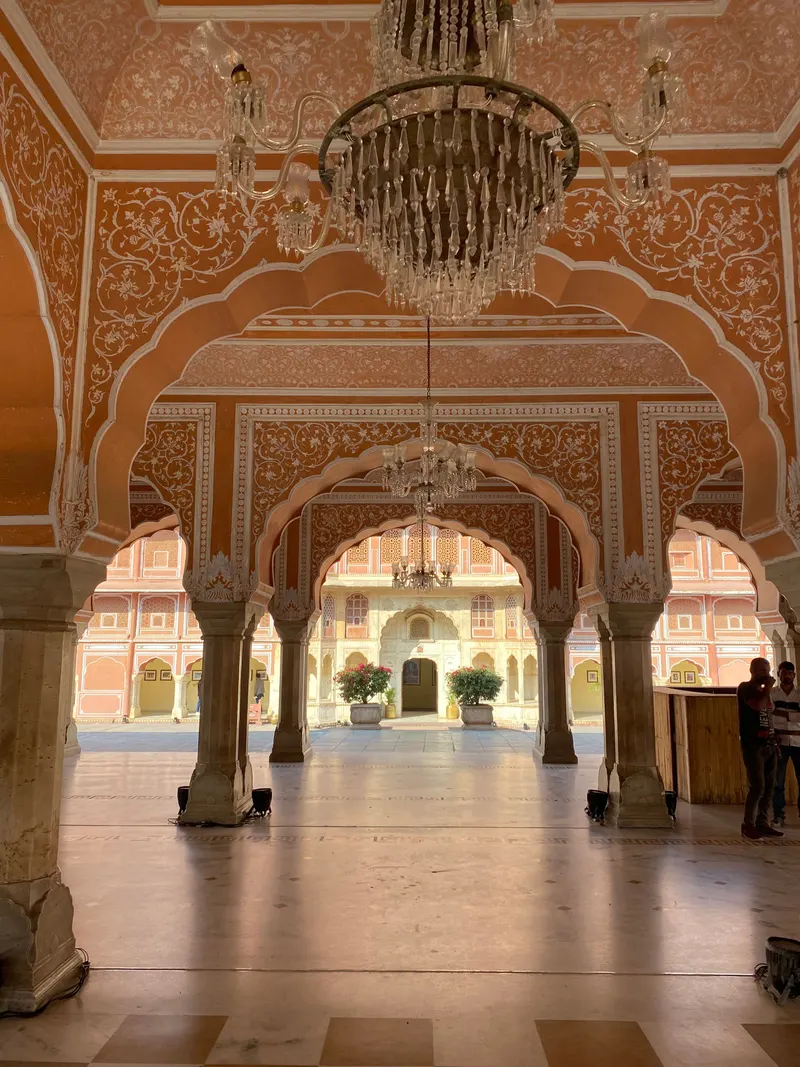
Ornate arches inside the City Palace
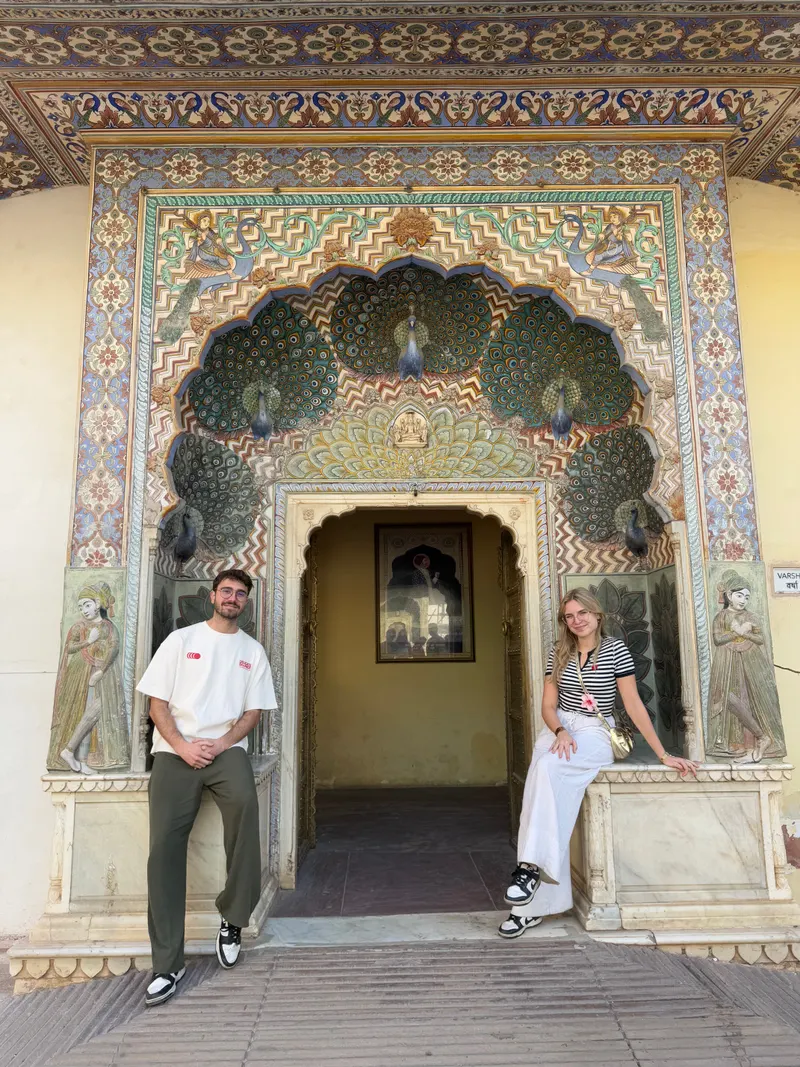
Relaxing in the royal courtyards
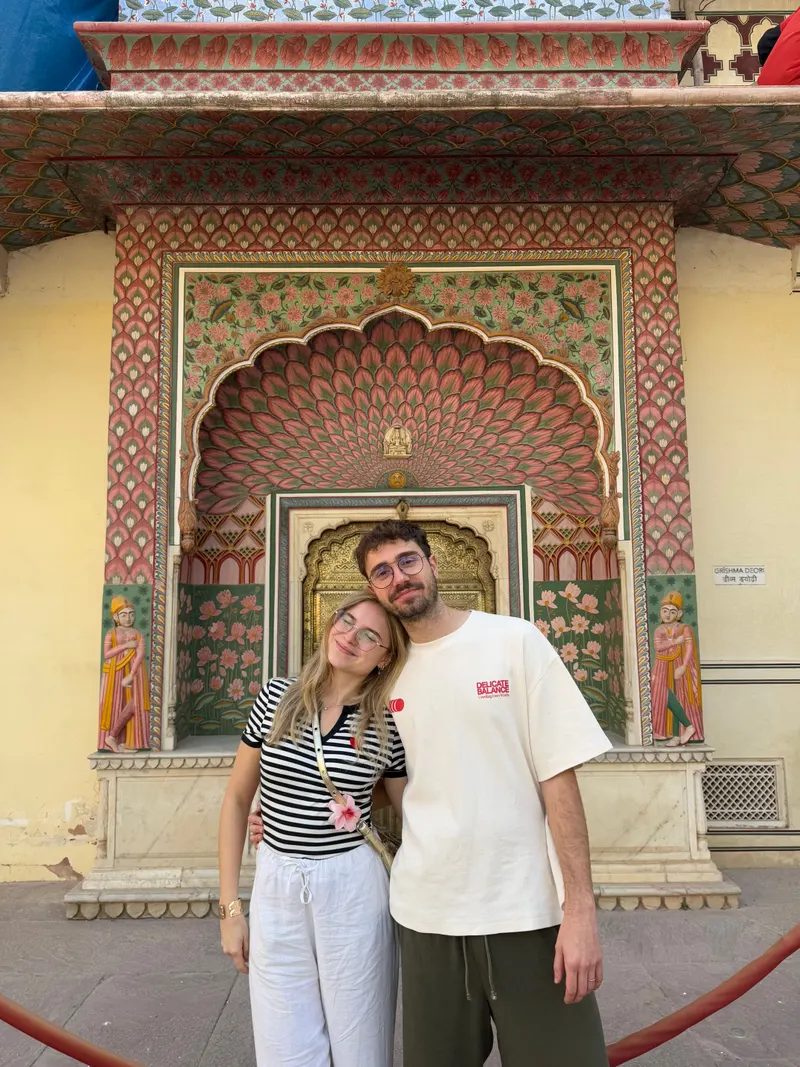
The stunning blend of Rajasthani and Mughal architecture
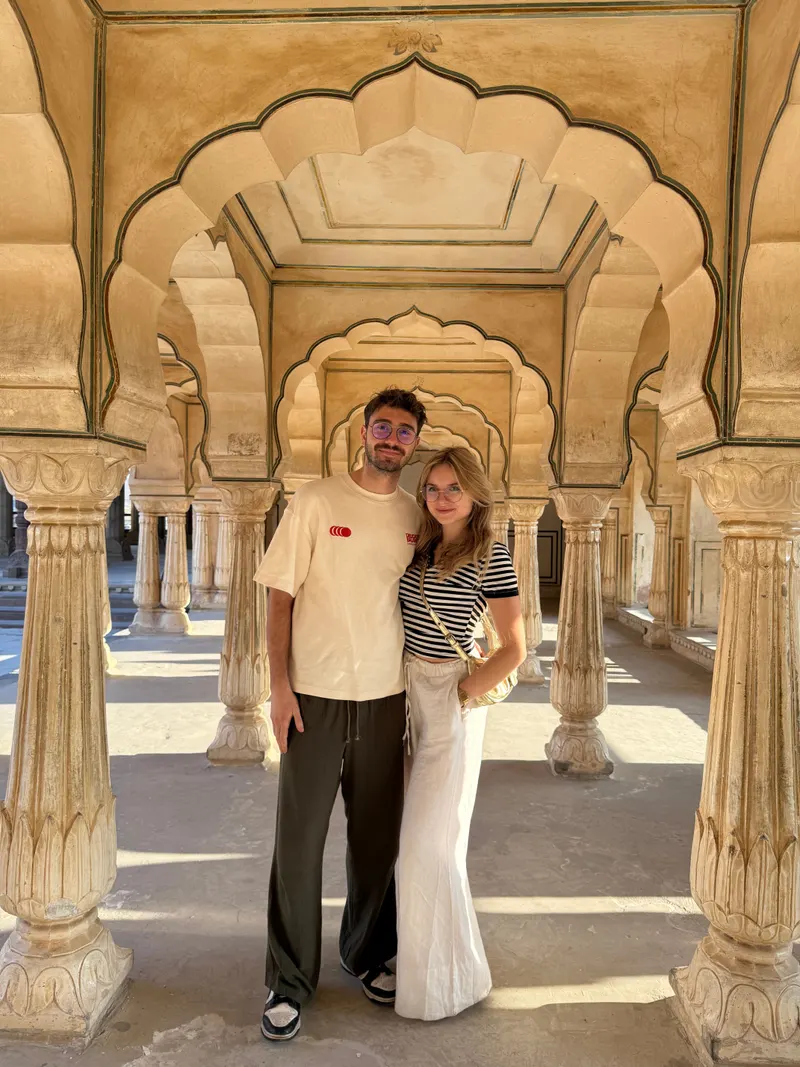
The intricate details of Jaipur's architectural heritage
We also explored Jantar Mantar, an astronomical observation site built in the early 18th century. It features the world’s largest stone sundial and various other astronomical instruments. It’s a UNESCO World Heritage site and a testament to India’s rich scientific history.
All this area is easily walkable, and all these sights are right next to each other, so it’s easy to visit them all together, ideally on the same day, like we did.
Afternoon: Amber Fort
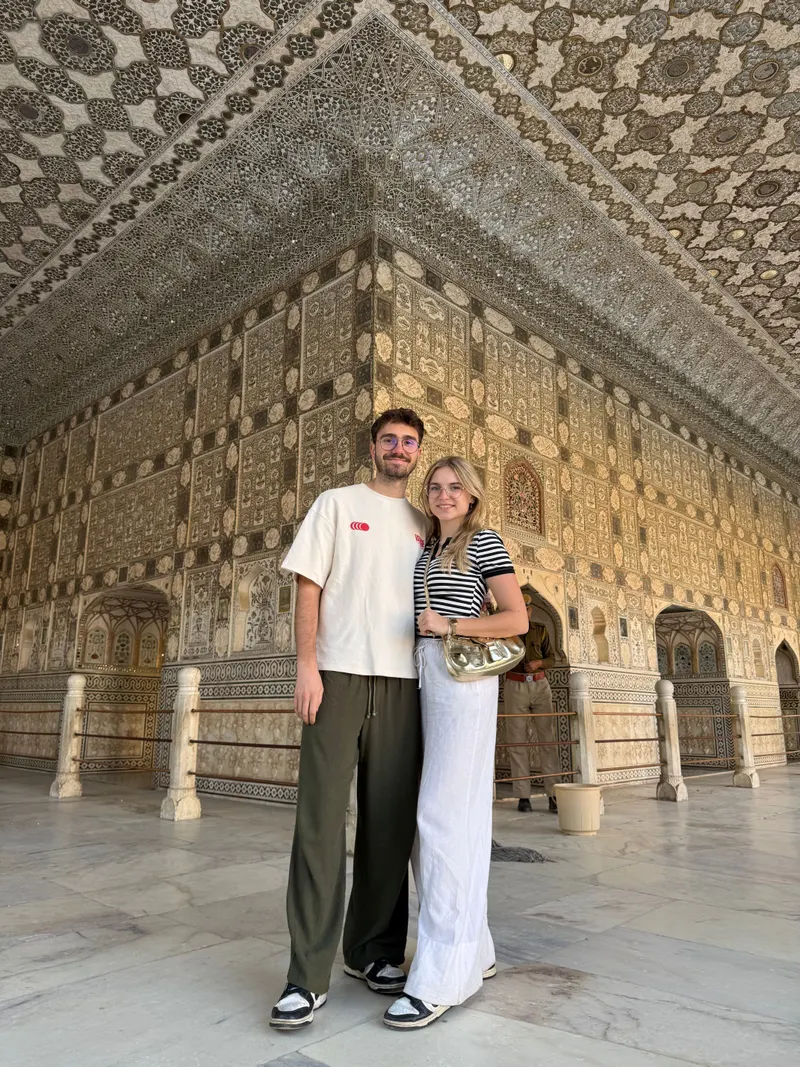
The majestic Amber Fort overlooking the hills
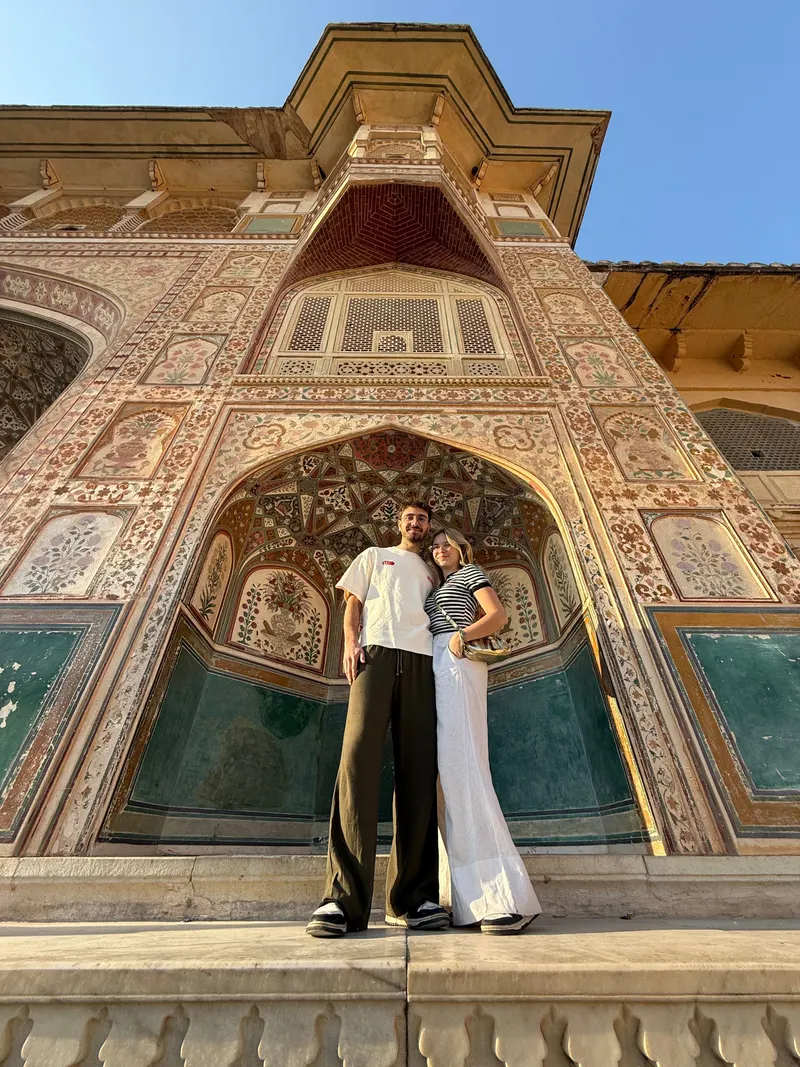
Massive fortification walls protecting the palace
We continued our tour by visiting the magnificent Amber Fort (also known as Amer Fort). This imposing fort-palace is located on a hilltop about 11 kilometers from Jaipur and offers breathtaking views of Maota Lake below. Built in 1592 by Raja Man Singh I, it’s a stunning example of Rajput architecture with its artistic Hindu-style elements.
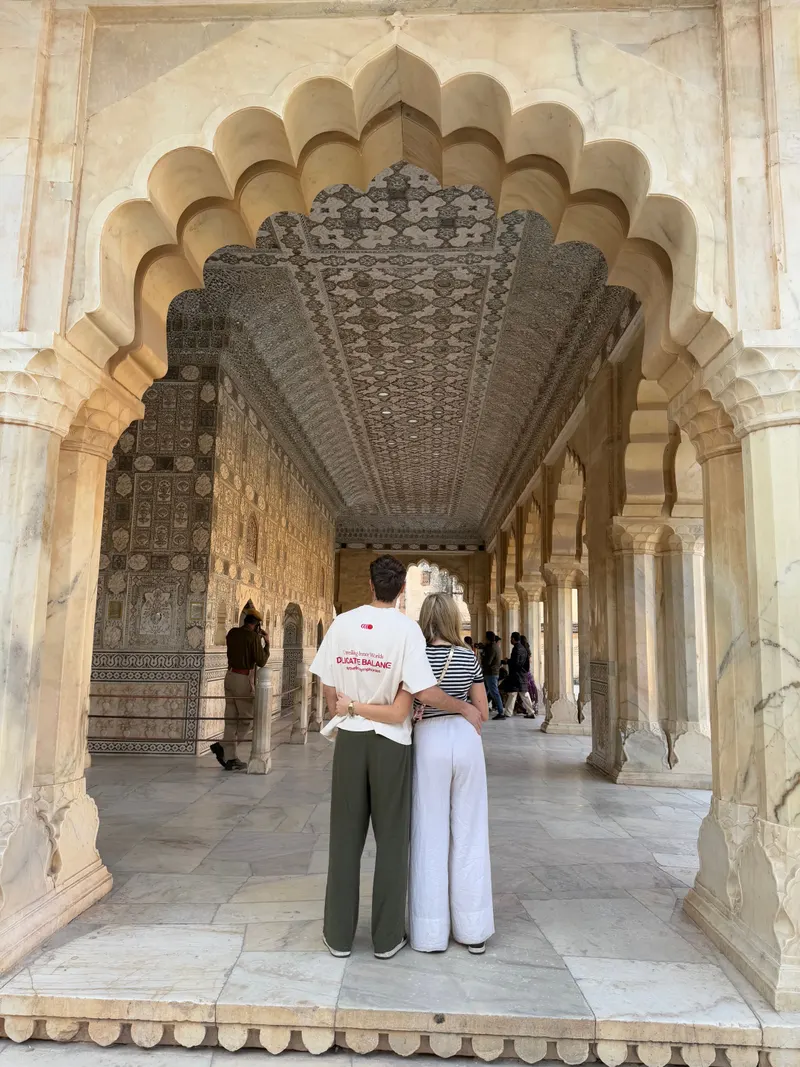
Beautiful archways throughout the fort
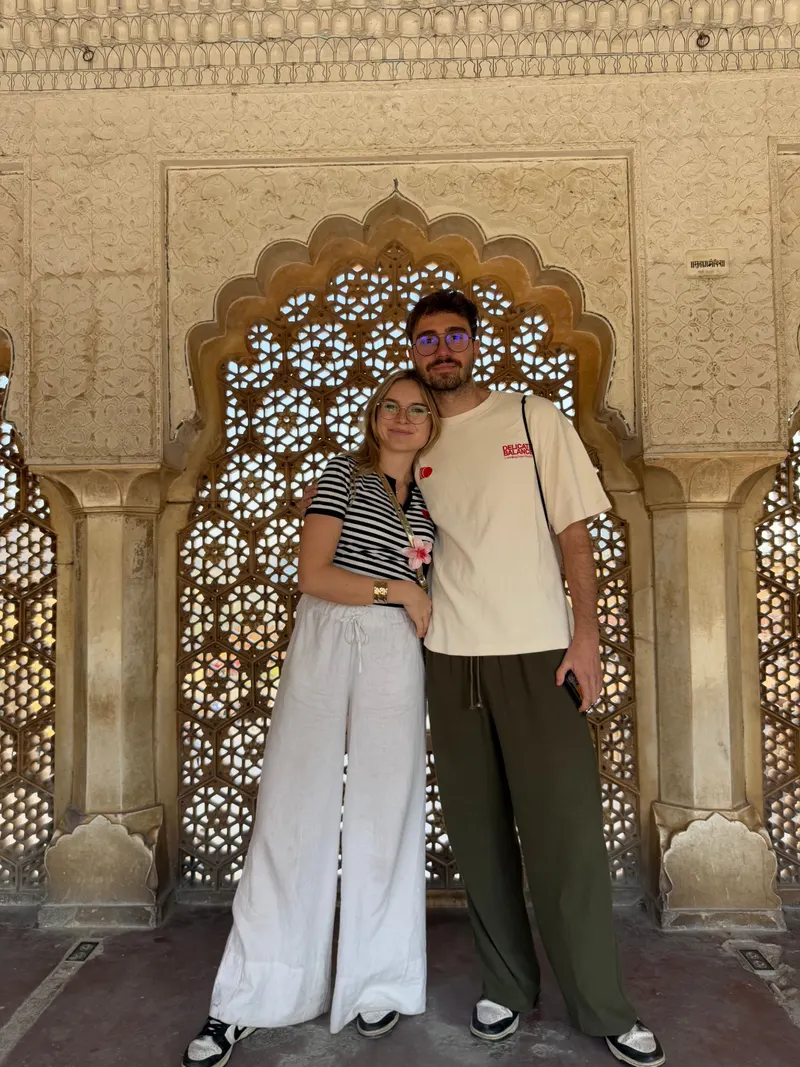
Every corner reveals new architectural wonders
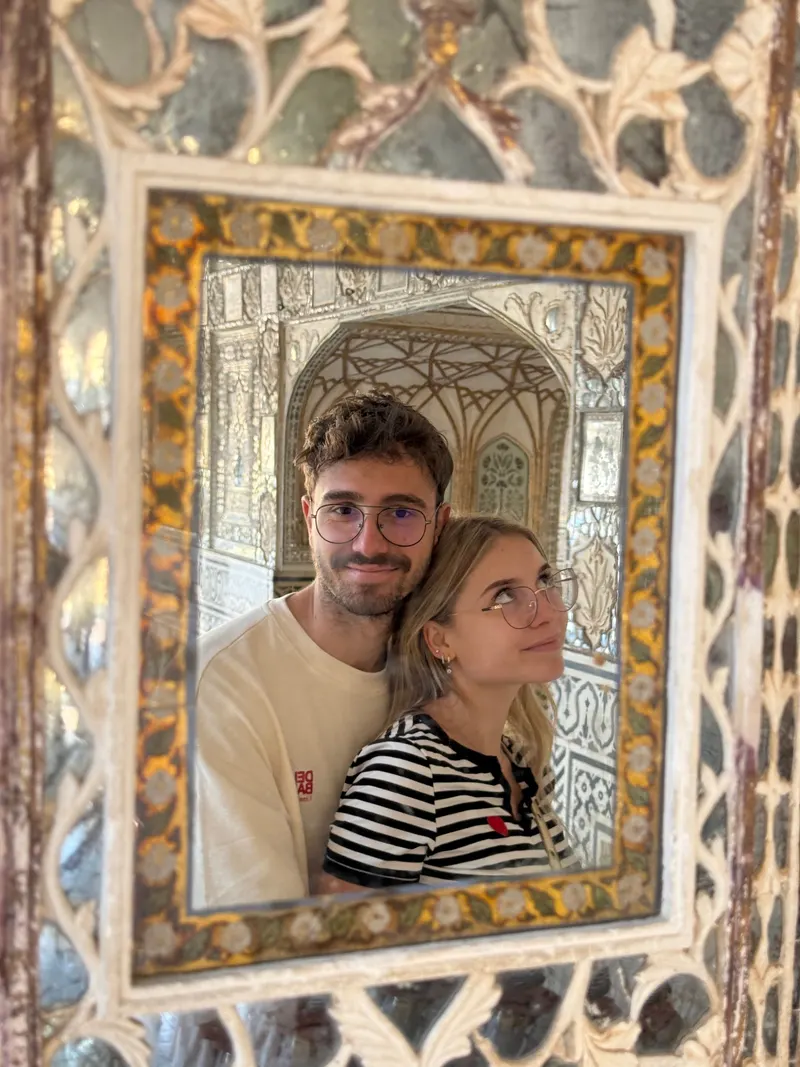
The famous Sheesh Mahal (Mirror Palace)
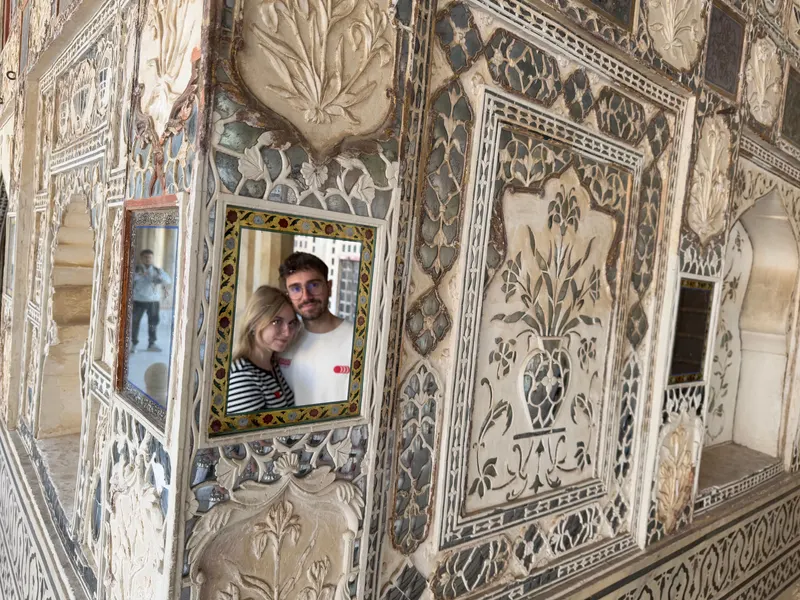
Intricate mirror work
The highlight is definitely the Sheesh Mahal (Mirror Palace), where tiny mirrors cover the walls and ceiling. It’s said that a single candle could illuminate the entire room through the reflection of thousands of mirrors. The craftsmanship is absolutely extraordinary.
After exploring the fort, we had some delicious parathas just outside: simple, authentic, and absolutely satisfying after hours of walking.
Rajasthani Cuisine
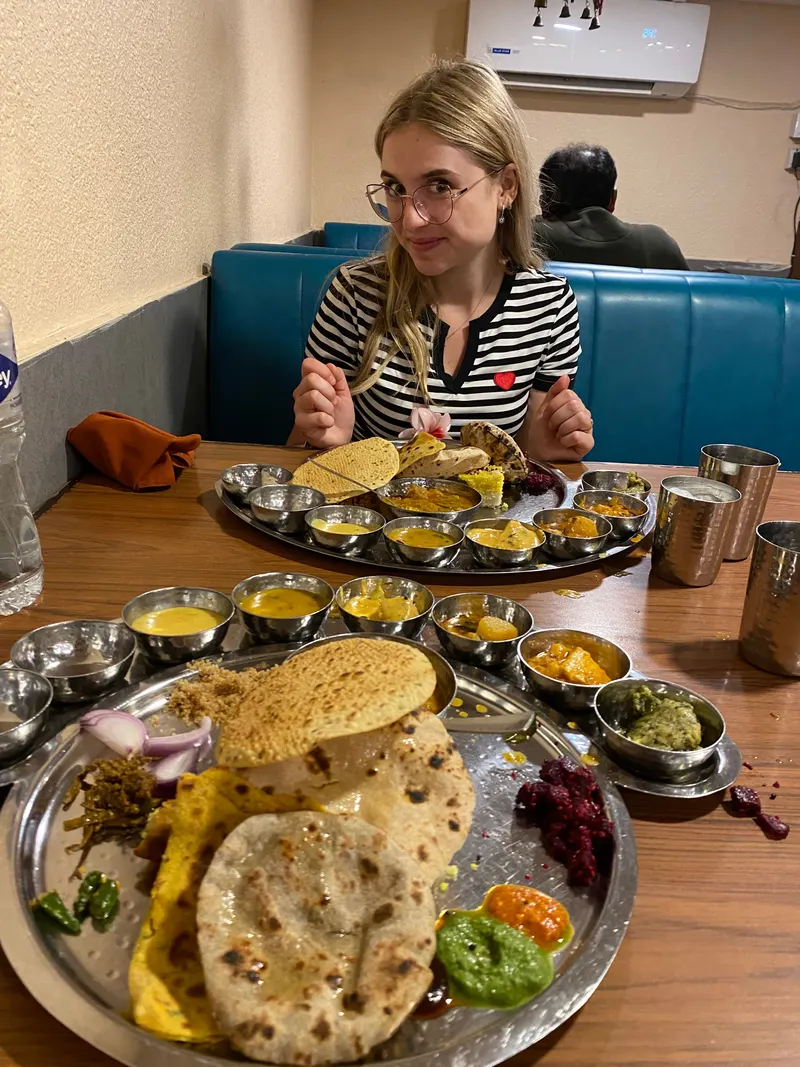
Colorful local dishes bursting with flavor
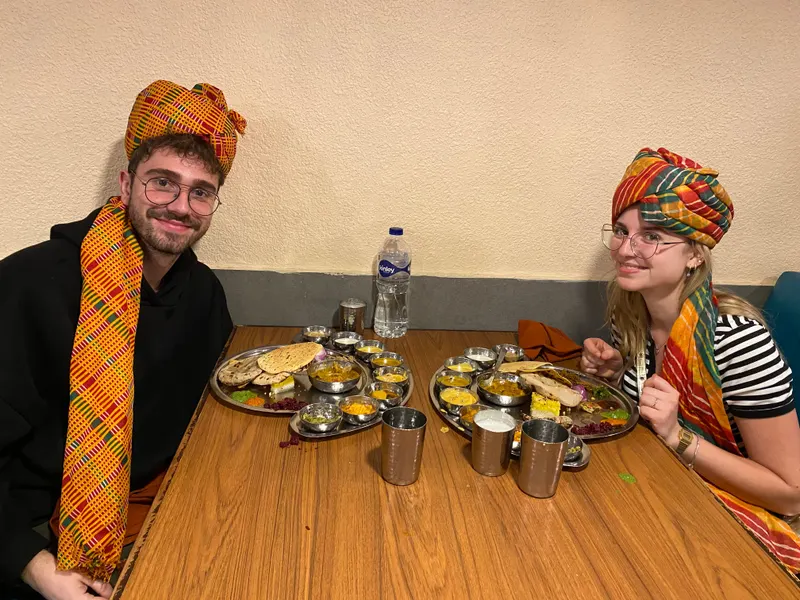
Dining experience with cultural performances
The food in Rajasthan is completely different from what you’ll find in Delhi or Agra. It’s spicier, more colorful, and heavily influenced by the desert climate. Don’t miss dishes like dal baati churma, laal maas, and gatte ki sabzi.
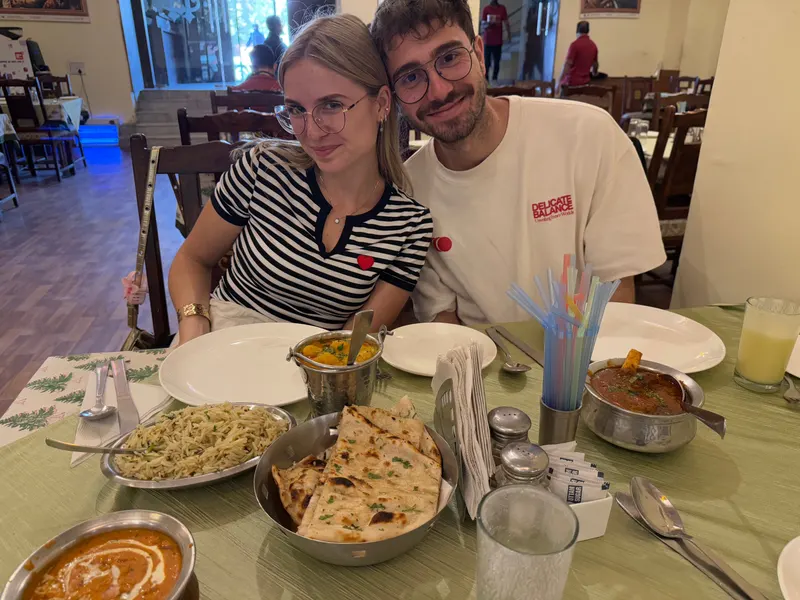
Every meal in India is a feast for the senses
What We Skipped in Jaipur
If you have more time, you can visit the Nahargarh Fort for sunset views, explore the Albert Hall Museum, or shop for textiles and jewelry in the local bazaars. We were a bit short on time, so we left these for our next visit.
Days 3-4: Back to Delhi
In the evening, it was time to head back to Delhi, where we started and where we’d be spending the last day and a half. Delhi is full of attractions to see, and it’s such a huge metropolis that you’ll need to choose carefully what you want to visit if you’re on a short trip like ours.
What We Managed to Visit in Delhi
Swaminarayan Akshardham: This massive Hindu temple complex is one of the largest in the world. Built in 2005, it showcases 10,000 years of Indian culture, spirituality, and architecture. The intricate carvings and the musical fountain show are absolutely spectacular.
India Gate: This 42-meter-tall war memorial honors the 70,000 Indian soldiers who died in World War I. It’s particularly beautiful at sunset and is a popular gathering spot for locals and tourists alike.
The war memorial that has become Delhi's iconic landmark
Jama Masjid: India’s largest mosque, built by Mughal Emperor Shah Jahan in 1656. Its massive courtyard can accommodate 25,000 worshippers. Climbing the minaret offers panoramic views of Old Delhi.
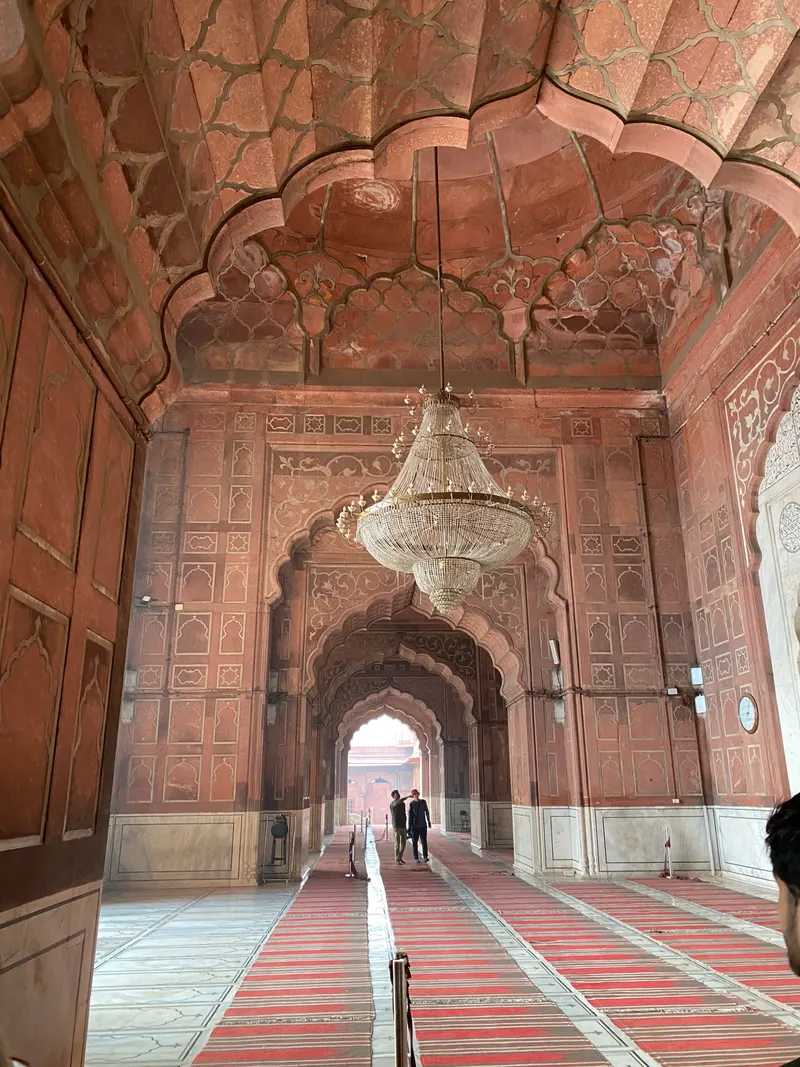
The stunning architecture of Jama Masjid
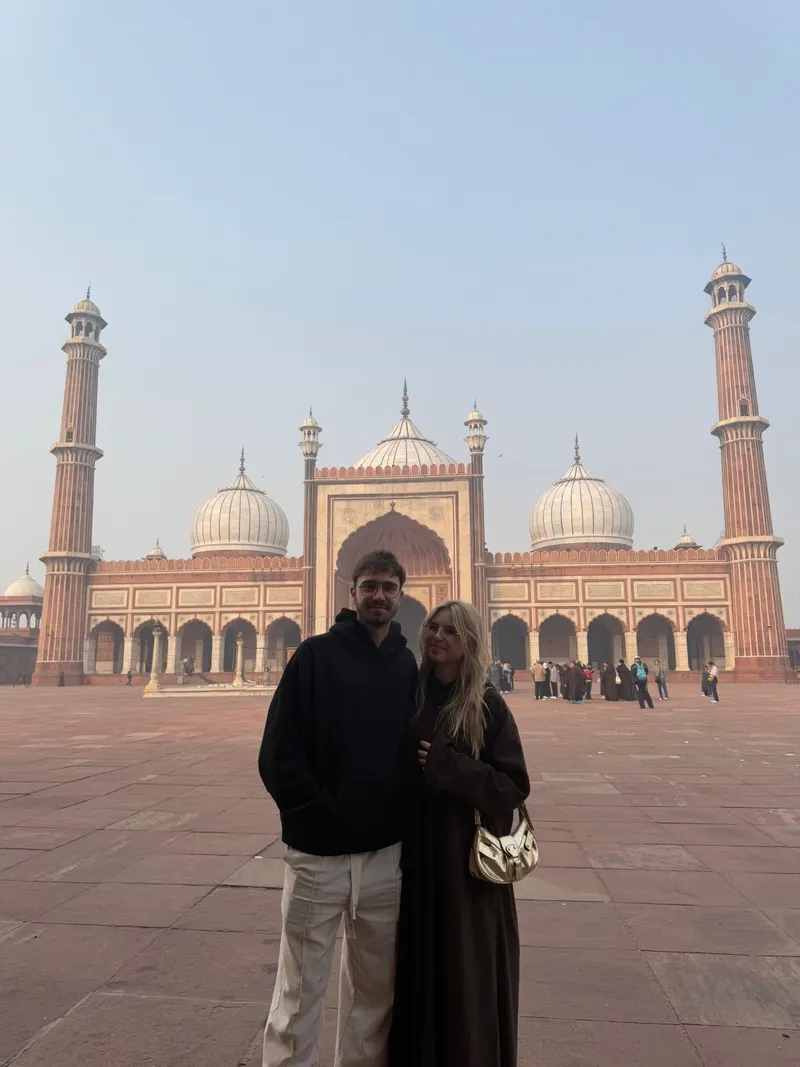
India's largest mosque can hold 25,000 worshippers
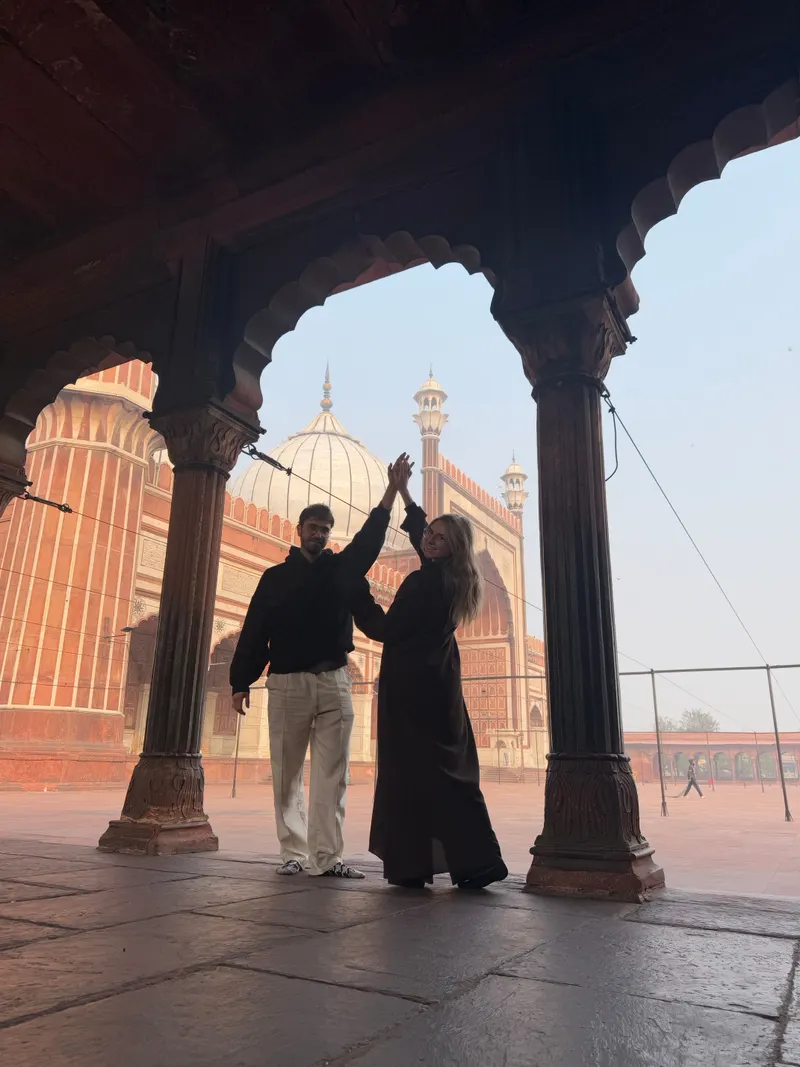
Exploring the peaceful courtyards of Jama Masjid
Red Fort: Another UNESCO World Heritage site, this massive red sandstone fort served as the main residence of Mughal emperors for nearly 200 years. The evening light and sound show brings the history to life.
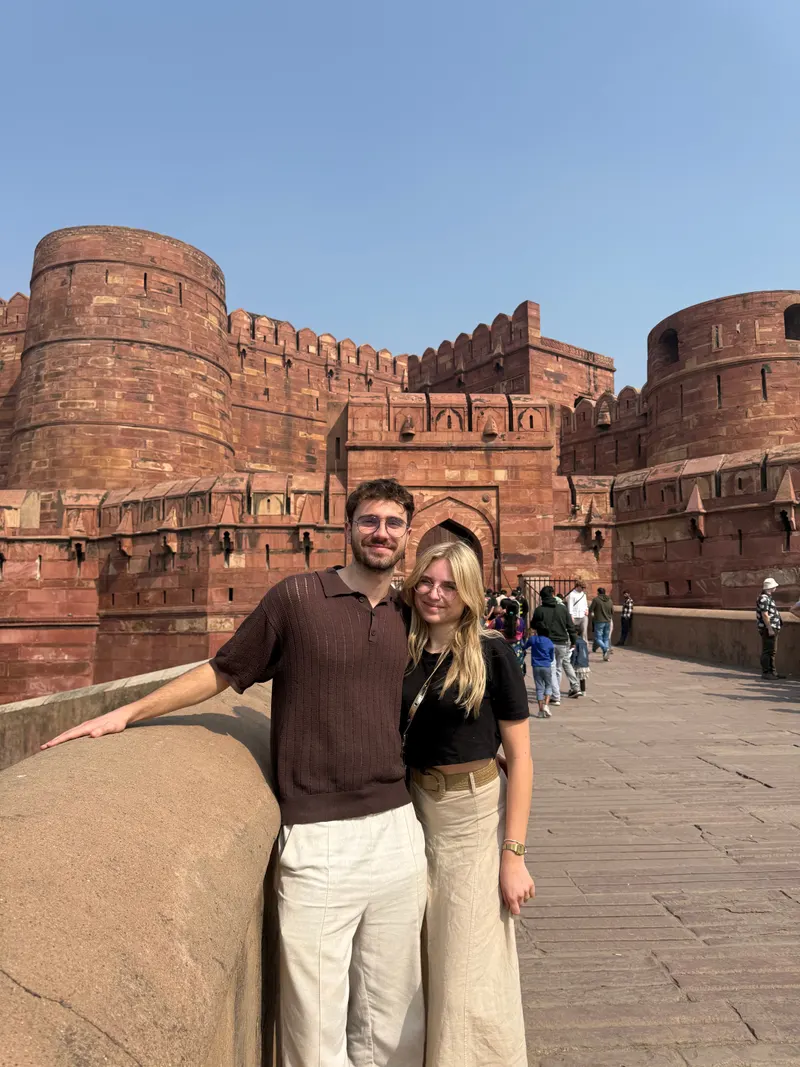
The imposing Red Fort, seat of Mughal power
Chandni Chowk Market and Naughara Gali: We explored this incredibly chaotic but fascinating market area on a cycle rickshaw. The narrow lanes are packed with shops selling everything from spices to jewelry. The hidden Naughara Gali is a maze of even narrower alleys where you’ll find authentic street food and local life at its most vibrant.
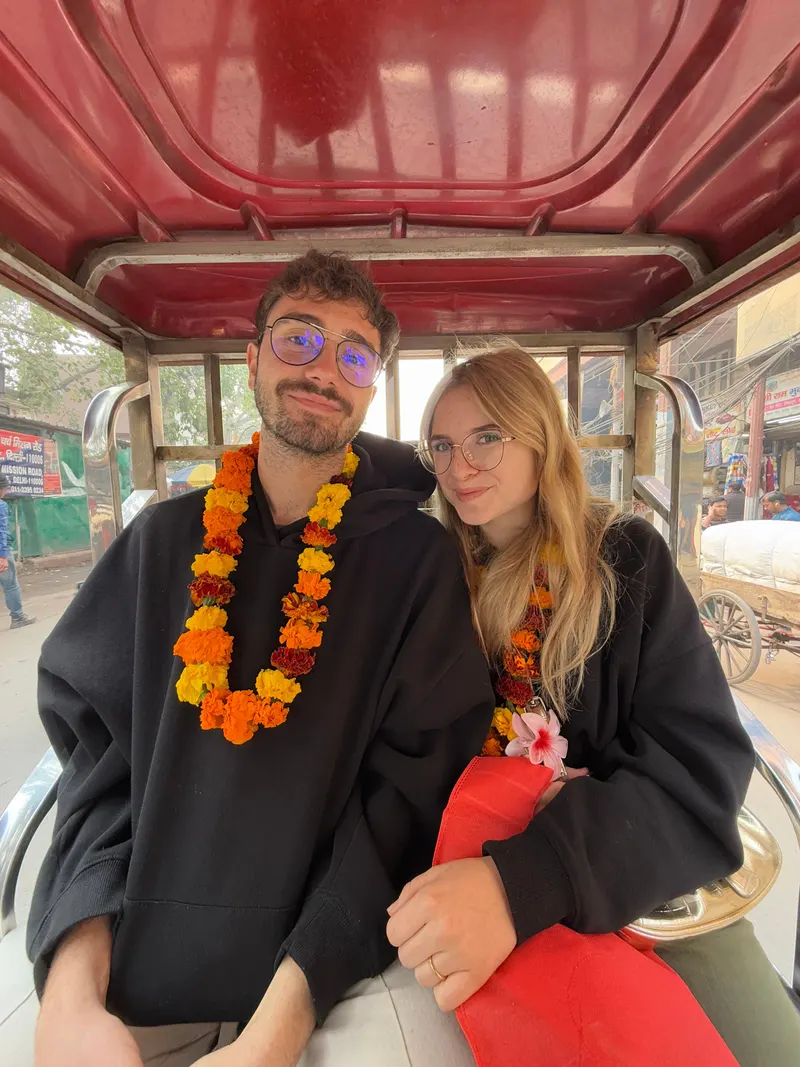
Navigating the chaotic lanes of Chandni Chowk by rickshaw
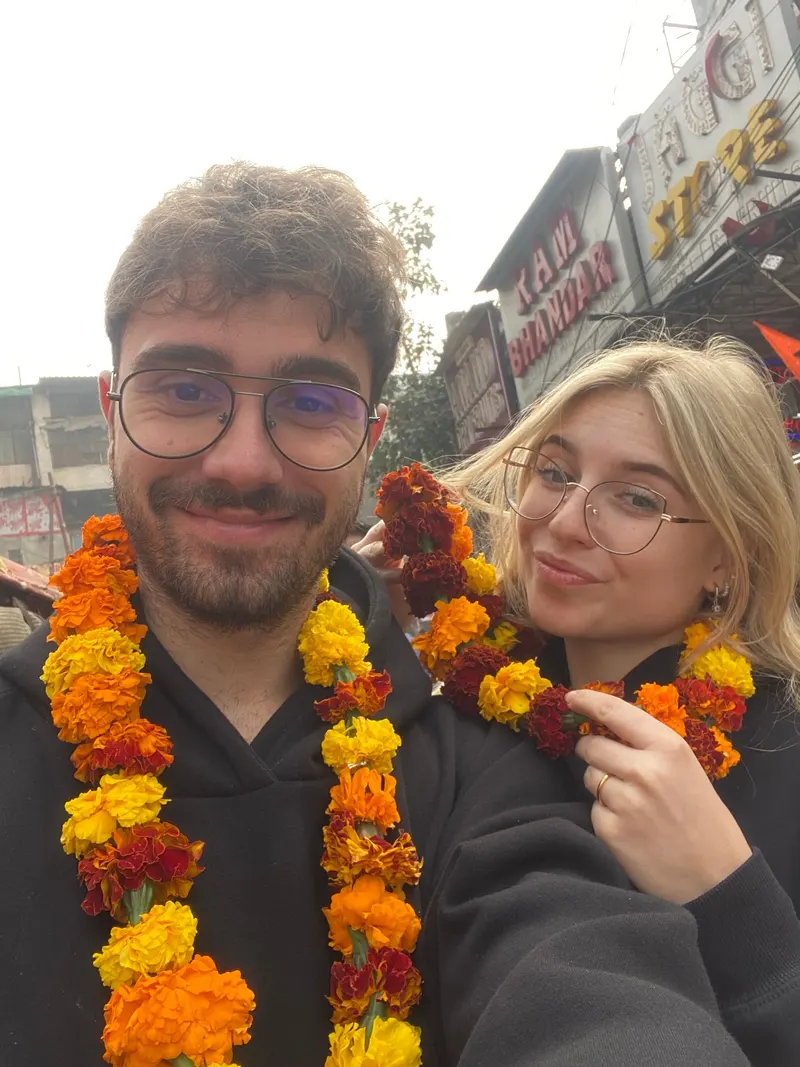
Colorful flower garlands filling the market streets
Don’t miss trying Delhi’s famous street food, especially the butter chicken, which originated in this city, and the crispy samosas served with tangy chutney.
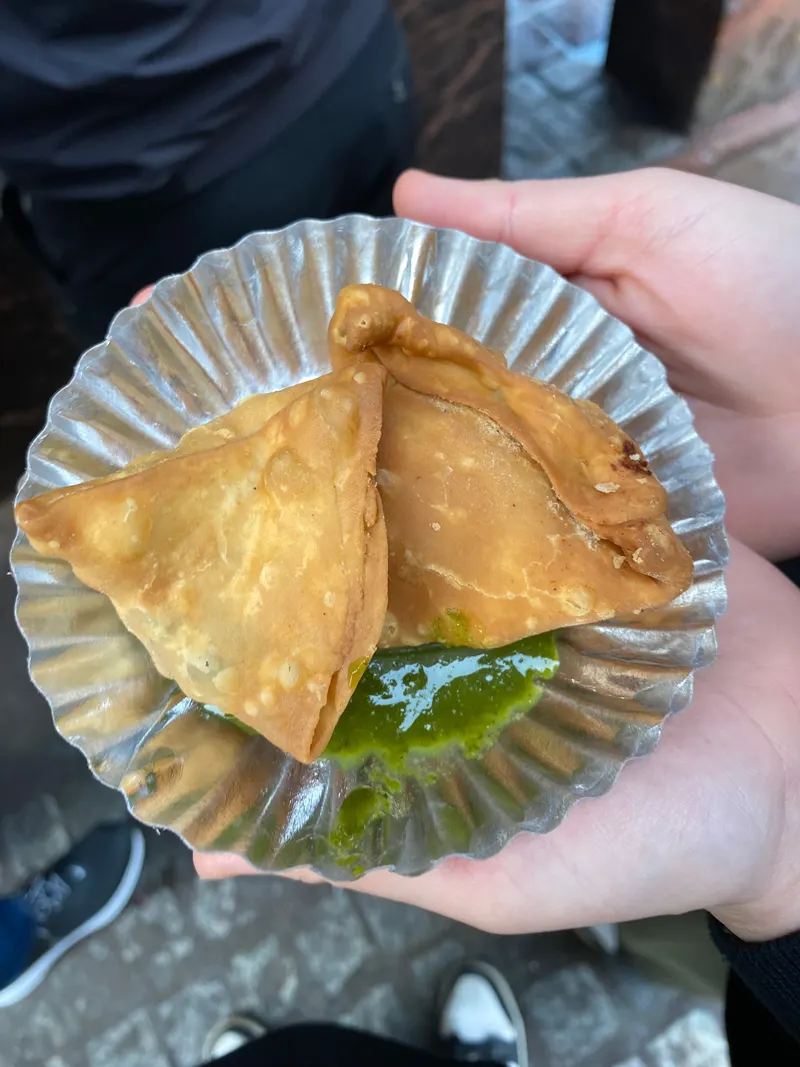
Crispy samosas fresh from the street vendor
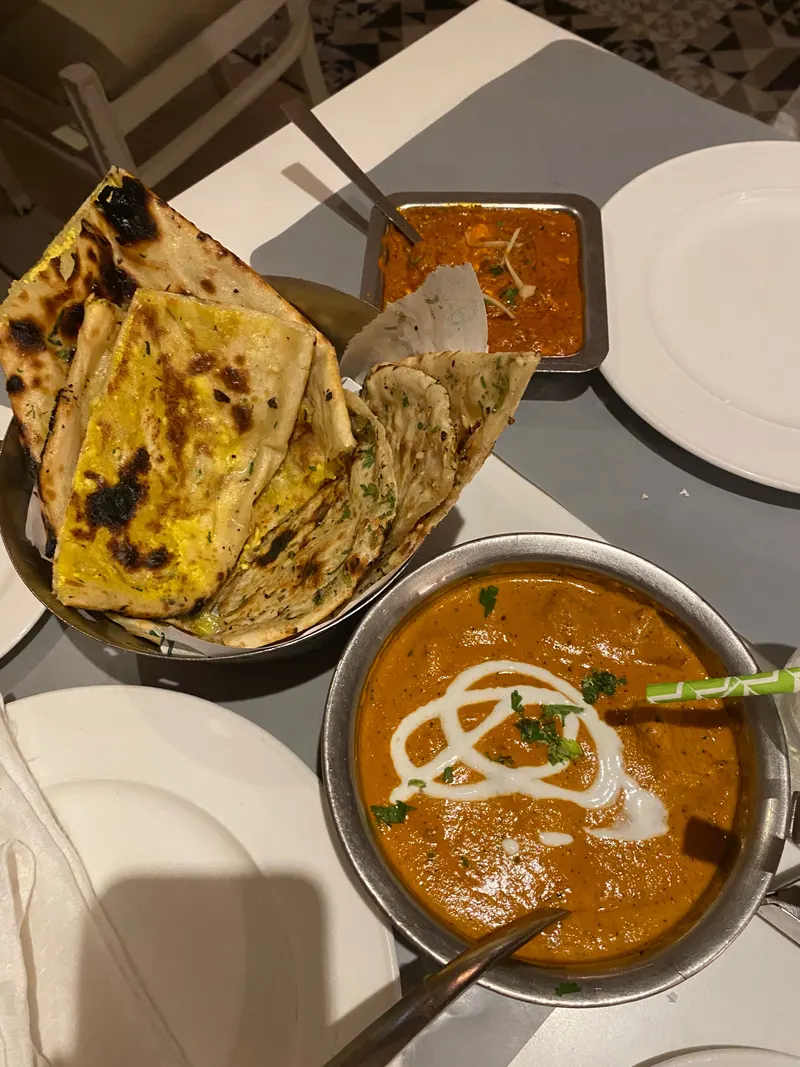
Delhi's legendary butter chicken
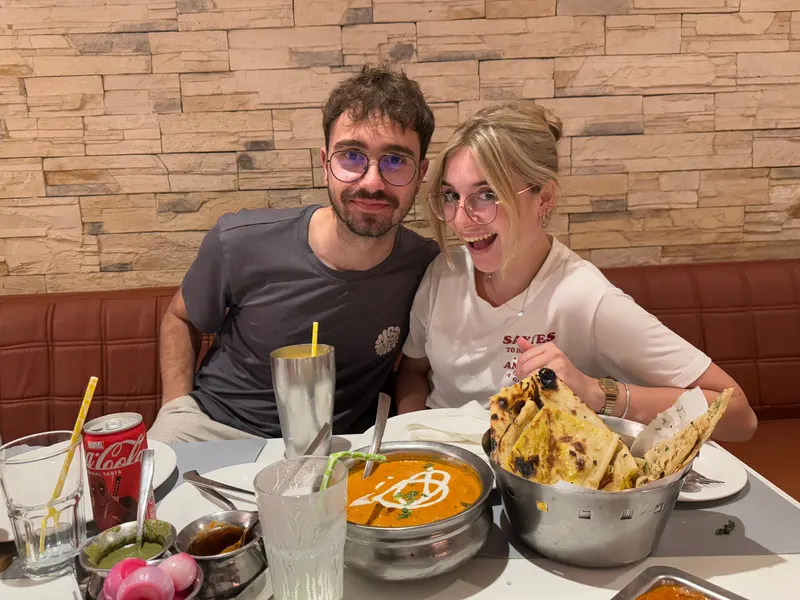
Rich, creamy, and utterly delicious
Humayun’s Tomb: This tomb, built in 1565, is considered a precursor to the Taj Mahal and is one of the best-preserved Mughal monuments in Delhi. The perfectly symmetrical gardens and the red sandstone architecture are breathtaking.
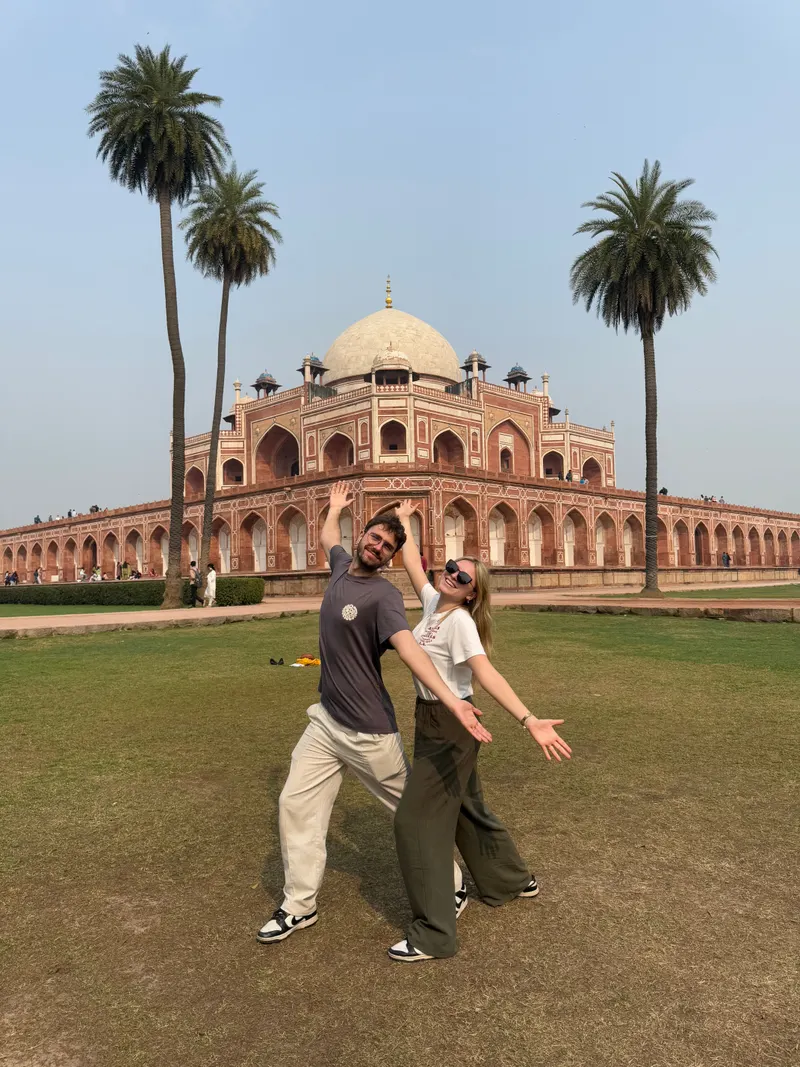
The magnificent Mughal garden tomb
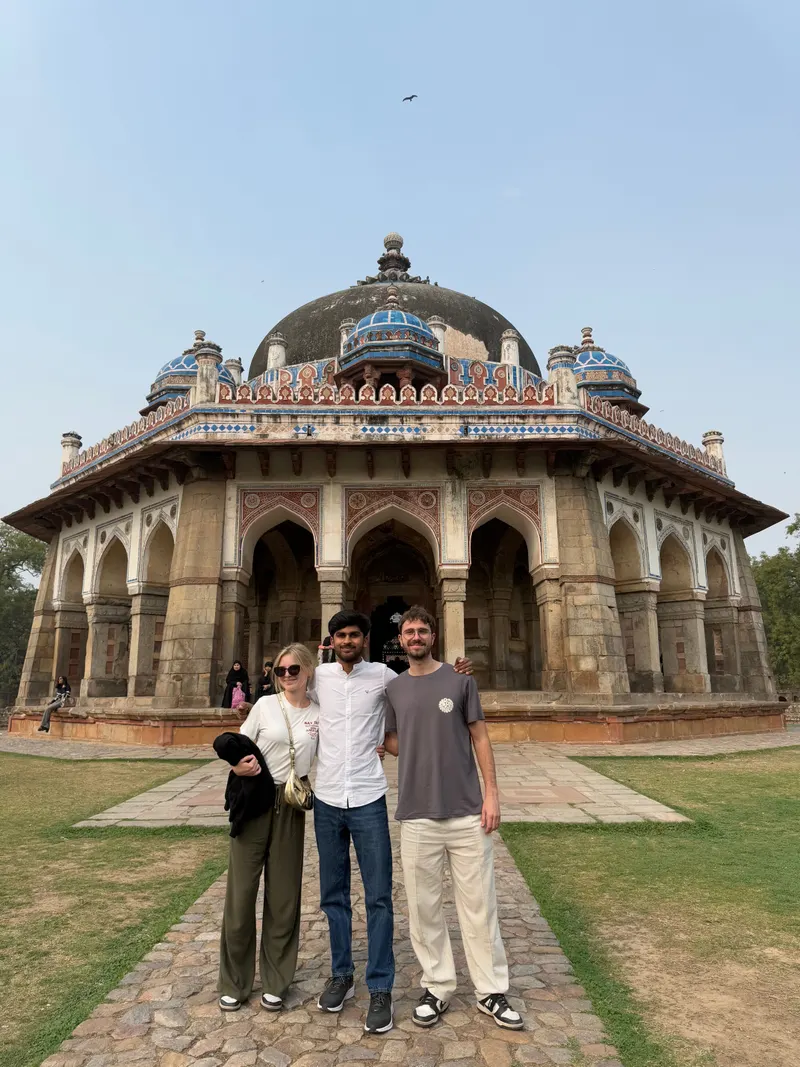
Learning about Mughal history at Humayun's Tomb
Gurudwara Bangla Sahib: This beautiful Sikh temple is one of the most prominent gurdwaras in Delhi. We had an incredibly moving experience here, cooking roti for people in need with local Sikh volunteers in the community kitchen (langar). The atmosphere of selfless service and equality is truly inspiring. Everyone sits together on the floor to eat, regardless of background or status.
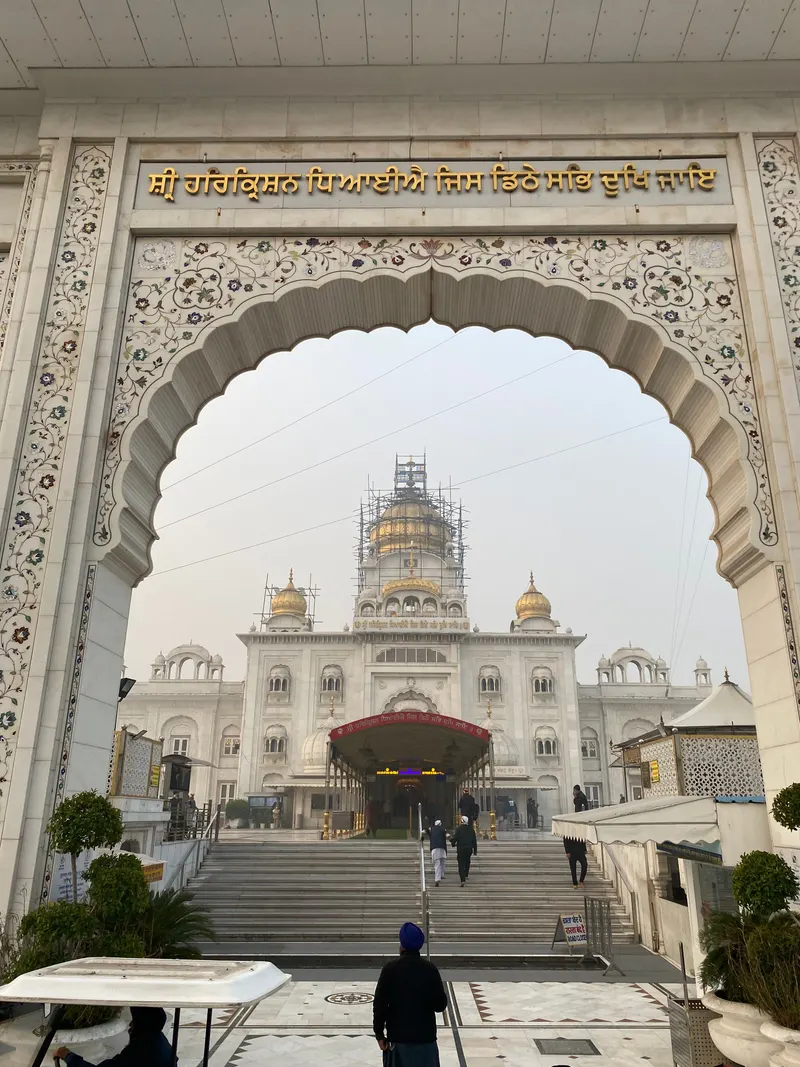
The serene Sikh temple with its golden dome
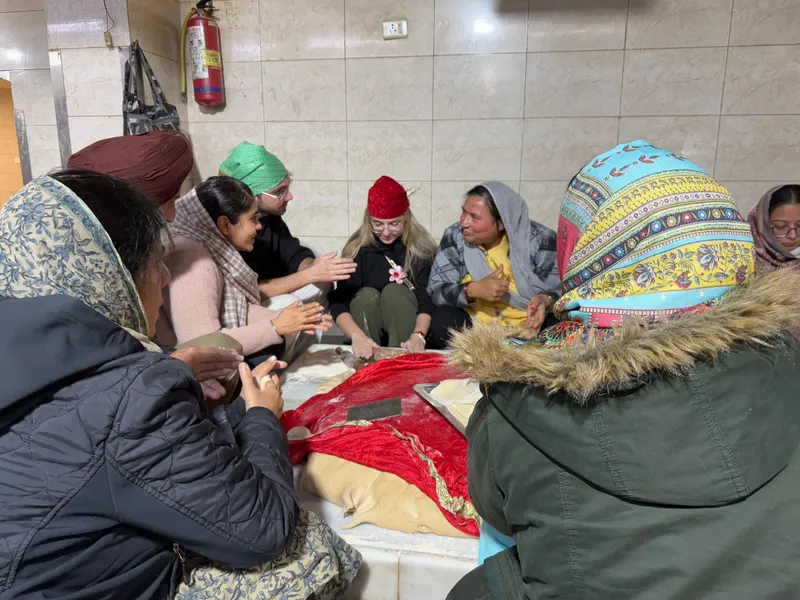
Rolling out rotis in the community kitchen

Connecting with locals while serving the community
Lotus Temple: This Bahá’í House of Worship is shaped like a lotus flower with 27 marble-clad “petals.” It’s open to all religions and is a remarkable example of modern architecture. The peaceful atmosphere makes it a perfect place for meditation and reflection.
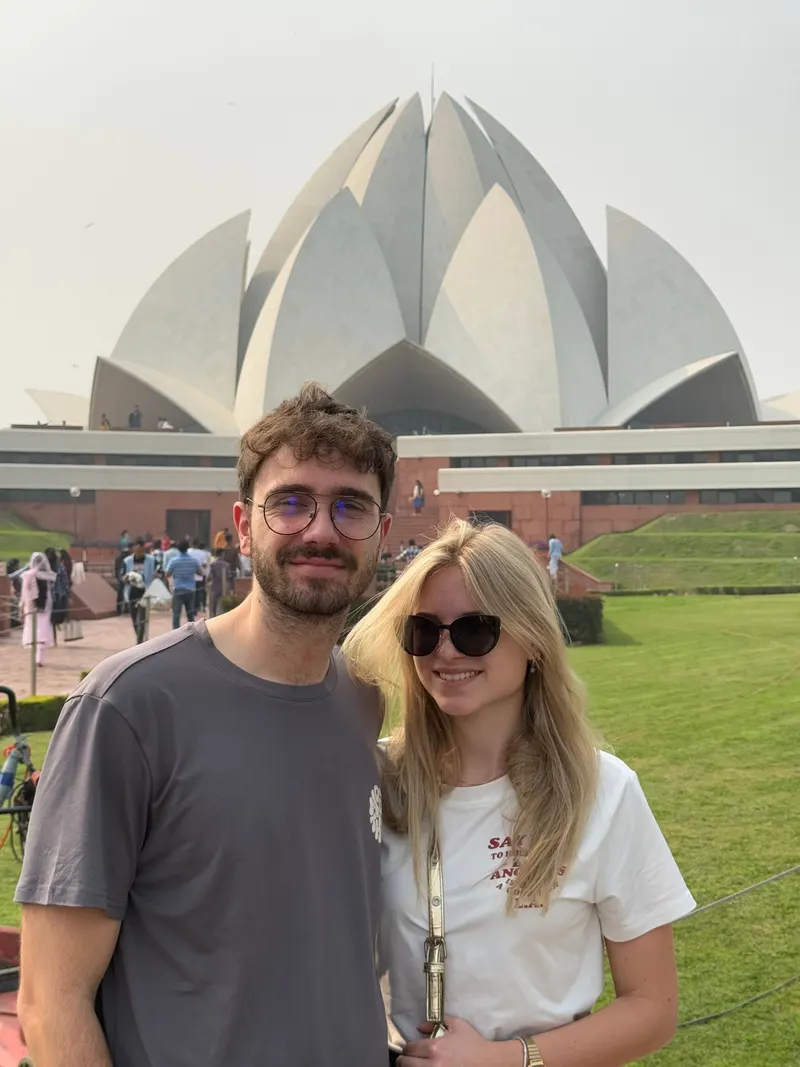
The stunning Lotus Temple, a Bahá'í House of Worship
Qutub Minar: This 73-meter-tall victory tower is the tallest brick minaret in the world. Built in 1193, it’s surrounded by several other ancient monuments, including the famous Iron Pillar that has stood for over 1,600 years without rusting, a metallurgical marvel that still puzzles scientists today.
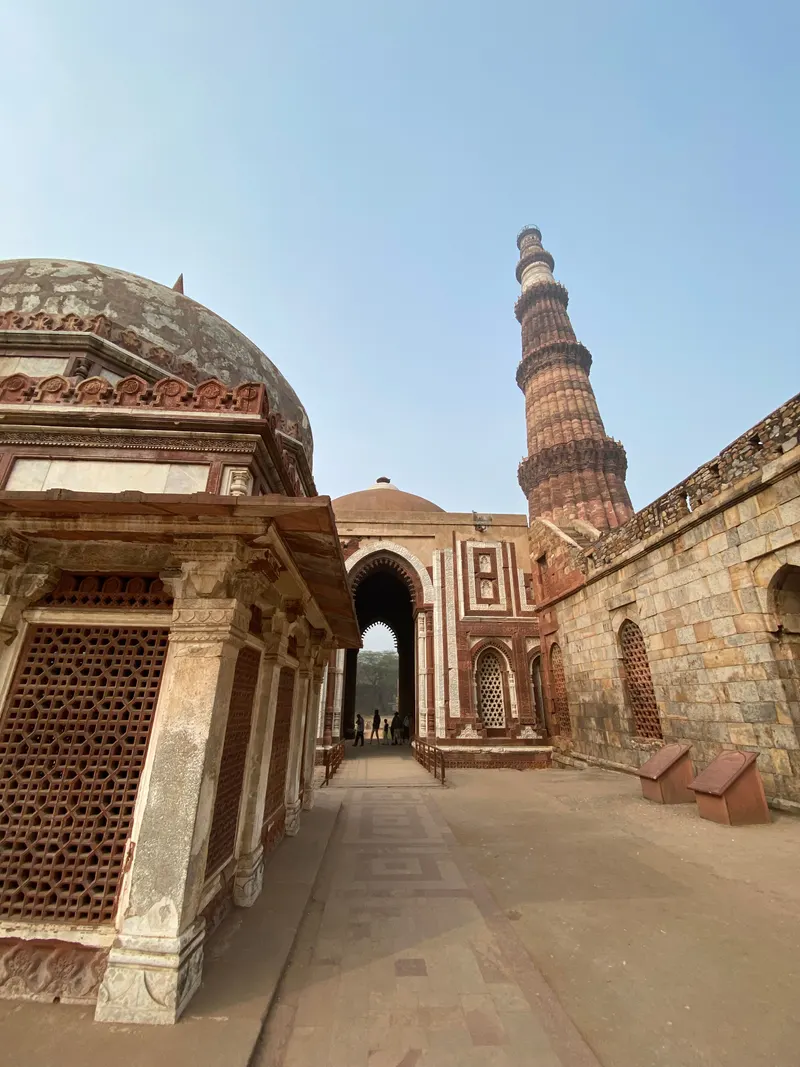
The towering Qutub Minar and ancient temple ruins
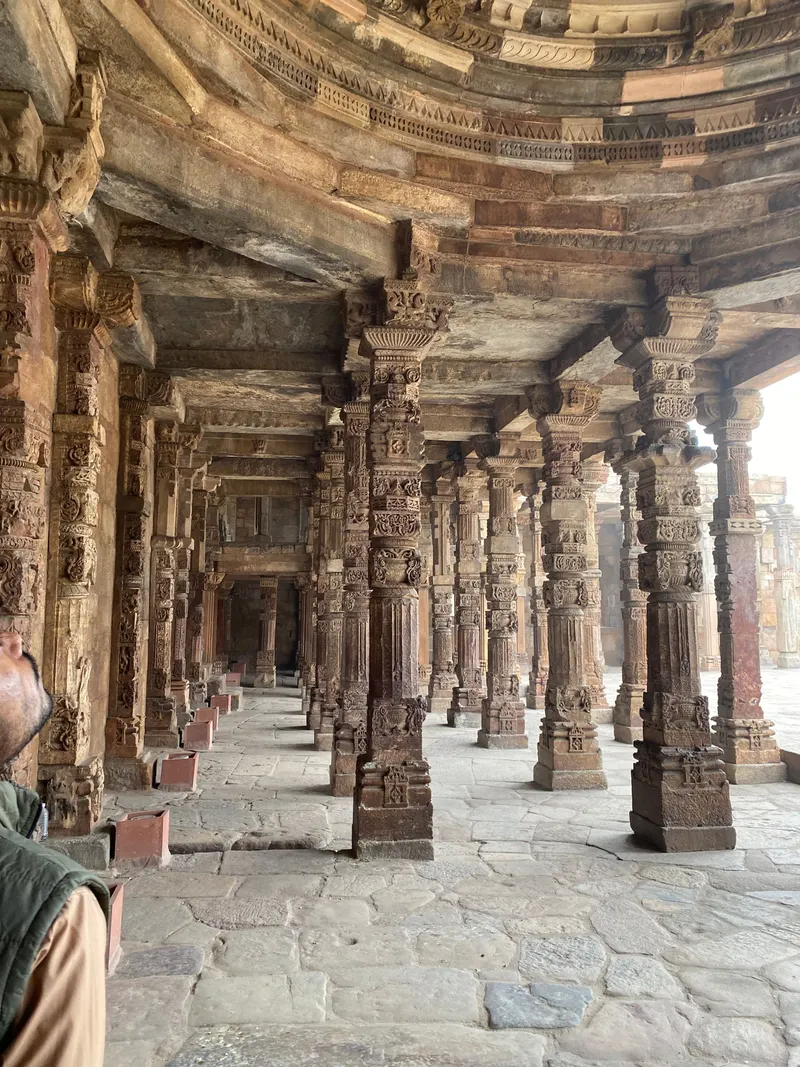
Qutub Minar's intricate columns
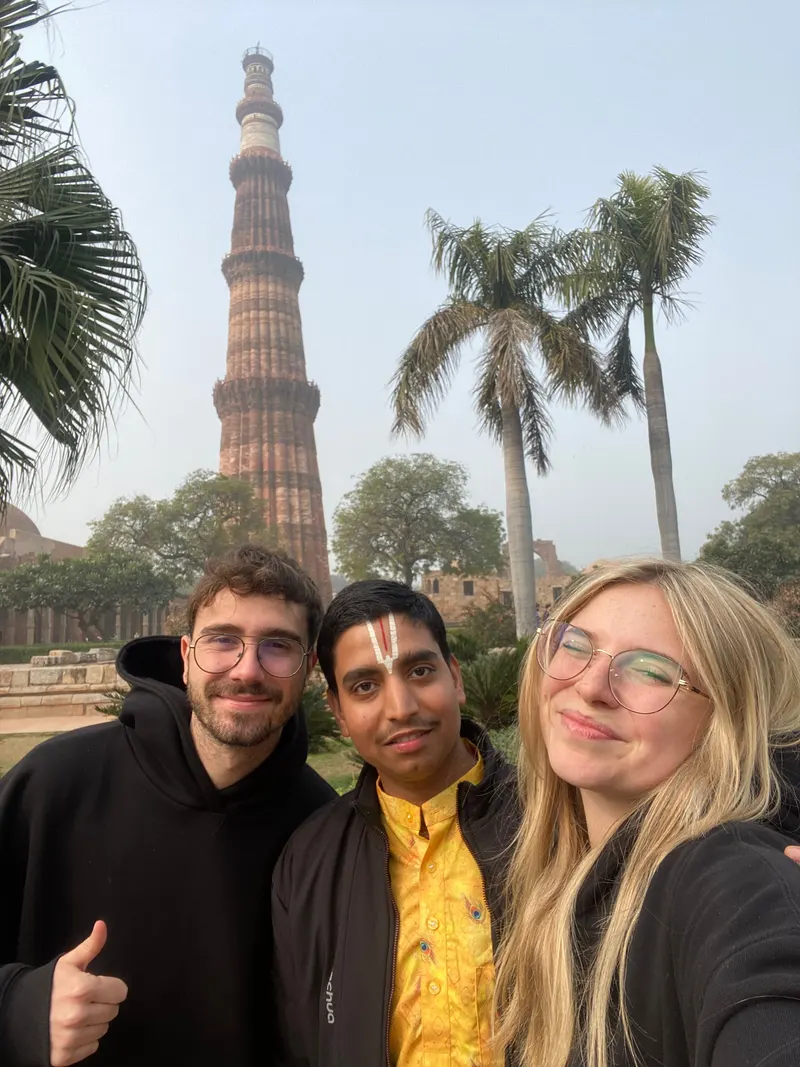
Final stop with our guide at the Qutub Minar
Final Thoughts
The Golden Triangle is the perfect introduction to India’s incredible diversity, rich history, and vibrant culture. In just 4 days, you’ll experience the romance of the Taj Mahal, the royal heritage of Jaipur, and the bustling energy of Delhi. While it’s intense and fast-paced, every moment is worth it.
Tips for Your Golden Triangle Trip
- Hire a knowledgeable local guide: This made our trip infinitely easier and more enriching
- Visit in winter (November-February): The weather is pleasant, though be prepared for fog
- Don’t skip the “extras”: Pay to enter the Taj Mahal interior, take the rickshaw ride, cook at the Gurudwara
- Bring cash: Many small vendors and street food stalls don’t accept cards
- Dress modestly: Especially when visiting religious sites: cover your shoulders and knees
- Stay flexible: Traffic, weather, and crowds can affect your schedule
- Try the local food: From street samosas to butter chicken, the cuisine is unforgettable
What We’re Saving for Next Time
There’s so much more to explore in this region:
- Agra Fort and Baby Taj (Itmad-ud-Daulah)
- Nahargarh Fort sunset in Jaipur
- Albert Hall Museum
- More time exploring Delhi’s neighborhoods
- Fatehpur Sikri (ancient Mughal capital near Agra)
- Ranthambore National Park for tiger spotting
India grabbed our hearts and left us wanting more. The Golden Triangle is just the beginning. We can’t wait to return and explore deeper into this fascinating country.