
Morocco had been on my list for a long time, and it did not disappoint. In one week I went from getting lost in Marrakech’s medina to chasing waterfalls near Ouzoud, sleeping under the stars in the Sahara, and wandering what might be the biggest pedestrian zone in the world in Fes. It is a country that rewards travelers who are happy to put the map away and just wander.
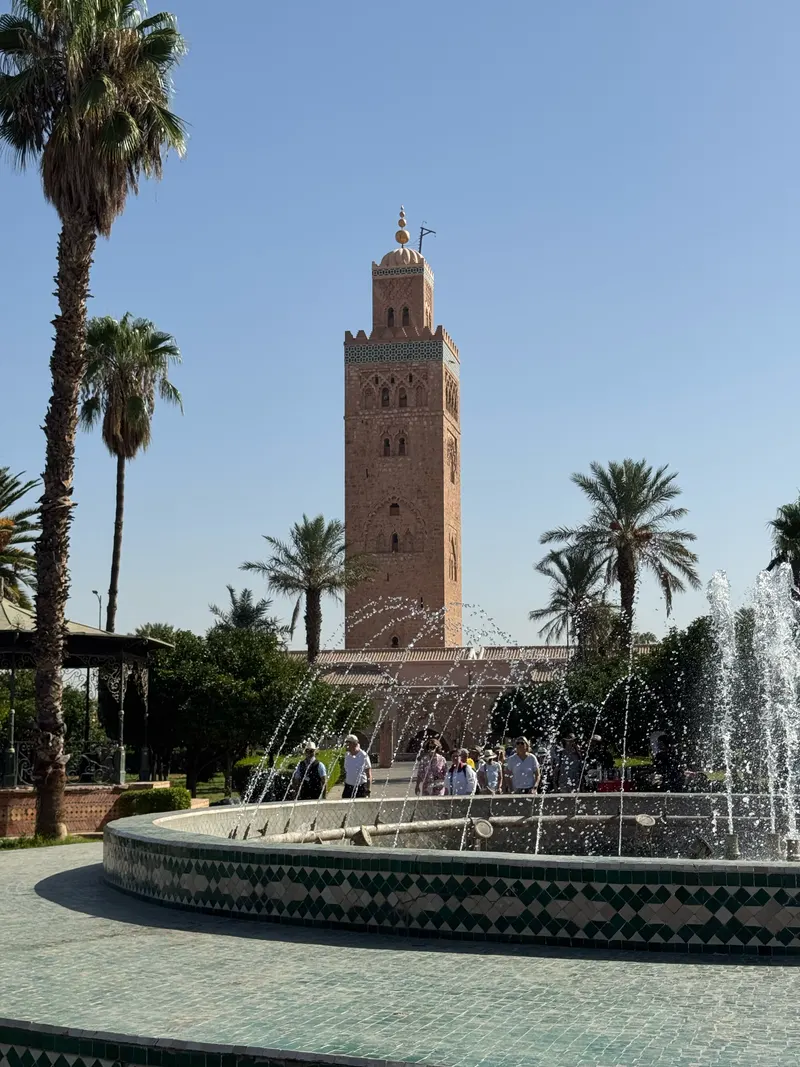
Koutoubia Mosque, Marrakech
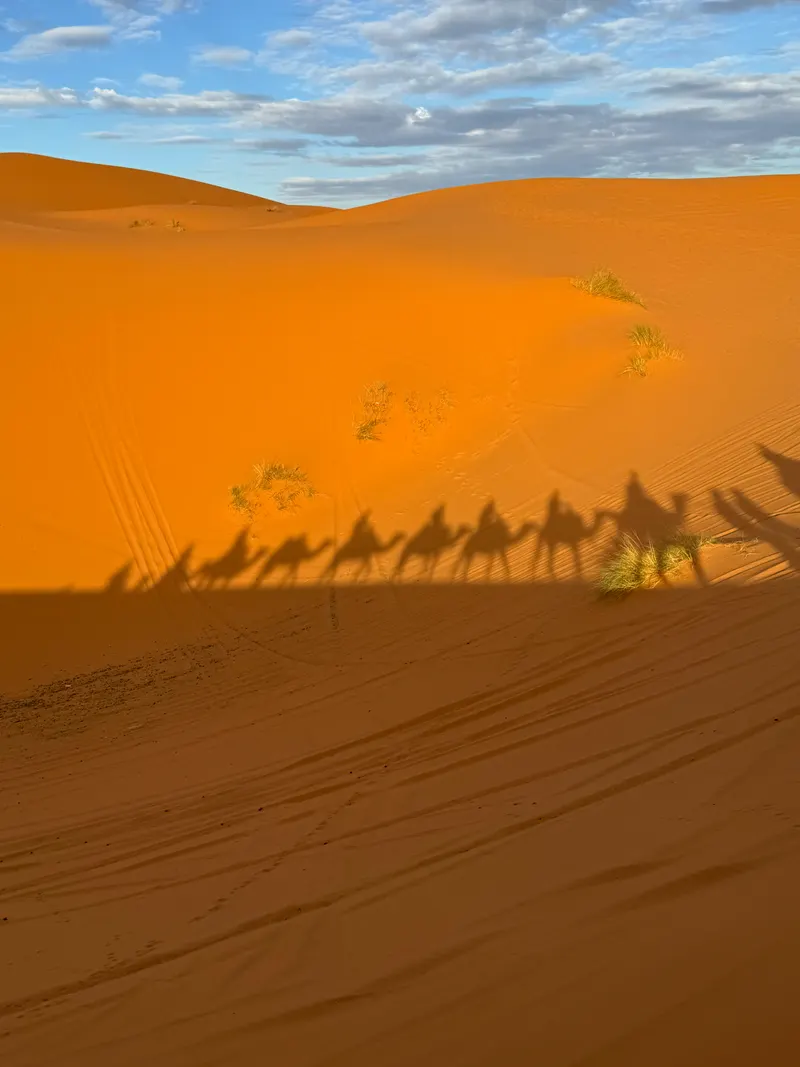
Camel ride into the Merzouga desert
Here’s how I’d spend 7 days covering Marrakech, a day trip to Ouzoud Falls, a 3-day crossing to the Sahara through the High Atlas, and Fes.
Day 1-2. Marrakech
Getting from the airport to the medina
Getting into Marrakech is easy. The airport is close to the city, and grabbing a taxi to your riad or hotel in the medina is straightforward. You won’t get scammed and there’s no need to haggle over the fare: there’s a staffed desk and a machine right outside, and the machine takes card (international cards work fine). Expect to pay somewhere between 100 and 200 MAD (~$11-21 USD, Oct 2026) depending on exactly where you’re headed.
Where to stay
Stay inside the medina if you want to make the most of your visit. This is where everything happens: the souks, street vendors, mosques, madrasas, charming squares. There are also some nice hotels outside the medina, within easy walking distance, if you want more amenities, La Mamounia being the obvious example.
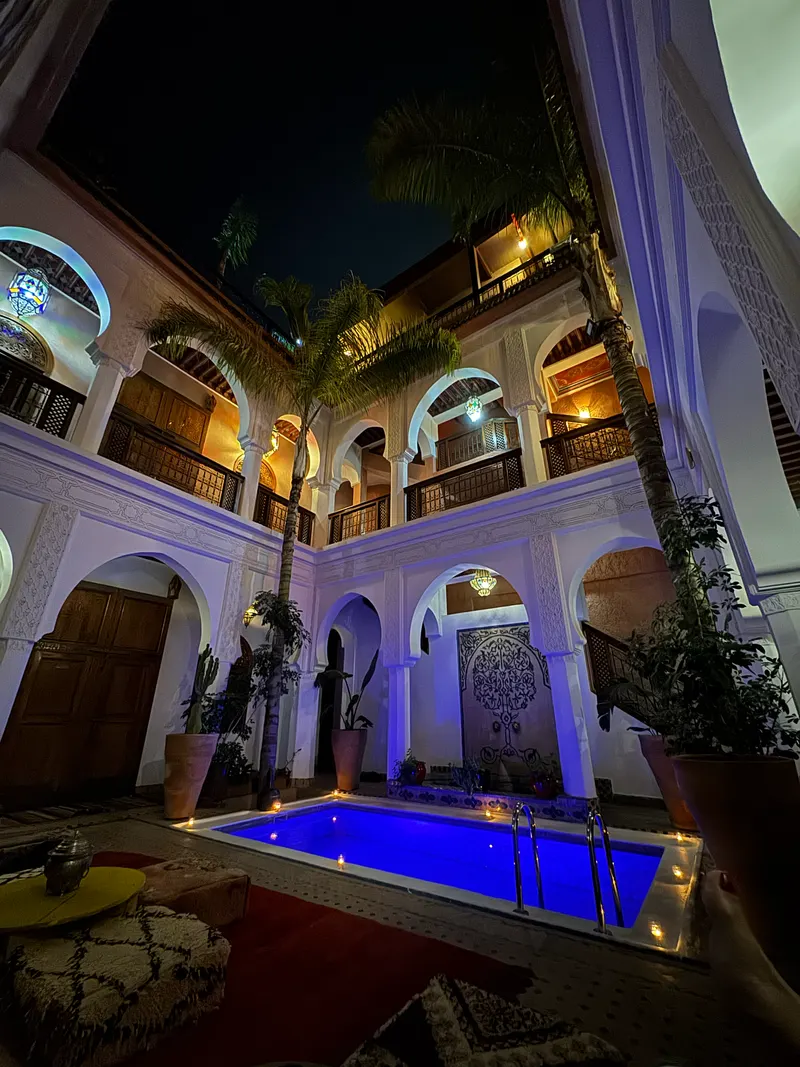
Riad Agdal Royal at night
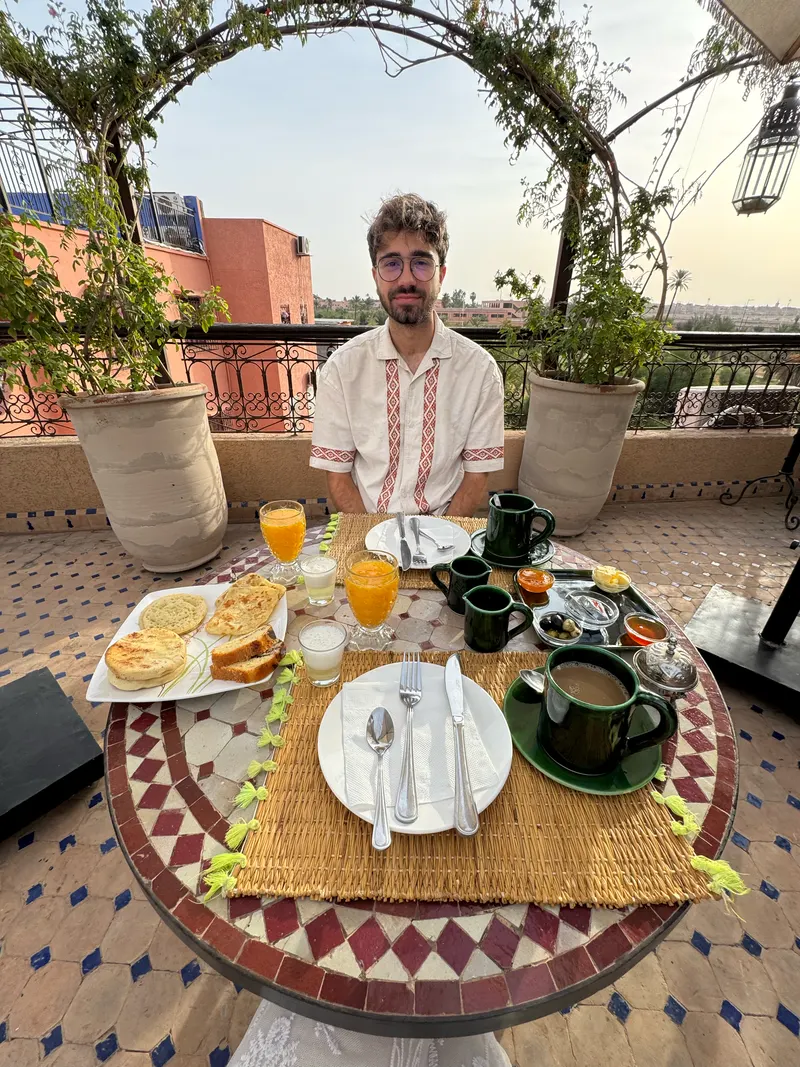
Traditional breakfast spread at our riad
The medina: souks, squares and getting (pleasantly) lost
Marrakech isn’t really about ticking off every single attraction on a list. It’s about getting lost in the narrow, maze-like streets of the medina. Wandering through the souks, past the spice stalls at Place des Épices and the lamp sellers stringing up wicker and Aladdin-style lanterns over the alleyways, is the whole point.
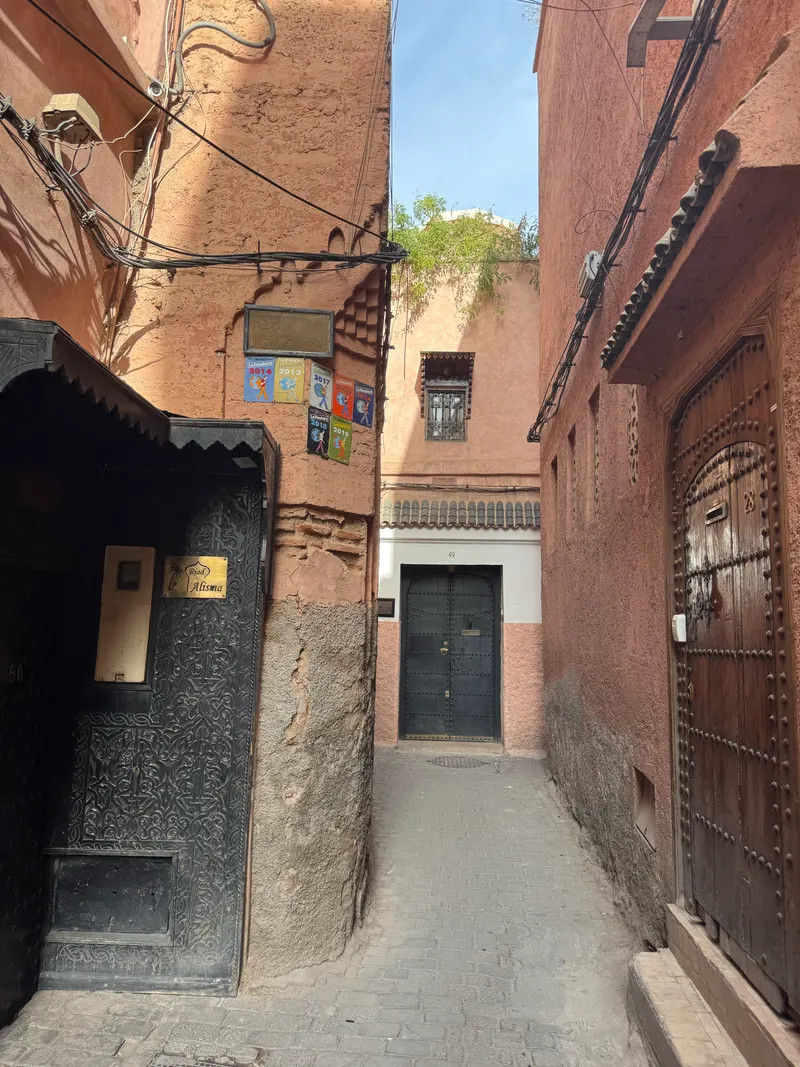
A narrow street in the medina
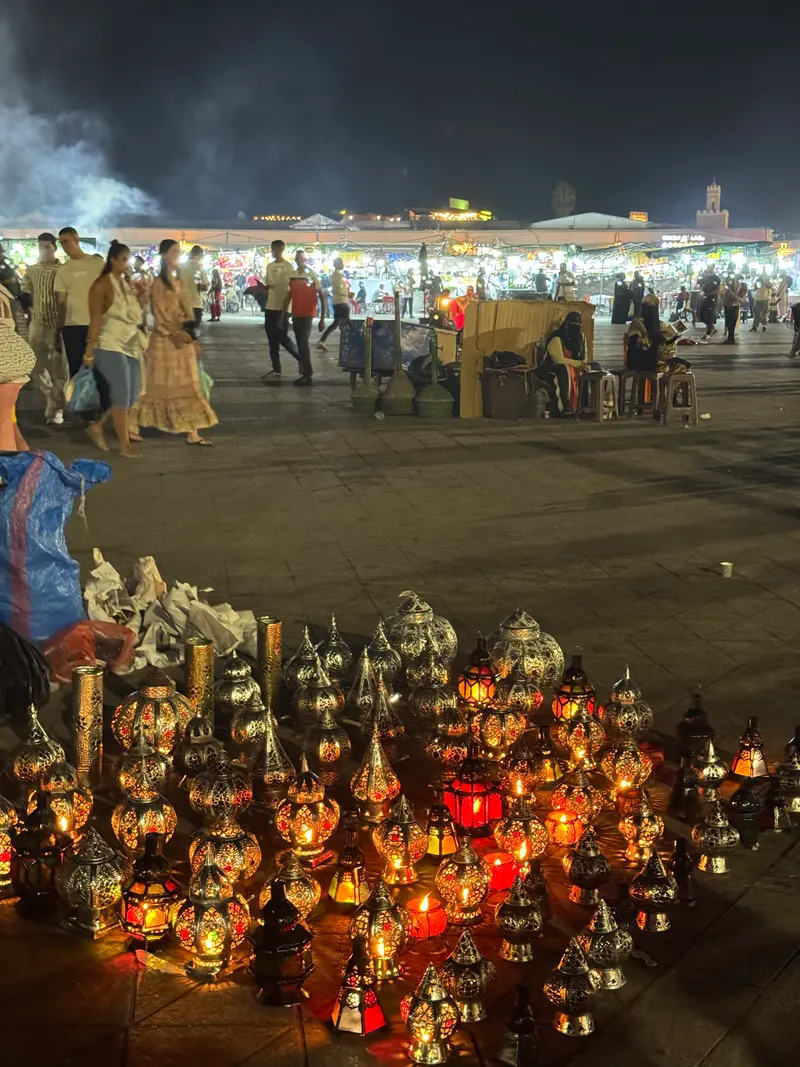
Aladdin-style lamps for sale
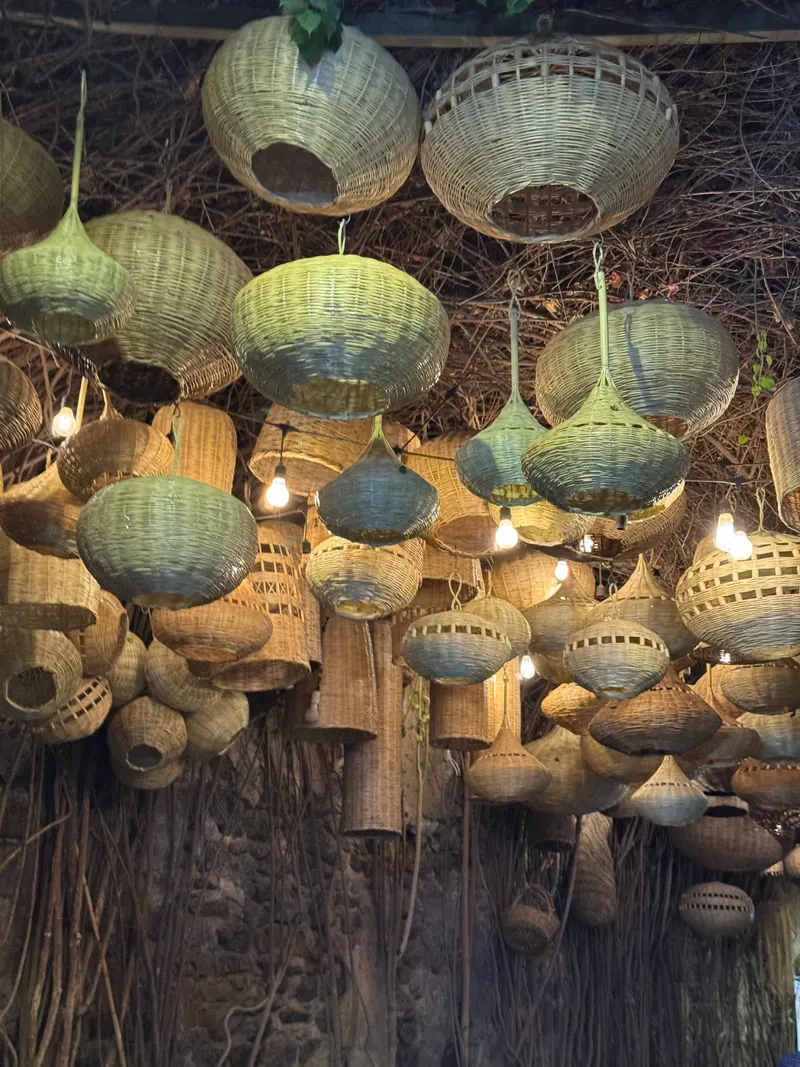
Wicker lamps strung over the street
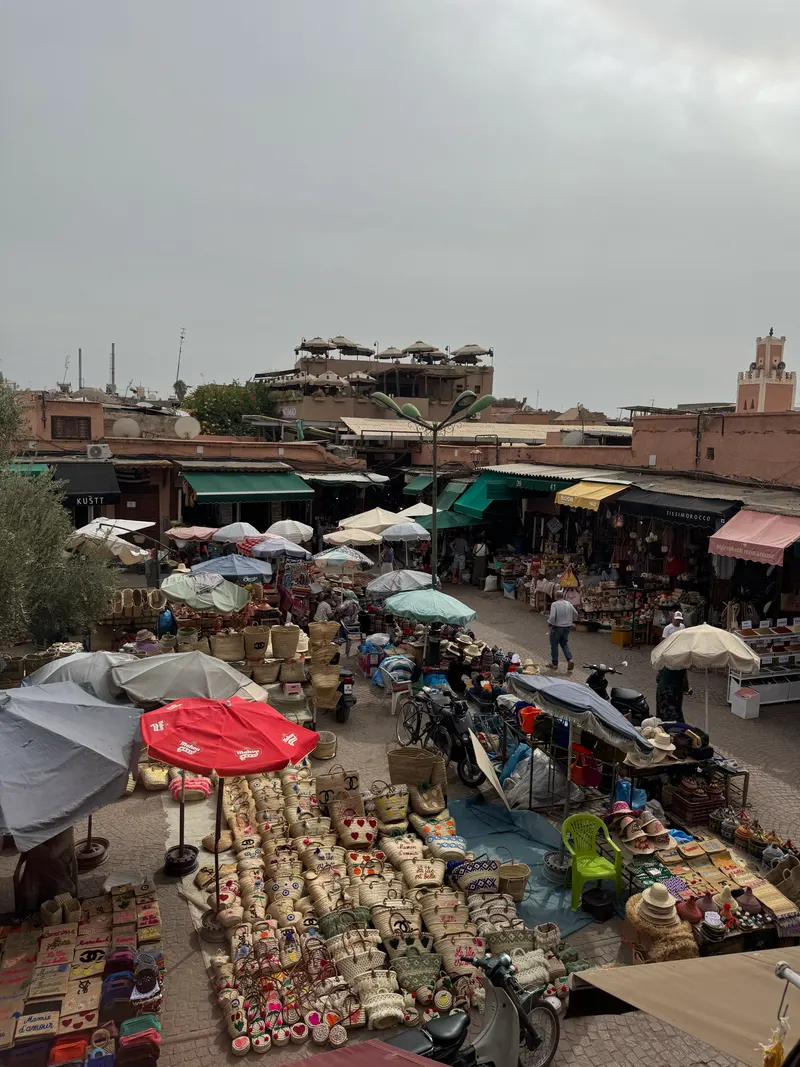
Place des Épices
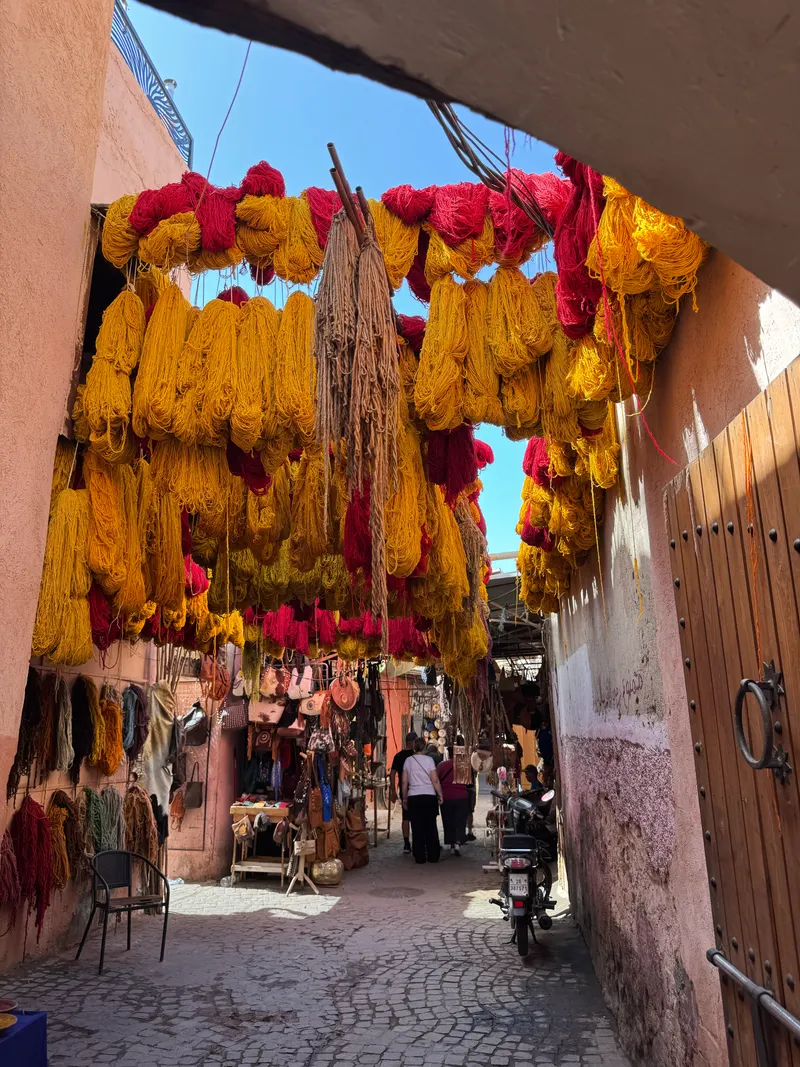
Yarn for sale in the souks
Pro Tip: Haggling is very much expected, and they won't take it as disrespectful, it's genuinely part of Berber culture. Don't be shy about negotiating the price in the souks.
You’ll also likely be offered tea in a lot of shops. Don’t feel pressured to pay for it or buy anything just because they do, it’s simply a gesture of Moroccan hospitality.
I’d also push back a little on the posts and blogs that describe Marrakech as uncomfortable or unsafe. That wasn’t my experience at all. I felt safe and welcome the entire time, and found locals genuinely nice and hospitable.
Koutoubia Mosque, Jardin Majorelle and Madrassa Ben Youssef
Most mosques can’t be entered unless you’re Muslim, and the same goes for most madrasas and Islamic schools, though some can be visited for a fee. Madrassa Ben Youssef is one of them, and it’s worth it for the geometric details. It’s a symmetrical building with several courtyards rather than just one, the main courtyard plus smaller side courtyards that used to house the classrooms, and it’s genuinely easy to lose your sense of direction wandering between them. Go early: by midday it fills up with visitors.
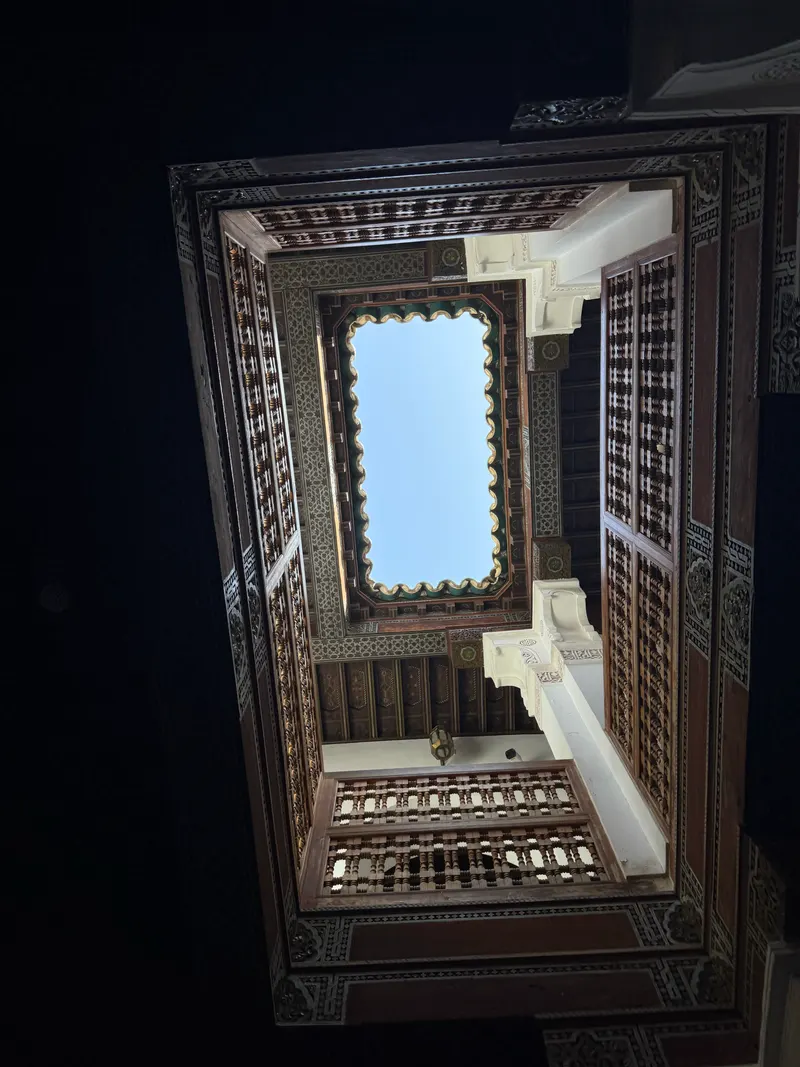
One of the side courtyards, where the classrooms used to be
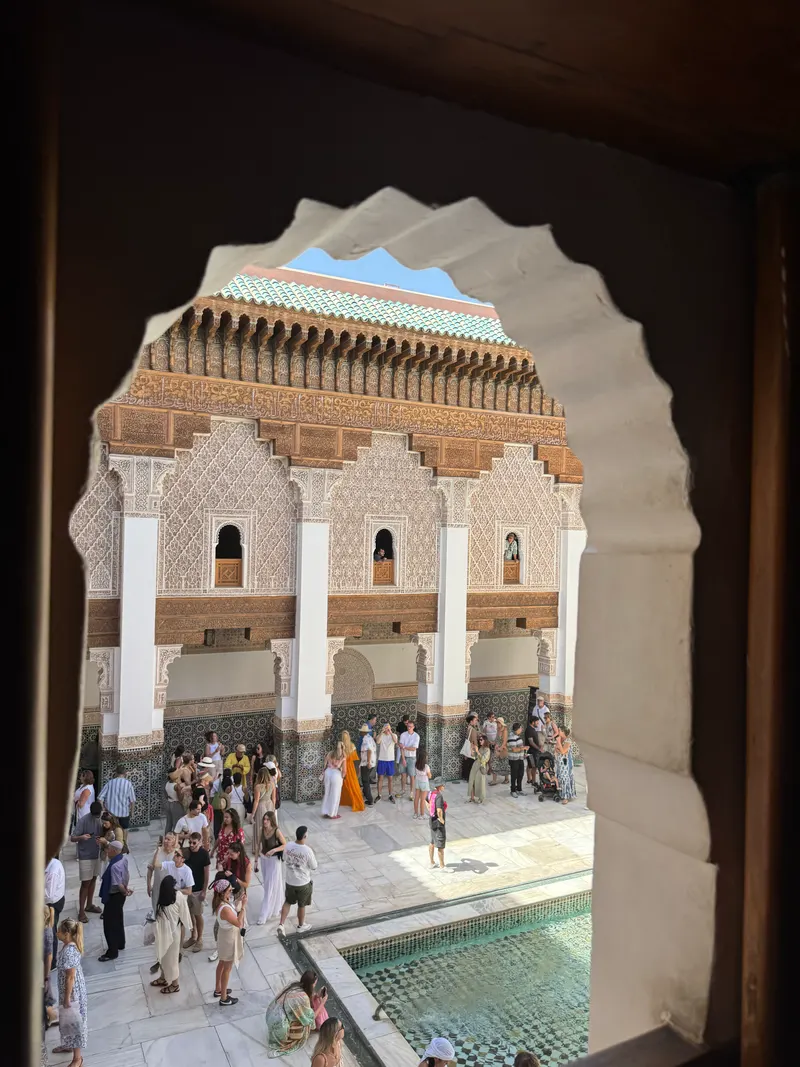
Geometric tilework in the courtyard
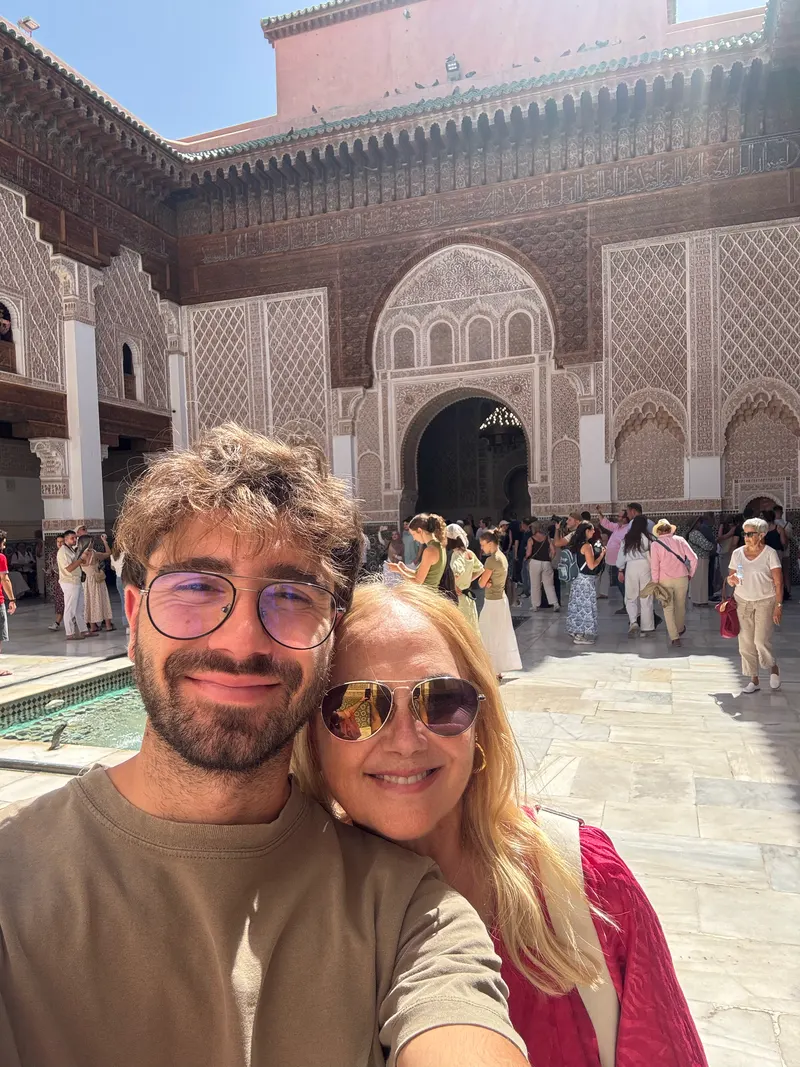
At Madrassa Ben Youssef
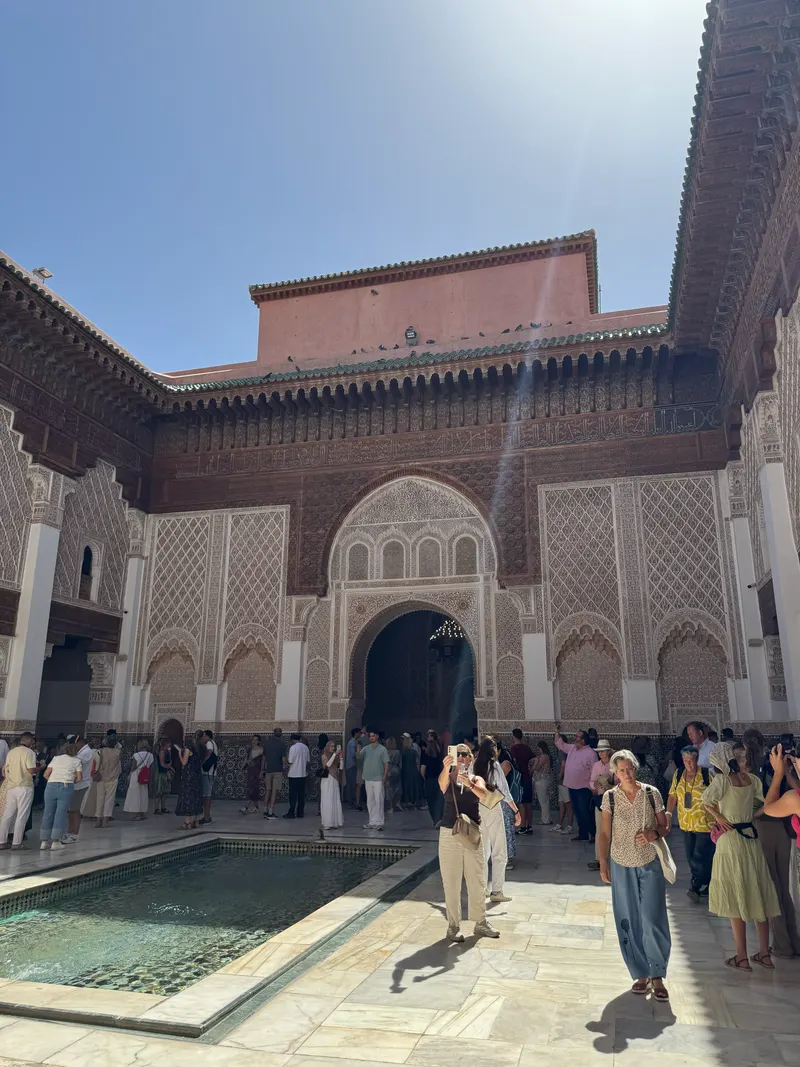
The courtyard by midday, worth avoiding
Koutoubia Mosque can only be admired from the outside, but it’s still Marrakech’s most recognizable landmark, especially from the park and fountain right in front of it. Nearby, street vendors sell fresh pomegranate juice, a perfect way to cool down between stops.
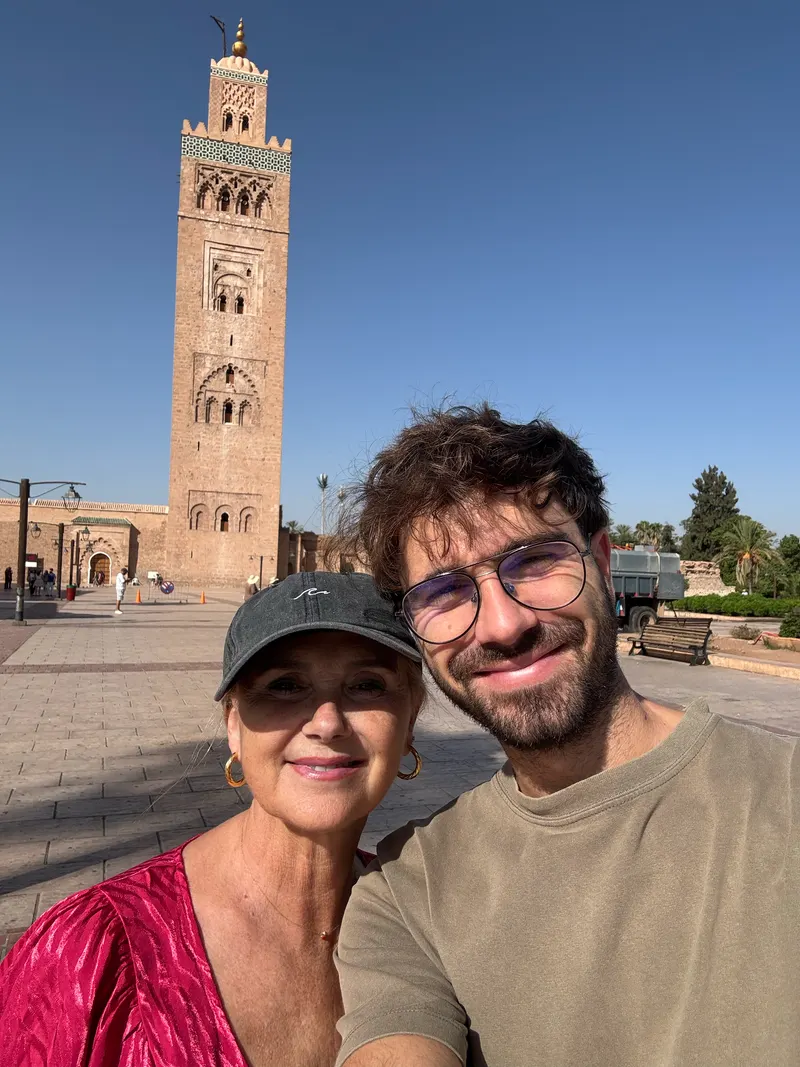
In front of Koutoubia Mosque
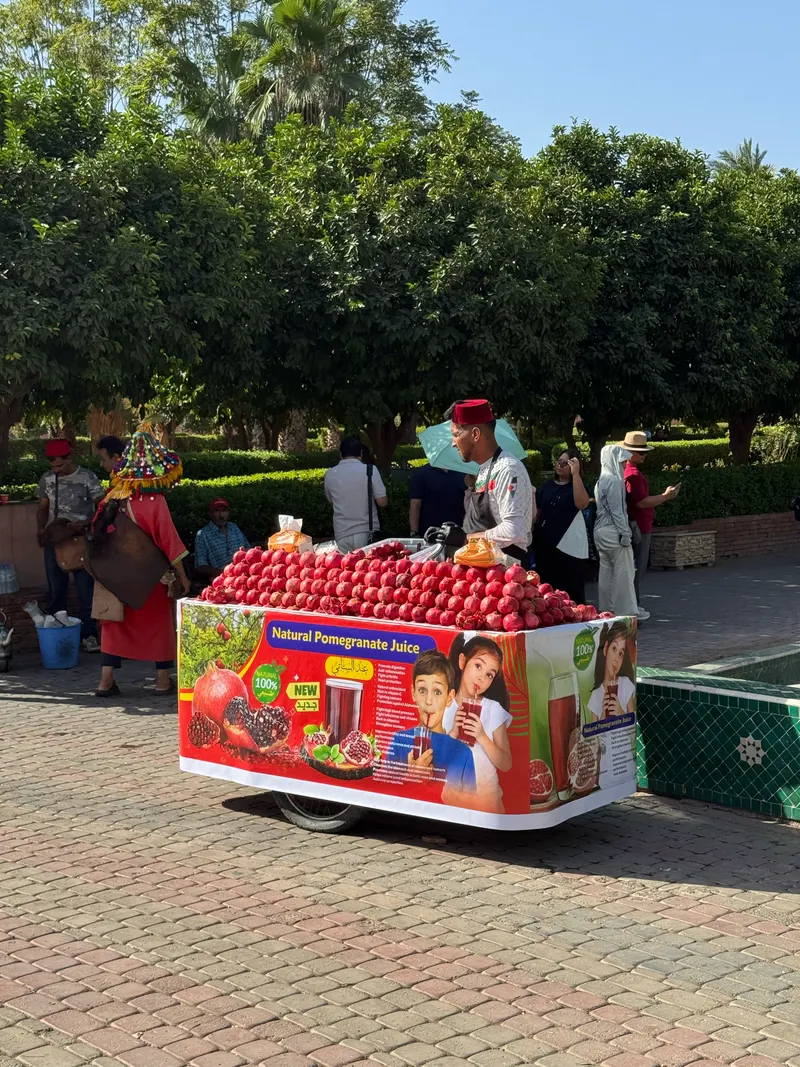
Fresh pomegranate juice stall
Jardin Majorelle, Yves Saint Laurent’s former garden, is a calm break from the medina’s energy: cobalt-blue buildings, cacti and palm trees, and a small Berber museum on site.
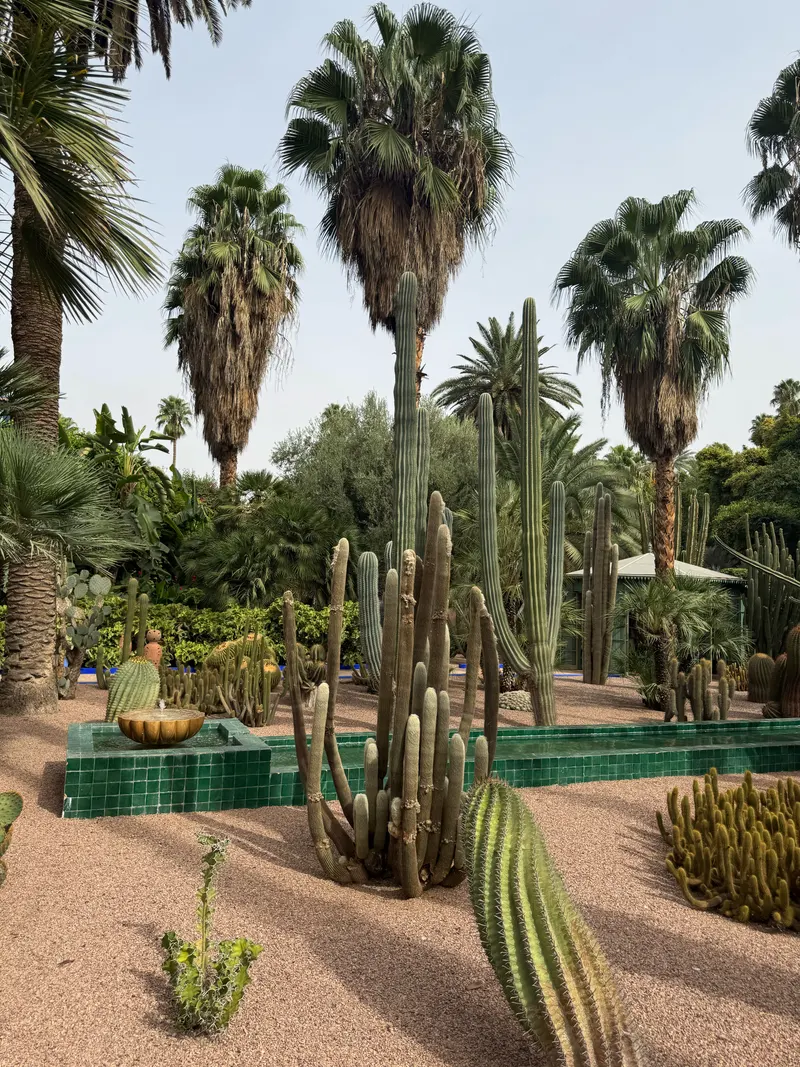
Cacti and palm trees in the garden
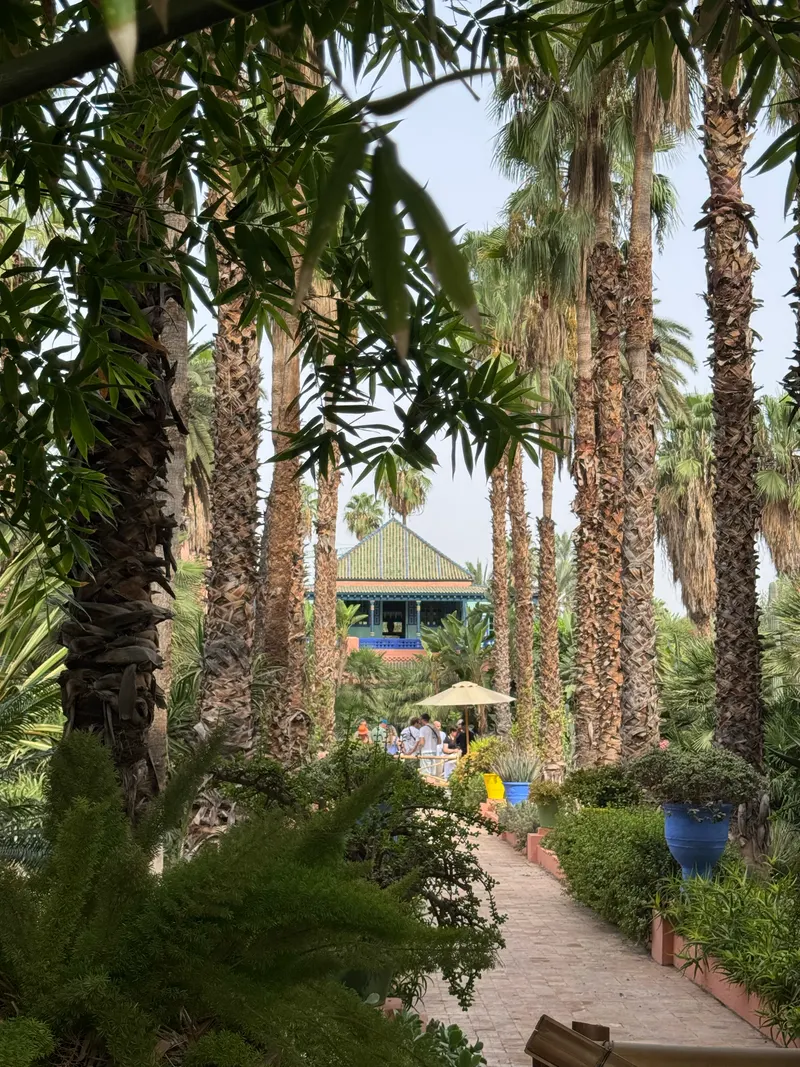
Jardin Majorelle's cobalt-blue house
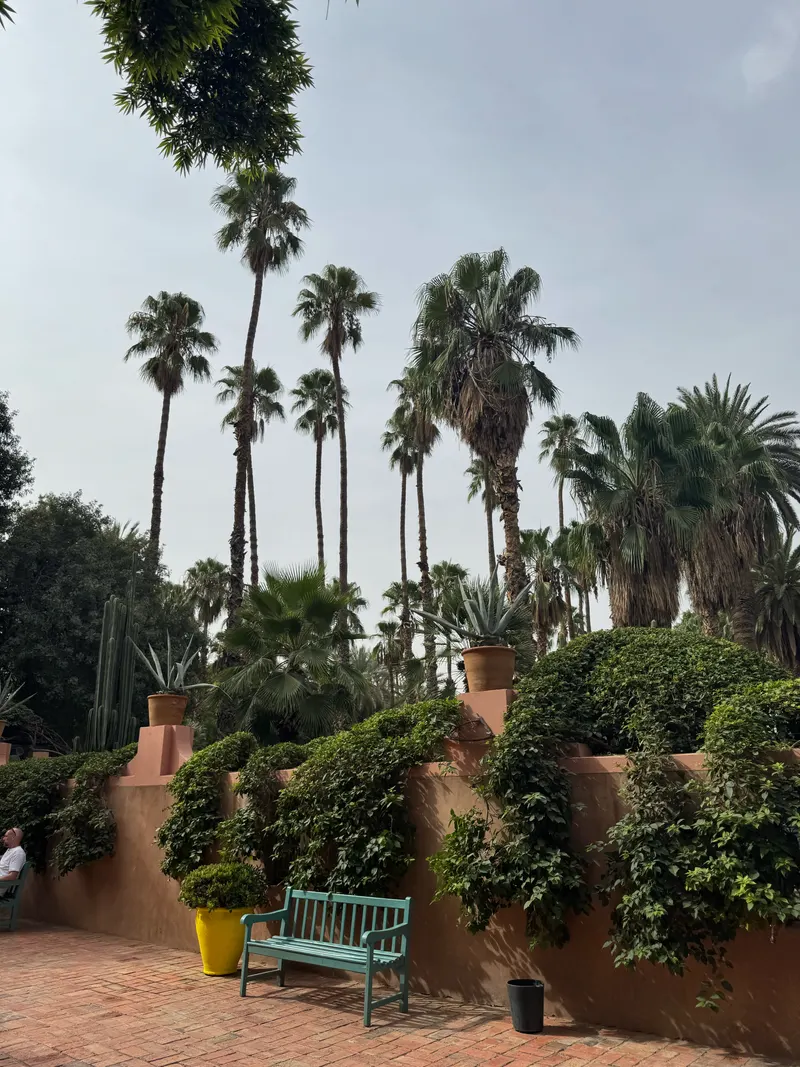
A bench among the palm trees
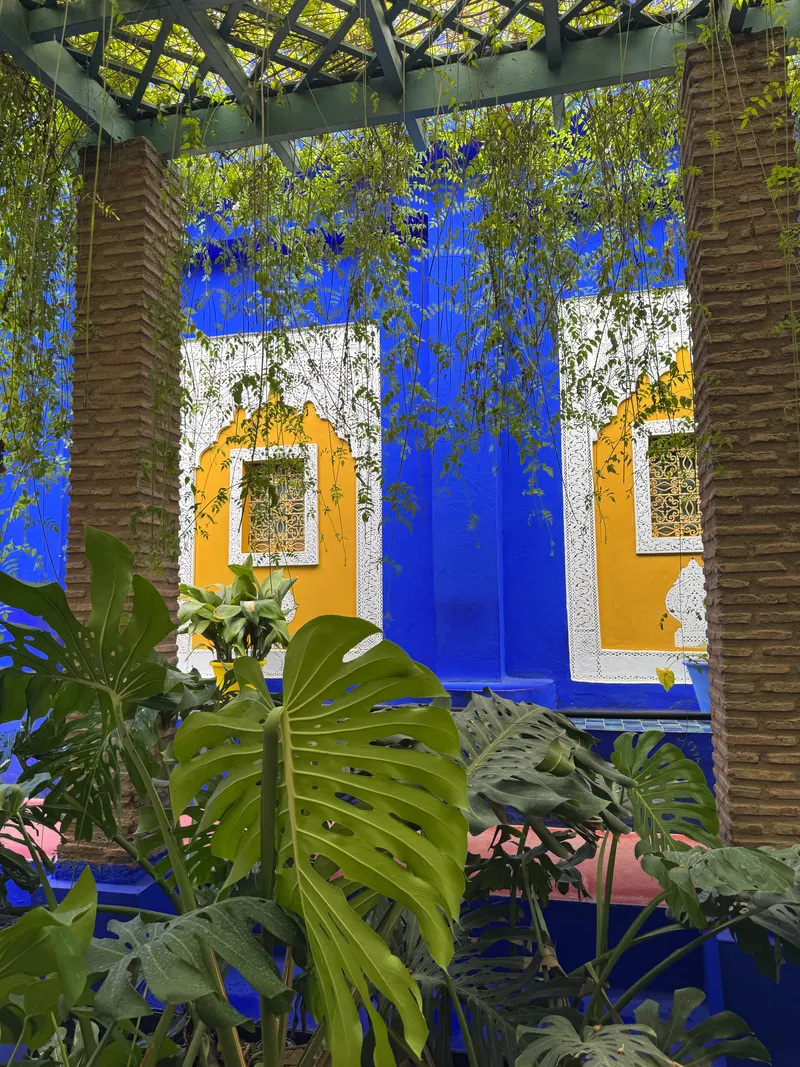
Garden in front of the Berber Museum
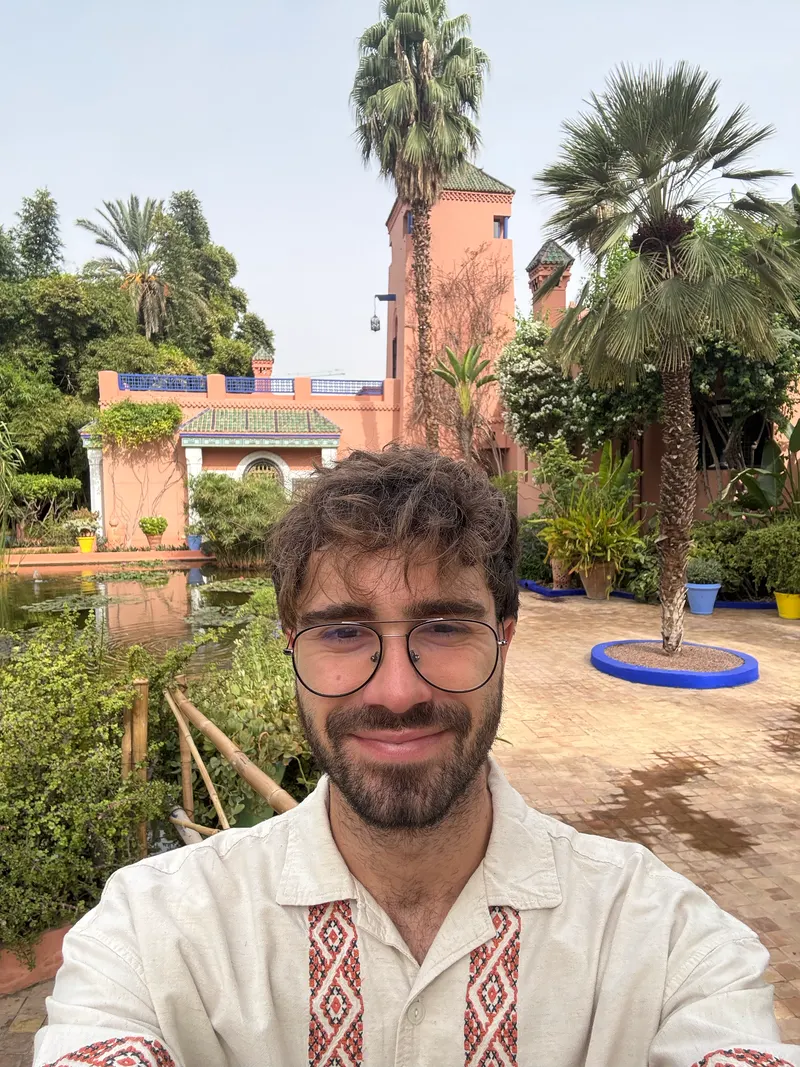
In front of Yves Saint Laurent's house
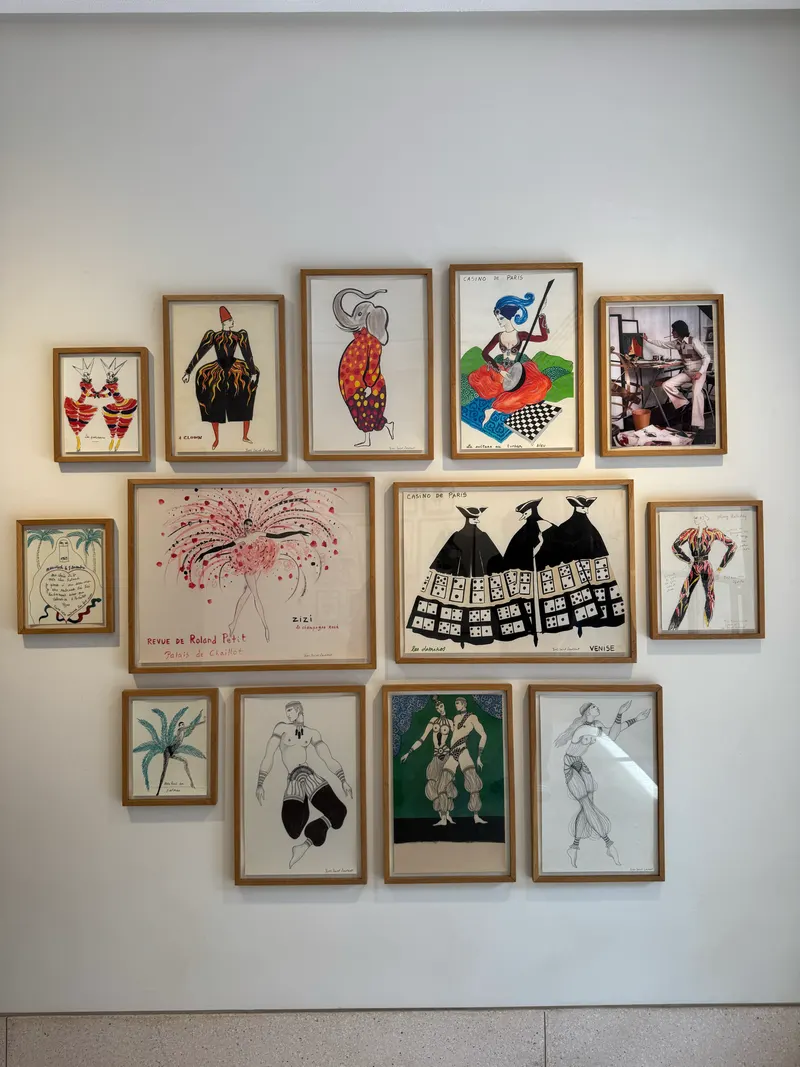
Yves Saint Laurent paintings inside the museum
Shopping and ateliers
You’ll find traditional babouche slippers and other crafts all over the medina, and some courtyards hide full ateliers where artisans work in the open.
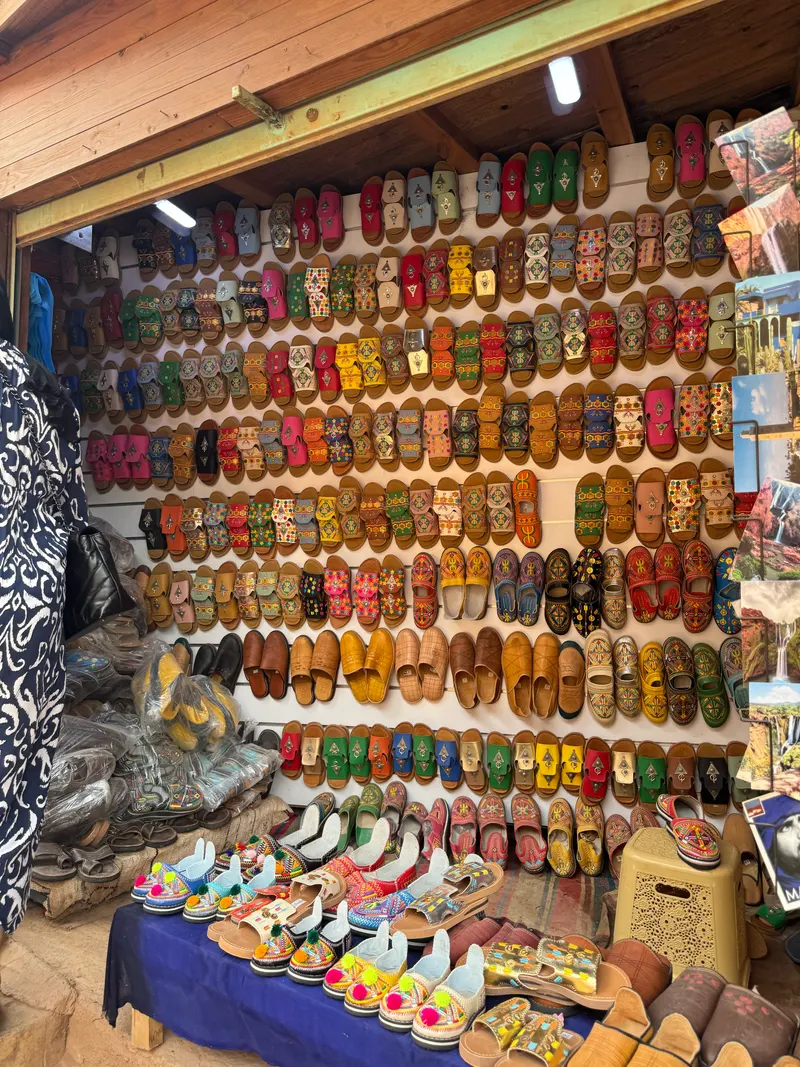
Traditional babouche slippers
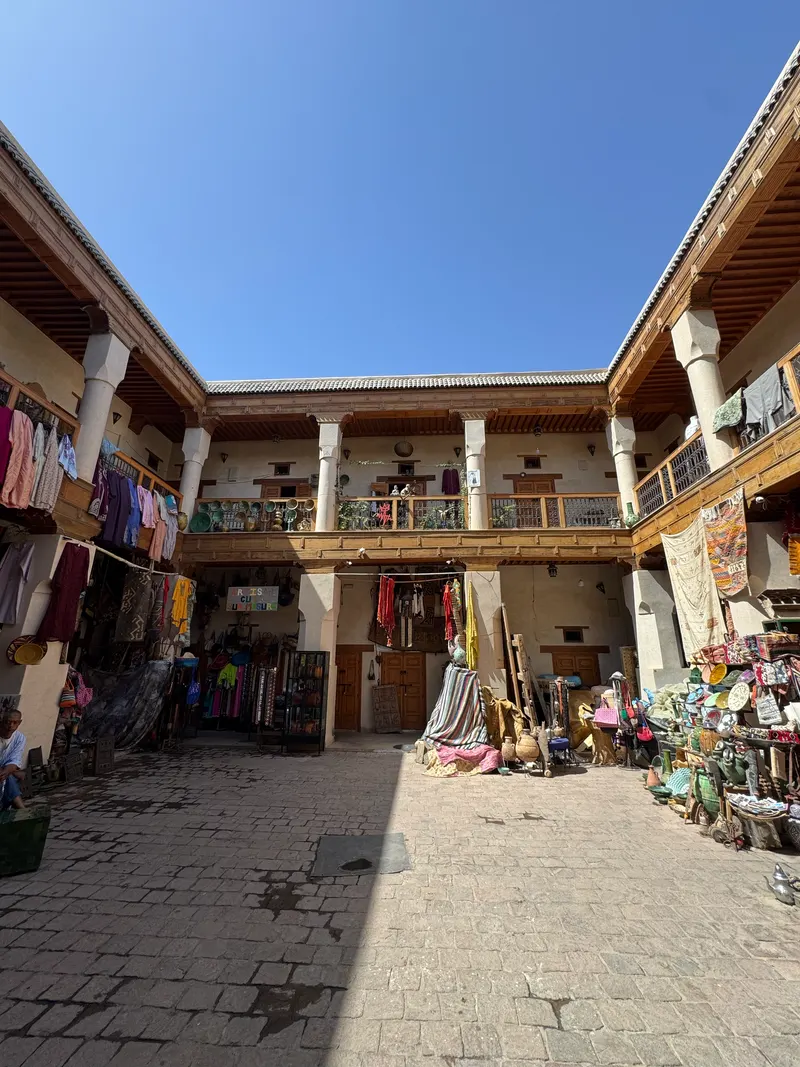
A courtyard full of craft ateliers
Moroccan flags and Amazigh (Berber) flags, recognizable by their blue, green and yellow stripes and the red Tifinagh letter ⵣ, are everywhere in the souks, a good reminder that Morocco’s culture is both Arab and Amazigh.
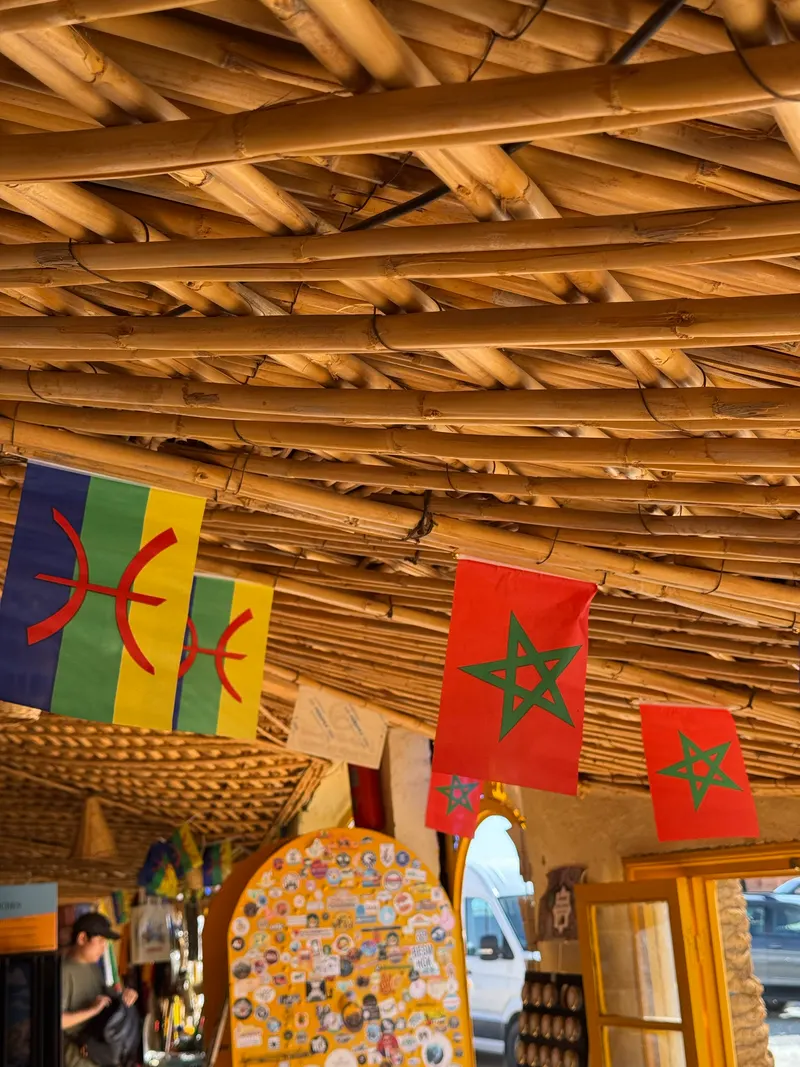
Moroccan and Amazigh flags for sale
Food and rooftops
Marrakech is full of rooftops, and some of them do serve alcoholic drinks, in case you were wondering. El Fenn and Nomad were two of our favorites for food and views, and La Mamounia is worth a visit even just for a drink in its gardens.
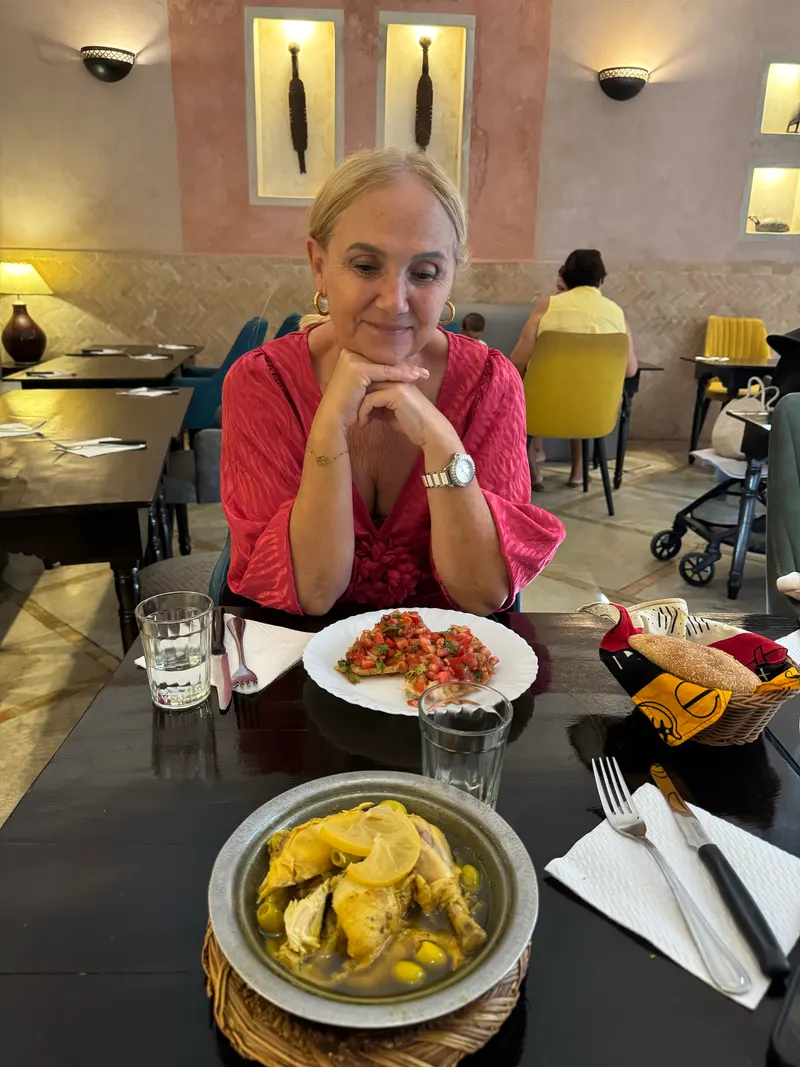
Chicken and preserved lemon tajine
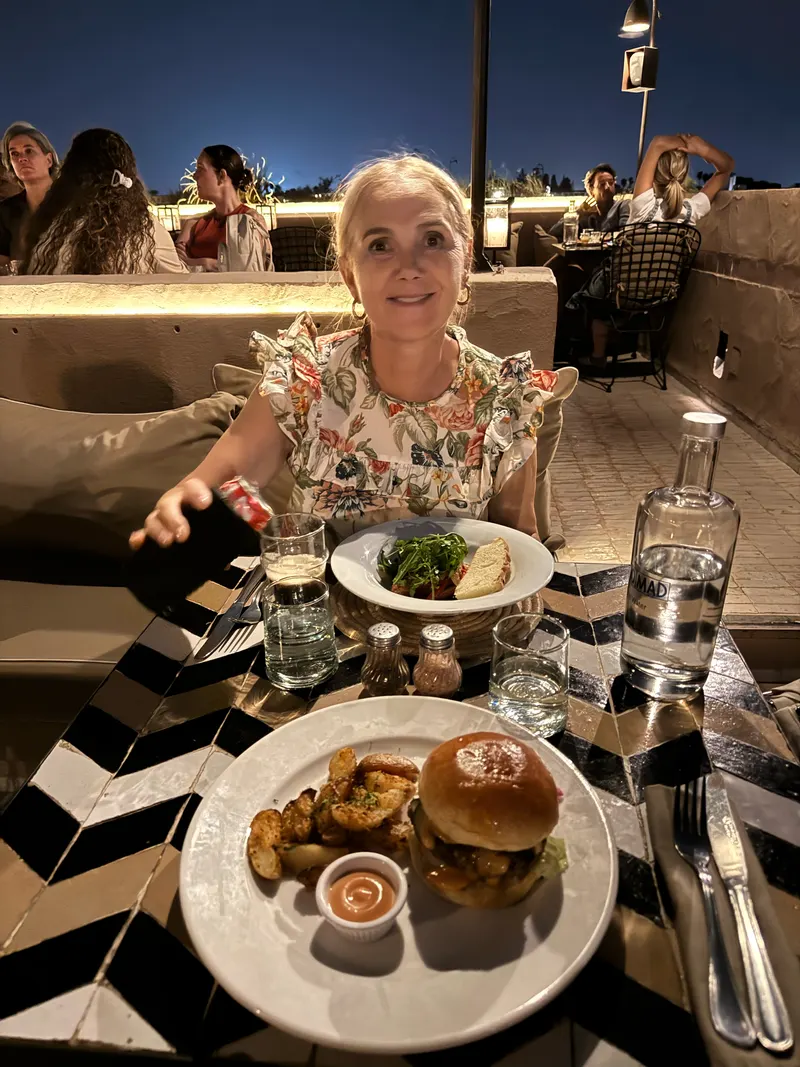
Dinner at Nomad rooftop restaurant
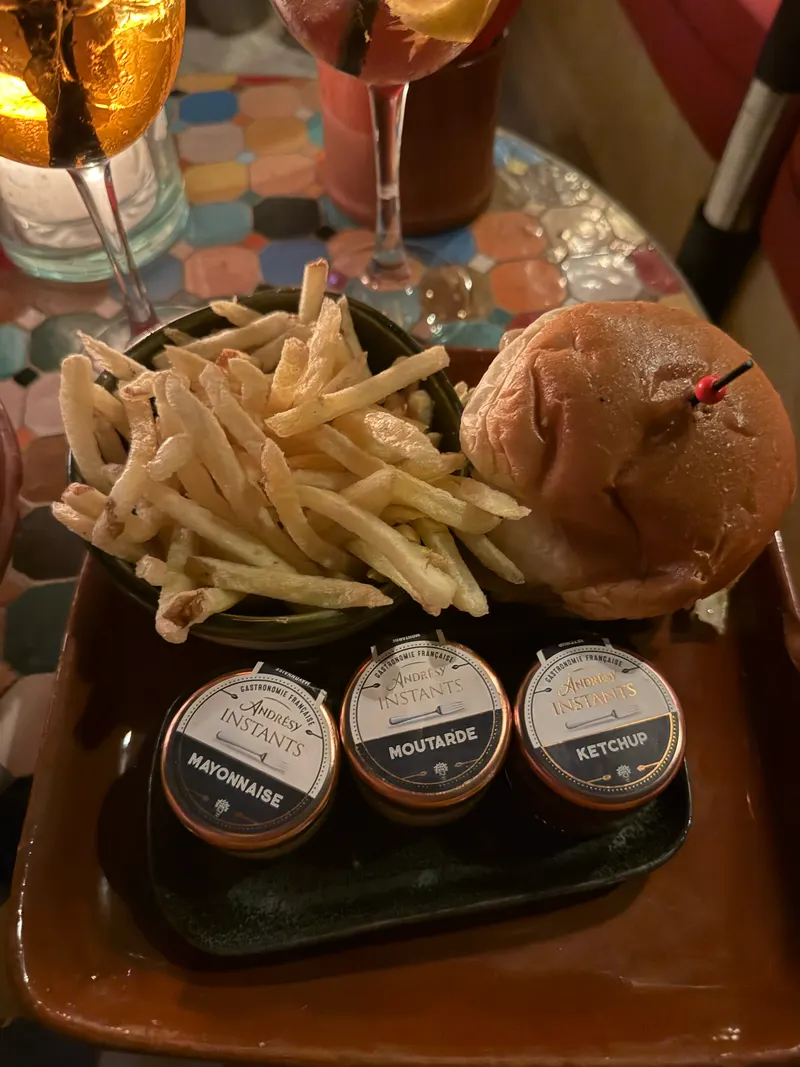
Beef burger at El Fenn
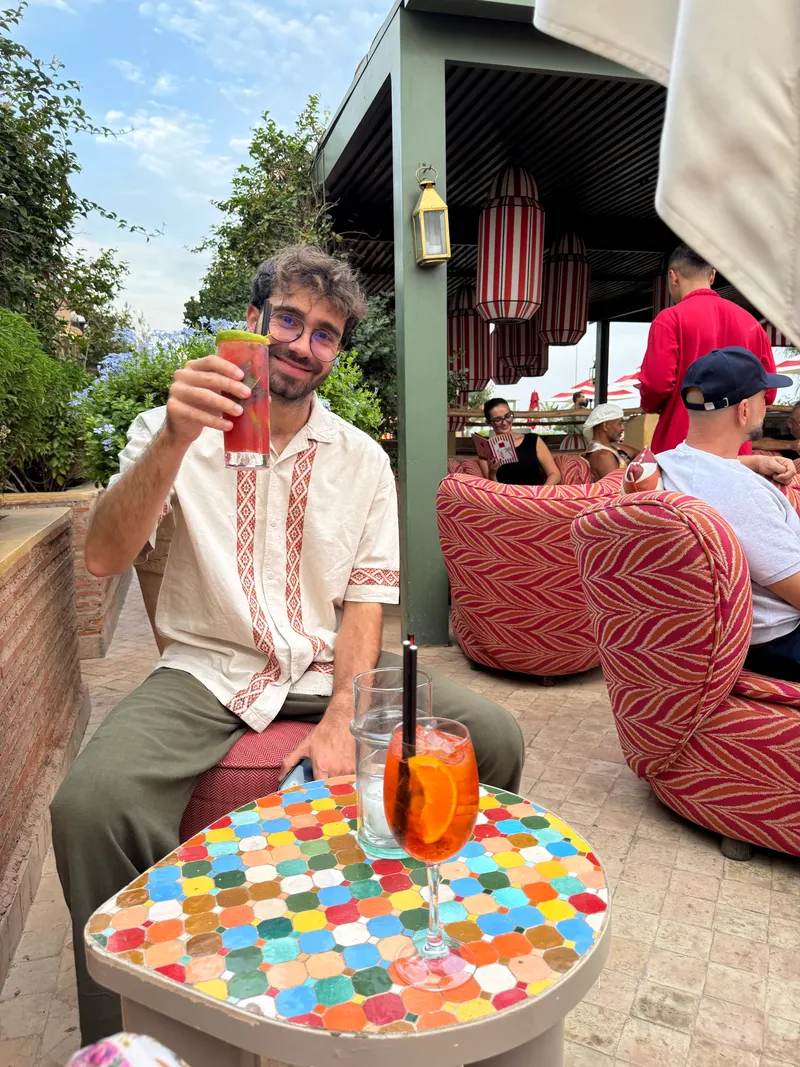
Cocktails at El Fenn
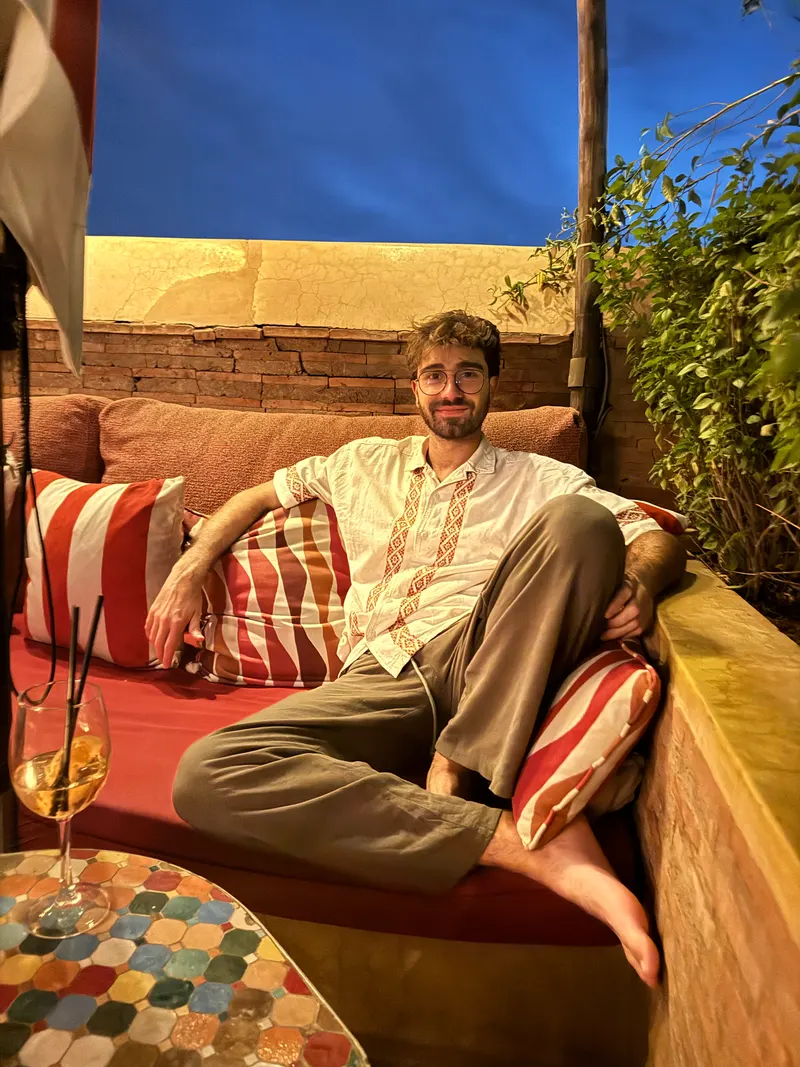
Sunset cocktails at El Fenn
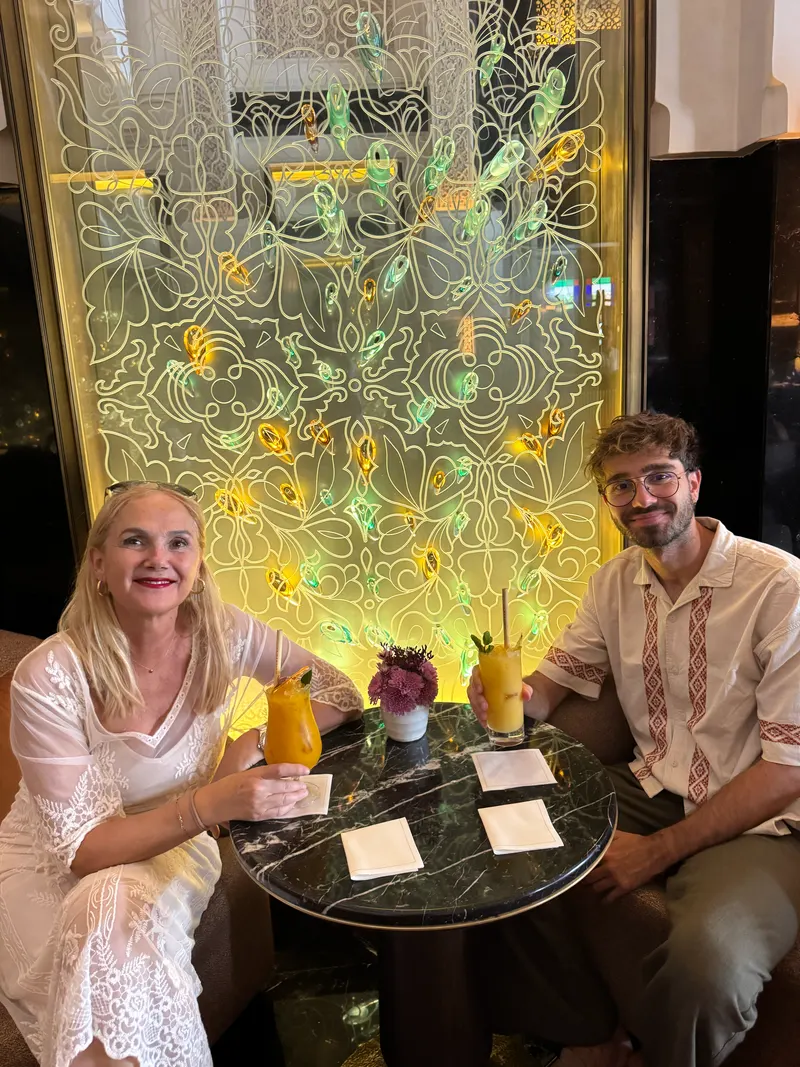
A cocktail at La Mamounia
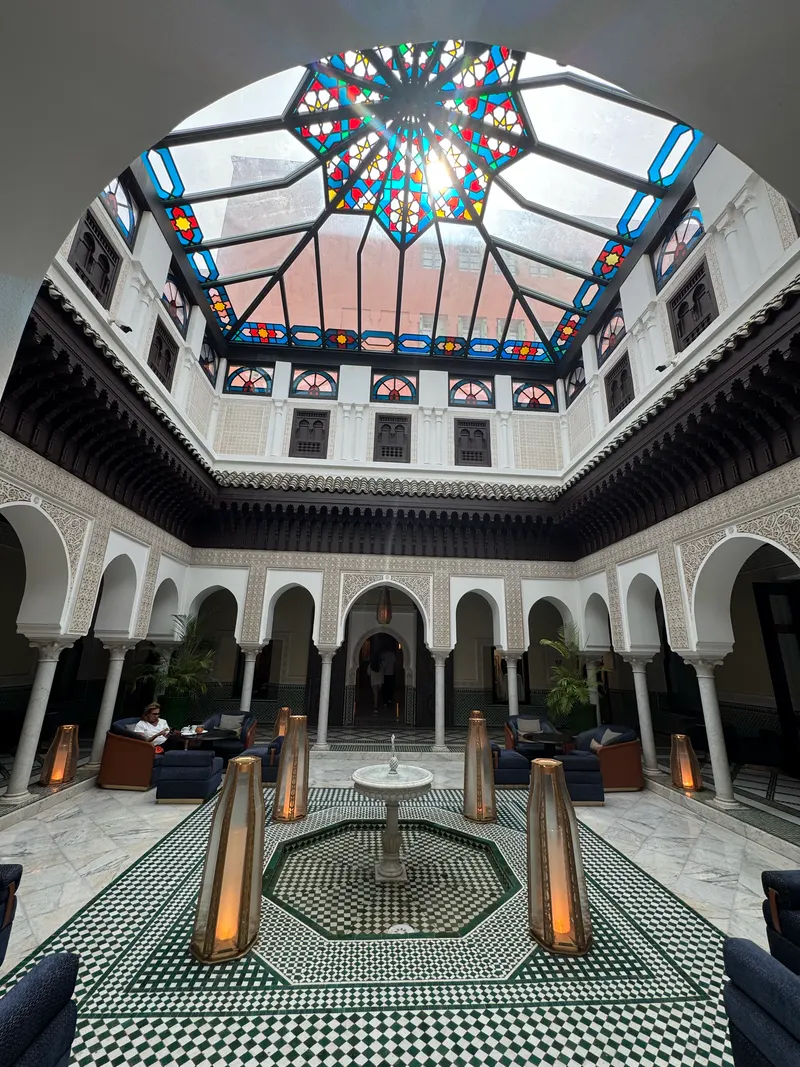
One of La Mamounia's courtyards
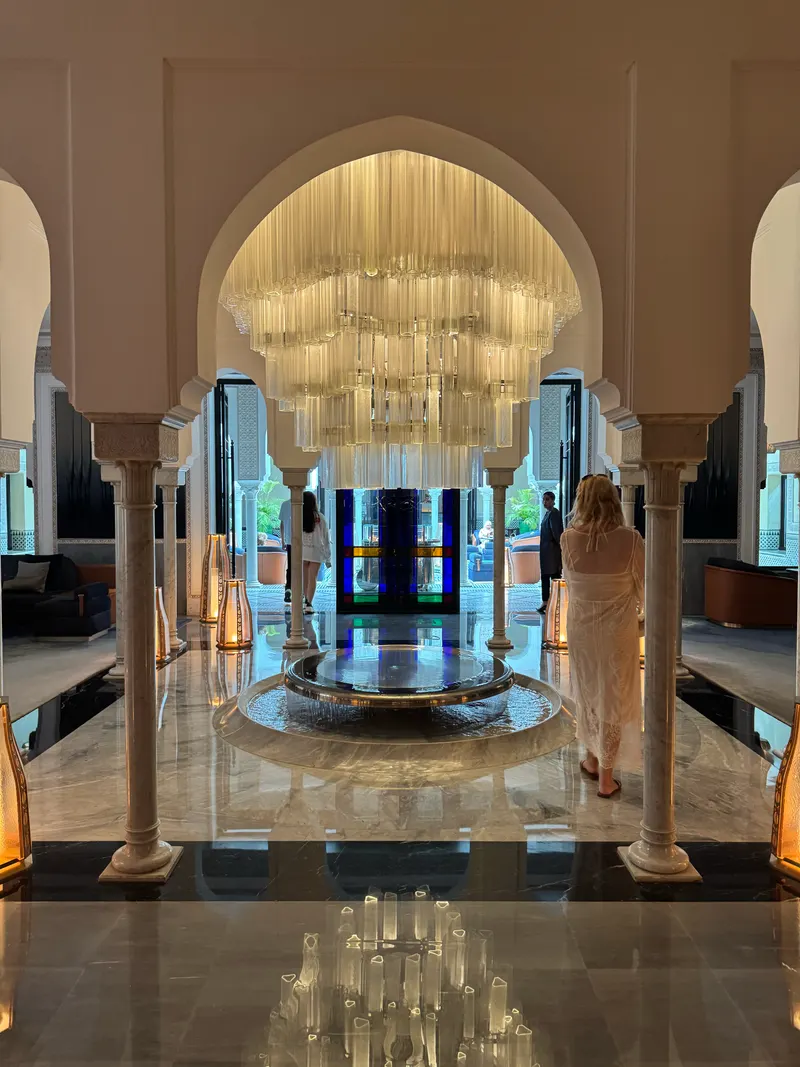
Inside La Mamounia
Marrakech is also a great base for day trips, Ourika Valley, Essaouira, the Agafay desert, and the one I did: Ouzoud Falls. It’s equally the natural starting point for heading onward to the Sahara.
Day 3. Day trip to Ouzoud Falls
This was my favorite day trip from Marrakech. It’s only 2-3 hours away by car and easy to arrange, I booked a GetYourGuide excursion.
There are usually monkeys waiting around for visitors to feed them. You don’t need to get close to them if you’d rather not.
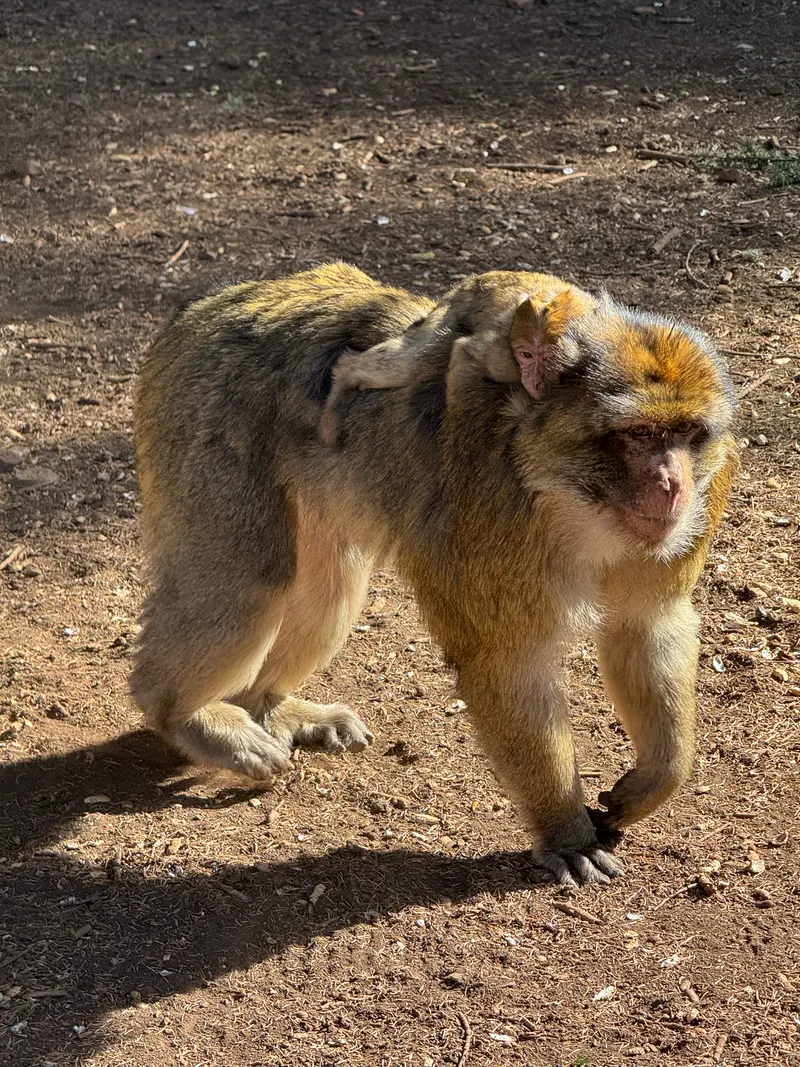
A Barbary macaque with her baby
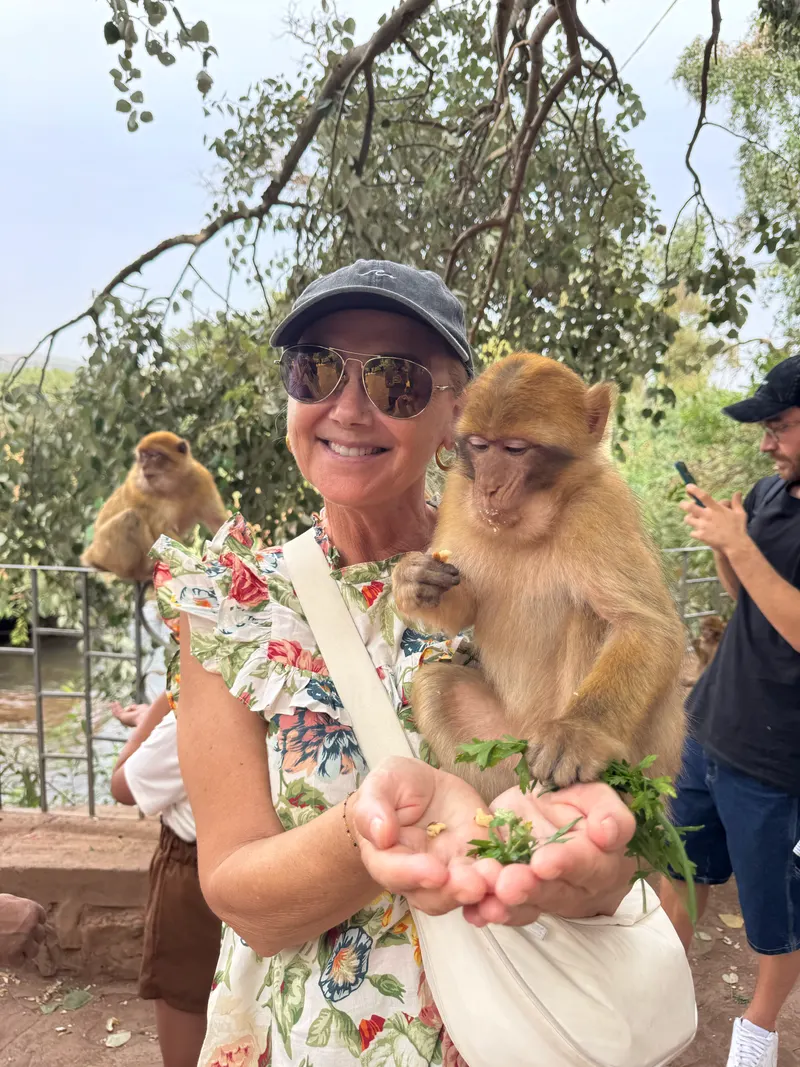
Feeding the monkeys at Ouzoud
The falls themselves are stunning, and genuinely different from any other falls I’ve seen elsewhere. I was surprised by just how much water there was when I visited.
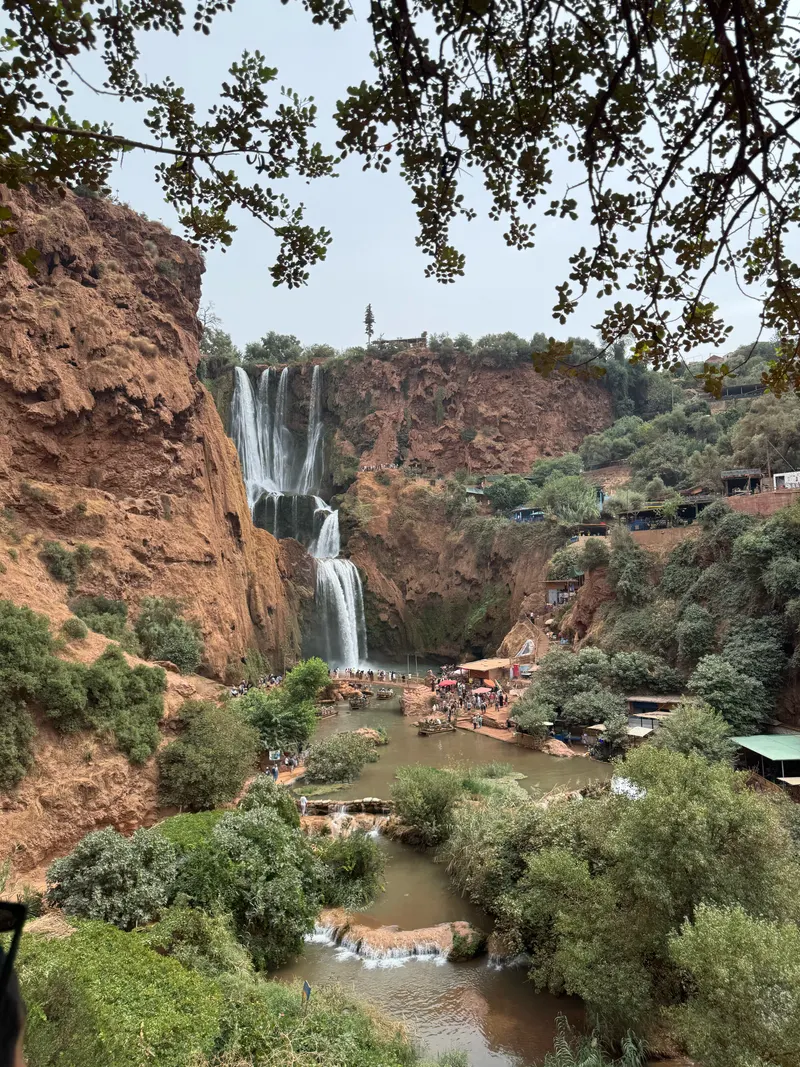
Ouzoud Falls from a distance
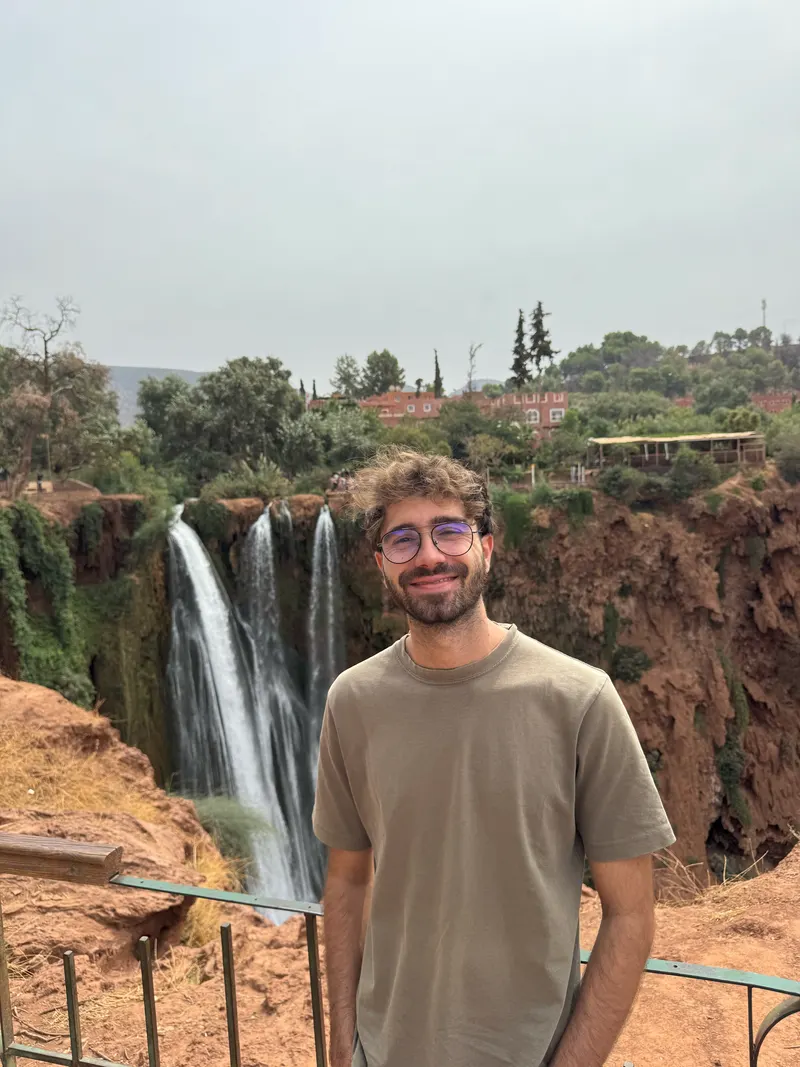
Smiling in front of the falls
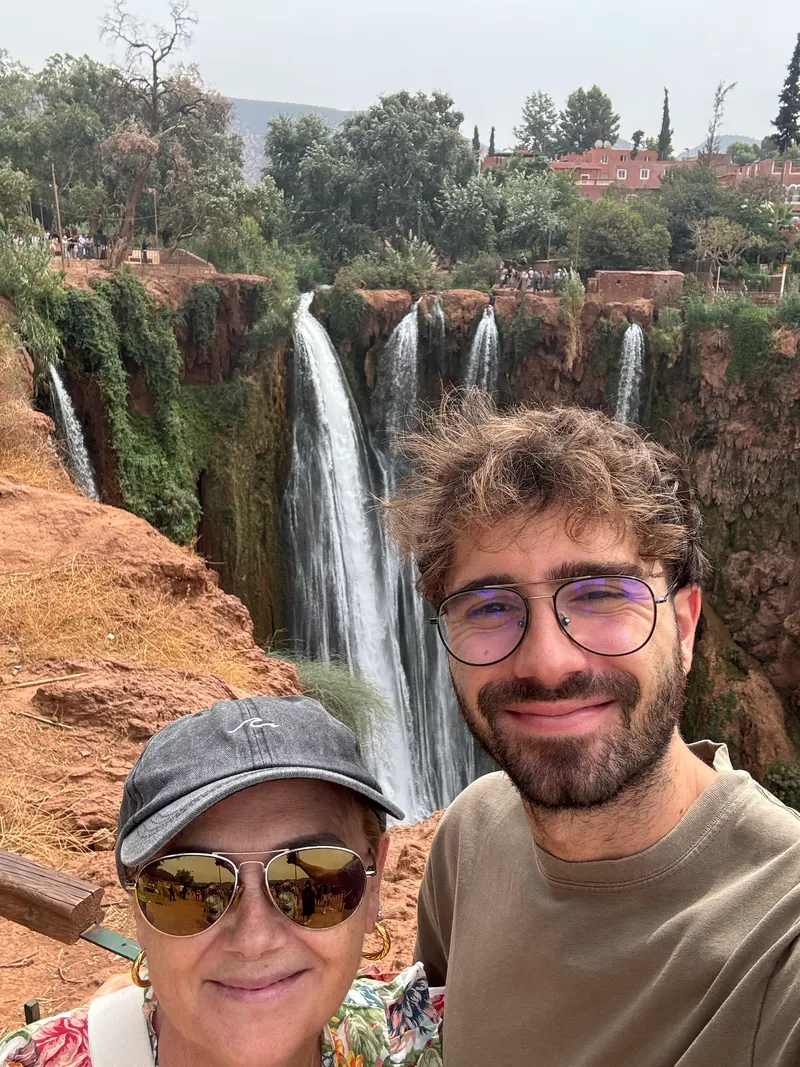
Up close at Ouzoud Falls
You can also take a boat ride. It’s a short one, but it gets you really close to the falls. I was sitting at the front and ended up pretty soaked, I’d recommend it anyway. It’s cheap and gives you a completely different perspective on the falls.
Day 4-6. Crossing to the Sahara: Ait Ben Haddou, Palm Valley, Rose Valley, Dades Gorges & Merzouga
Marrakech is a great starting point for a desert adventure, and that’s exactly where I departed from, though Fes, Ouarzazate and other cities work too. Most tours from Marrakech last at least 3 days. I wouldn’t recommend doing it in fewer, it takes a lot of time just to get there, and anything shorter means spending most of your time on the road.
Day 4: Ait Ben Haddou, Palm Valley and the road through the High Atlas
One of the first stops is Ait Ben Haddou, a UNESCO-listed village famous for its kasbah. Films like Gladiator and more recent ones like Christopher Nolan’s The Odyssey have been shot here, so you’re literally walking through a movie set.
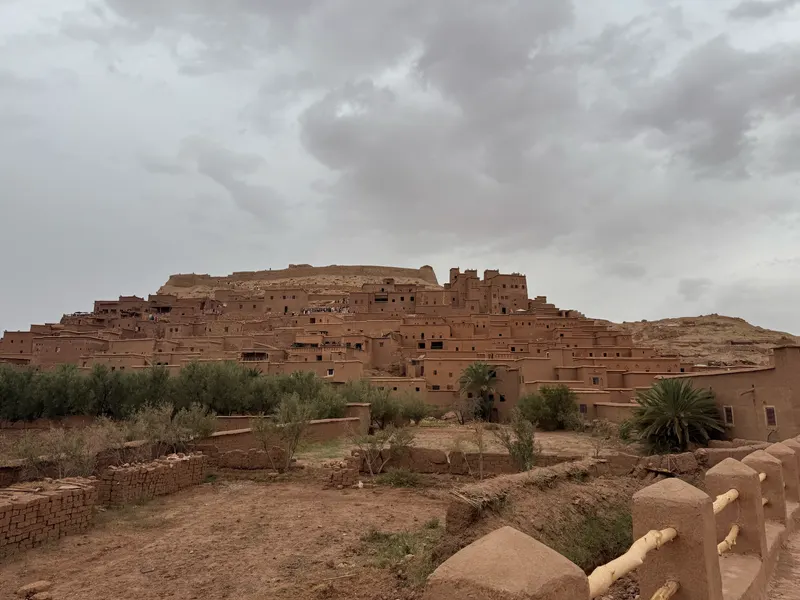
Ait Ben Haddou on a cloudy day
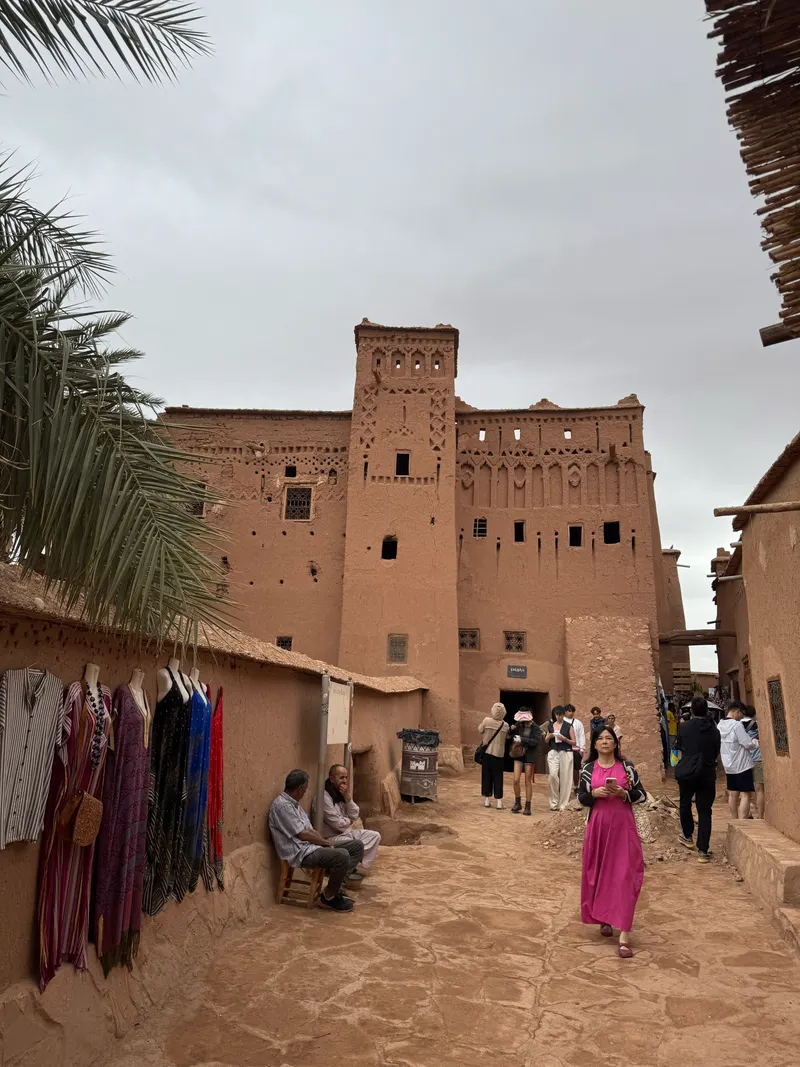
The kasbah of Ait Ben Haddou
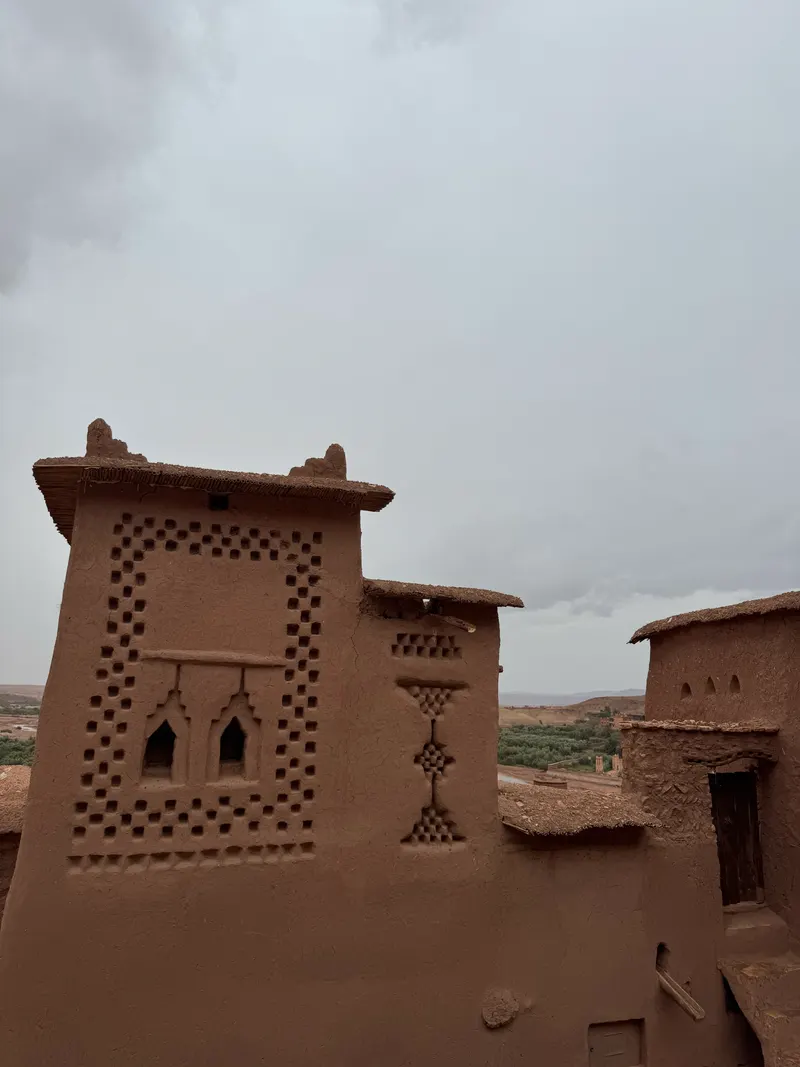
Traditional earthen construction
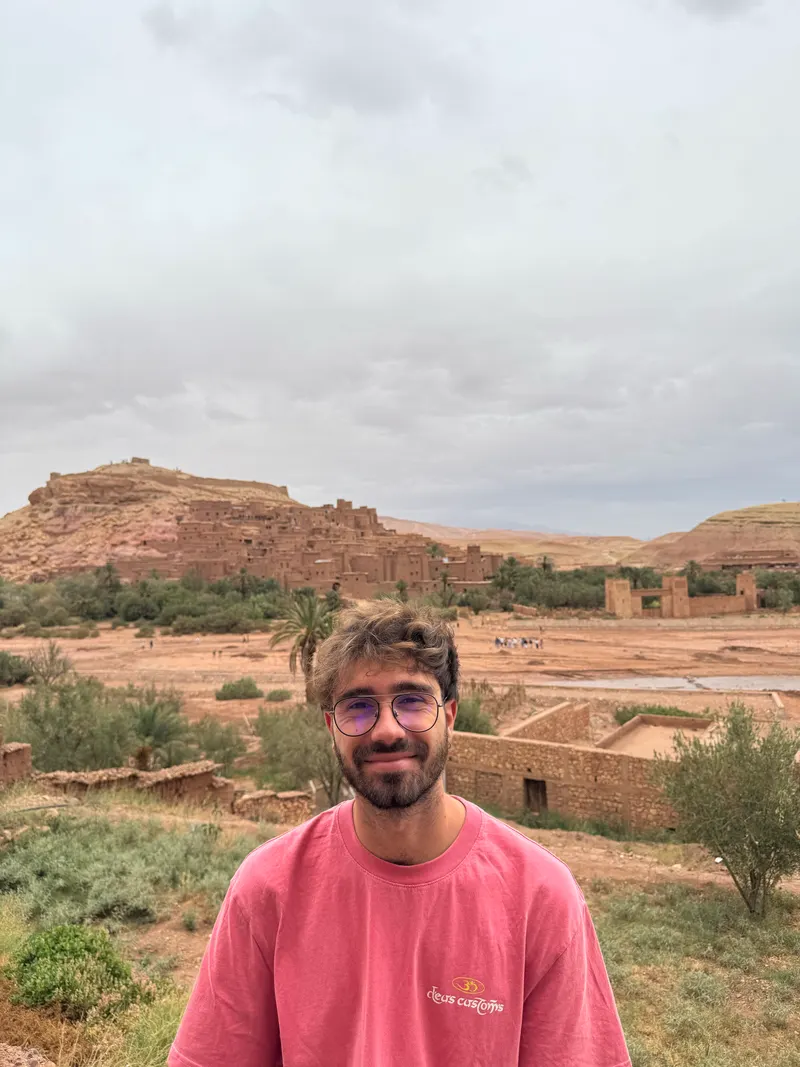
Ait Ben Haddou in the background
The route also stops at Palm Valley, where it’s surreal how many palm trees line the valley floor compared to the arid landscape surrounding it.
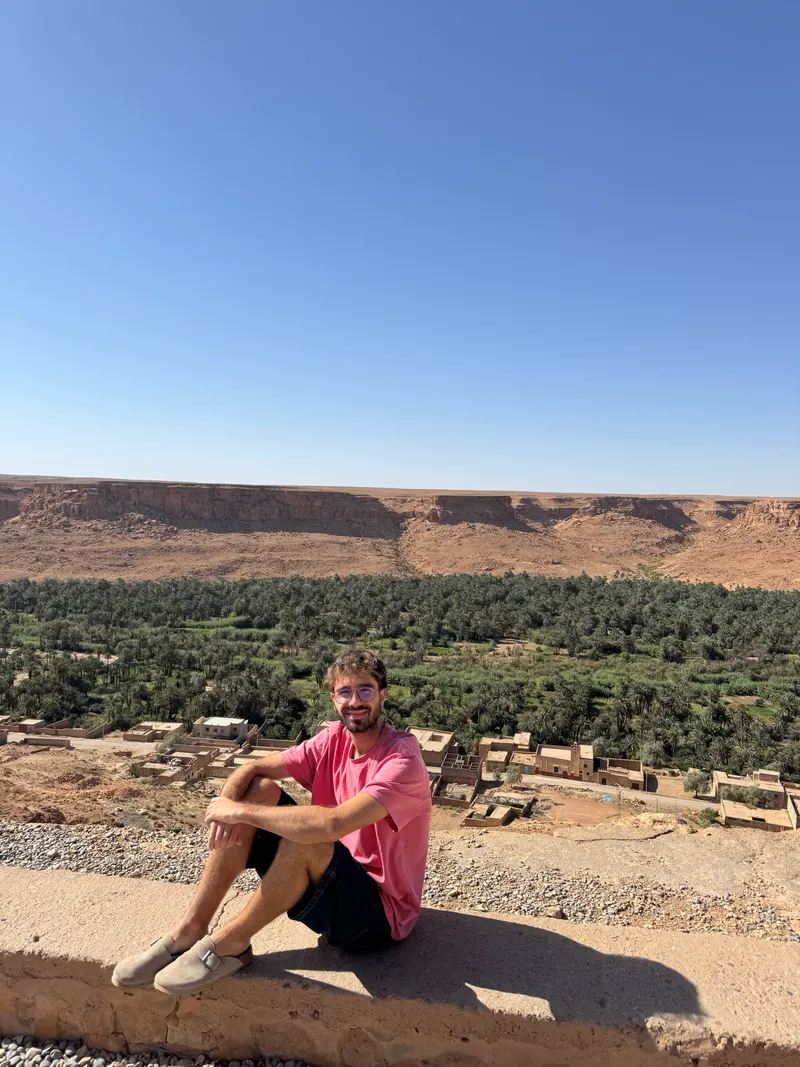
Palm Valley
Somewhere along the road through the High Atlas, we stopped in a traditional Amazigh village, mudbrick houses built straight into the mountainside, with a wall nearby painted in the Amazigh flag’s colors. It’s a good reminder of just how much of rural Morocco is Amazigh, not Arab, and how visible that identity still is.
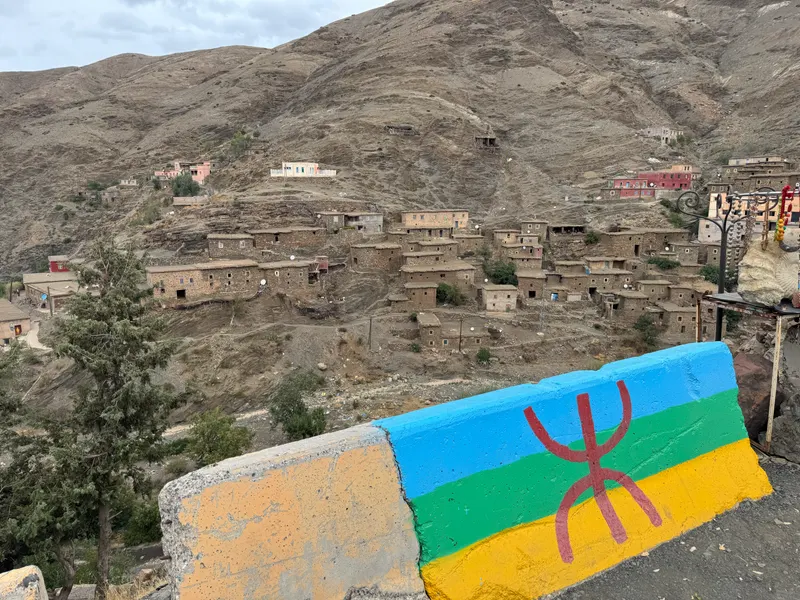
Amazigh flag overlooking the village
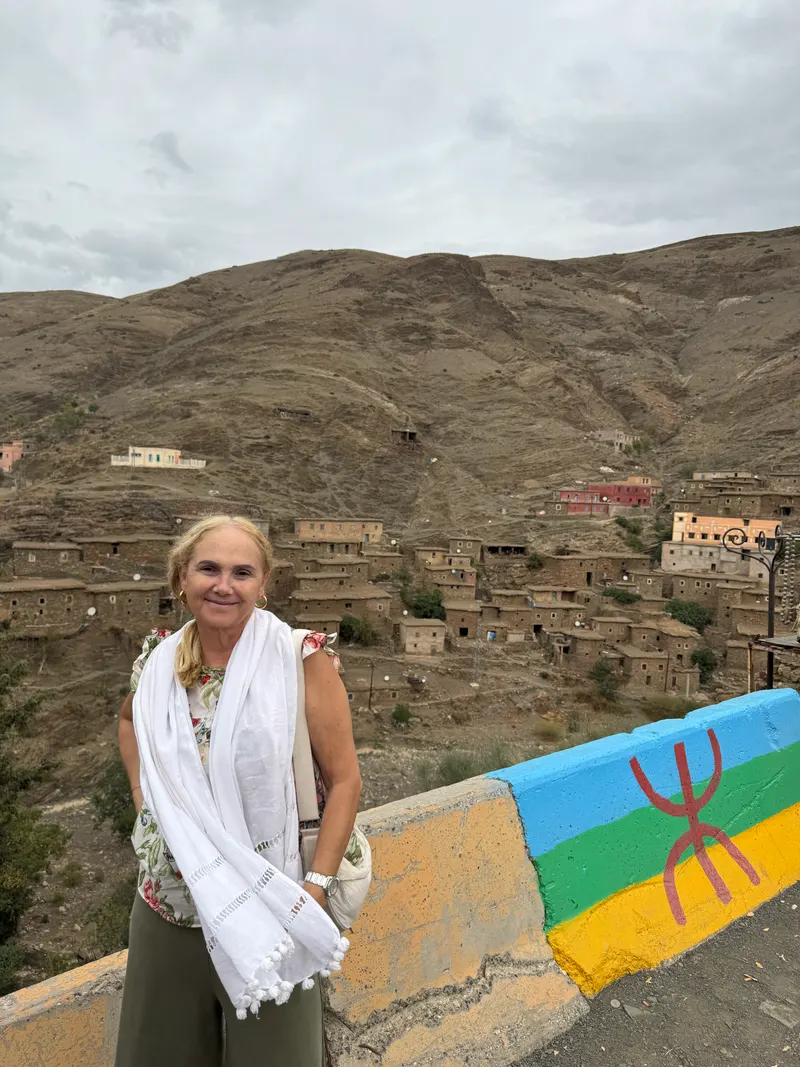
A traditional Amazigh village in the Atlas Mountains
Your first night is usually spent around the Rose Valley, famous for its rose festival, though don’t expect to see roses in bloom outside the season.
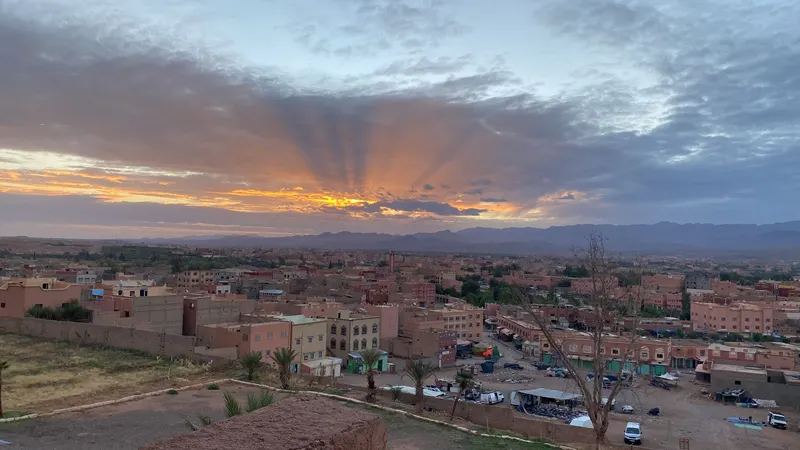
View from our hotel in Rose Valley
Day 5: Dades Gorges to Merzouga, then sunset in the dunes
The next day continues through the impressive Dades Gorges before heading on toward Merzouga.
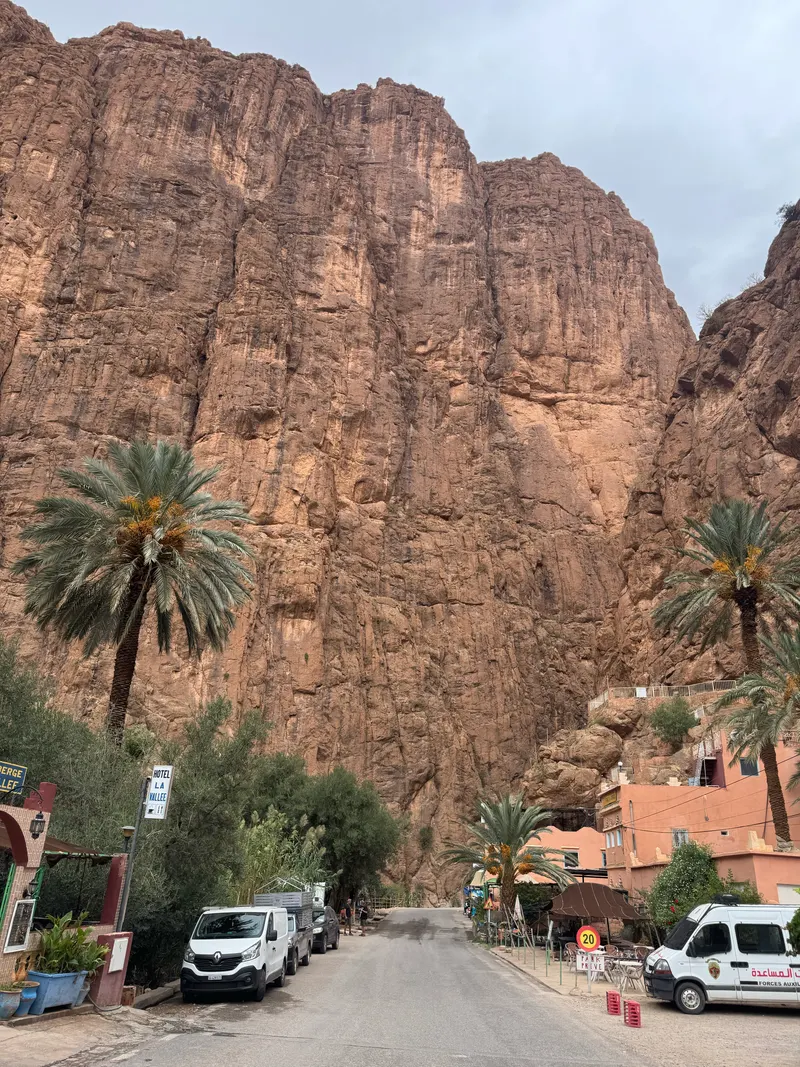
Dades Gorges
Most excursions are timed so you reach Merzouga a couple of hours before sunset, giving you time to get your turban on and prepare for a camel or 4x4 ride into the dunes.
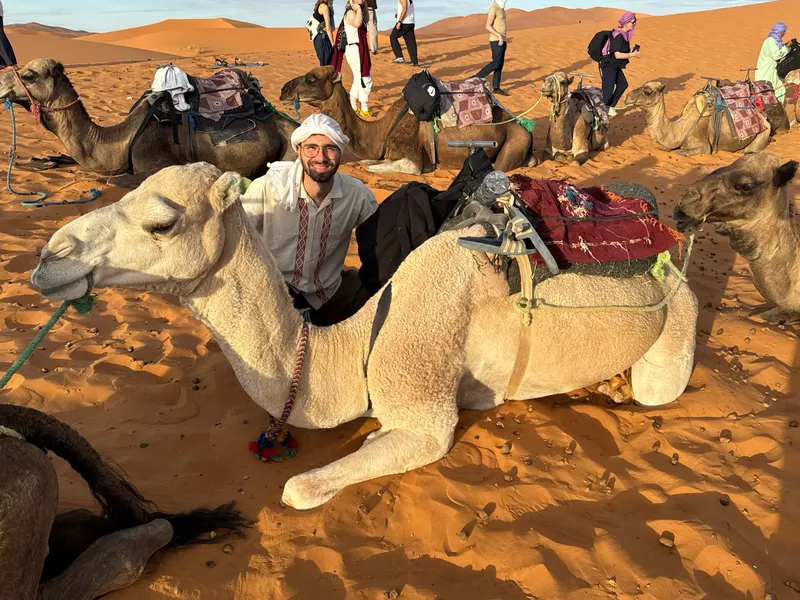
Meeting my camel before the ride
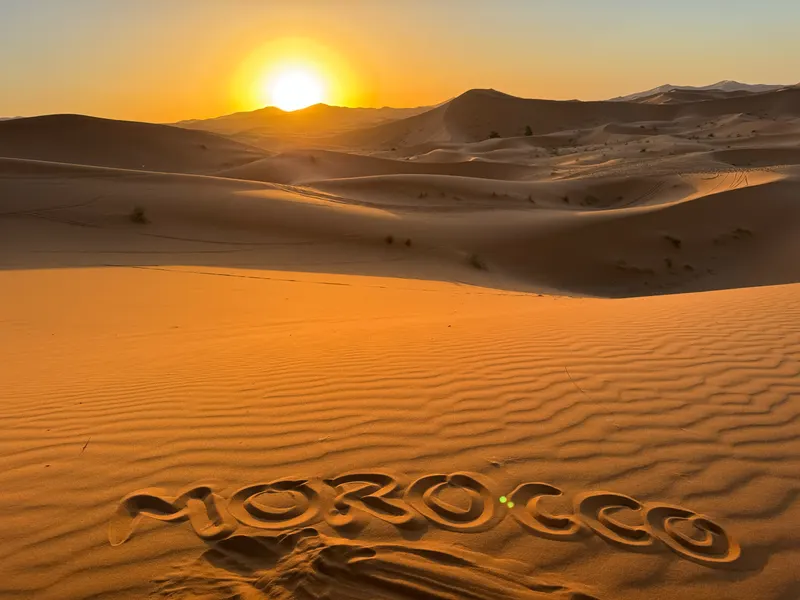
"Morocco" written in the sand
Pro Tip: If you're planning to sleep in the desert, which I'd definitely recommend, you'll reach the camp by camel, 4x4, or on foot alongside the camel convoy, the tents are a little way into the dunes, though most camps aren't actually that remote.
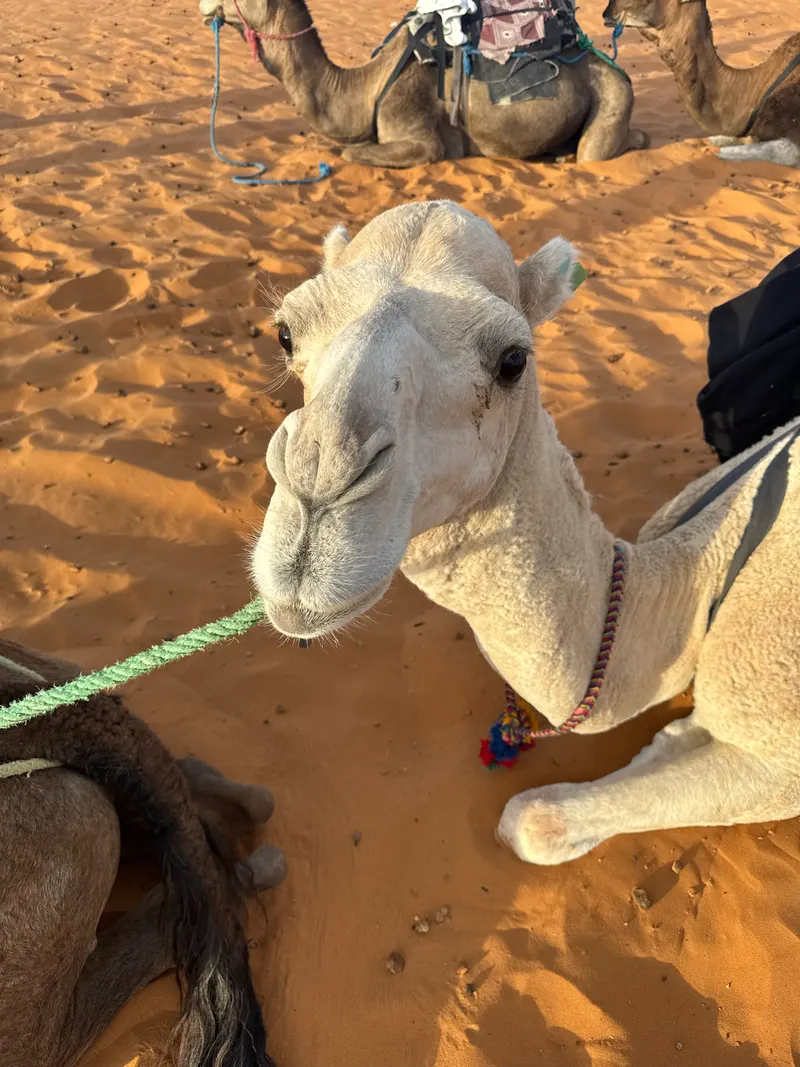
Al-Abyad, "the white one"
Camel ride at sunset
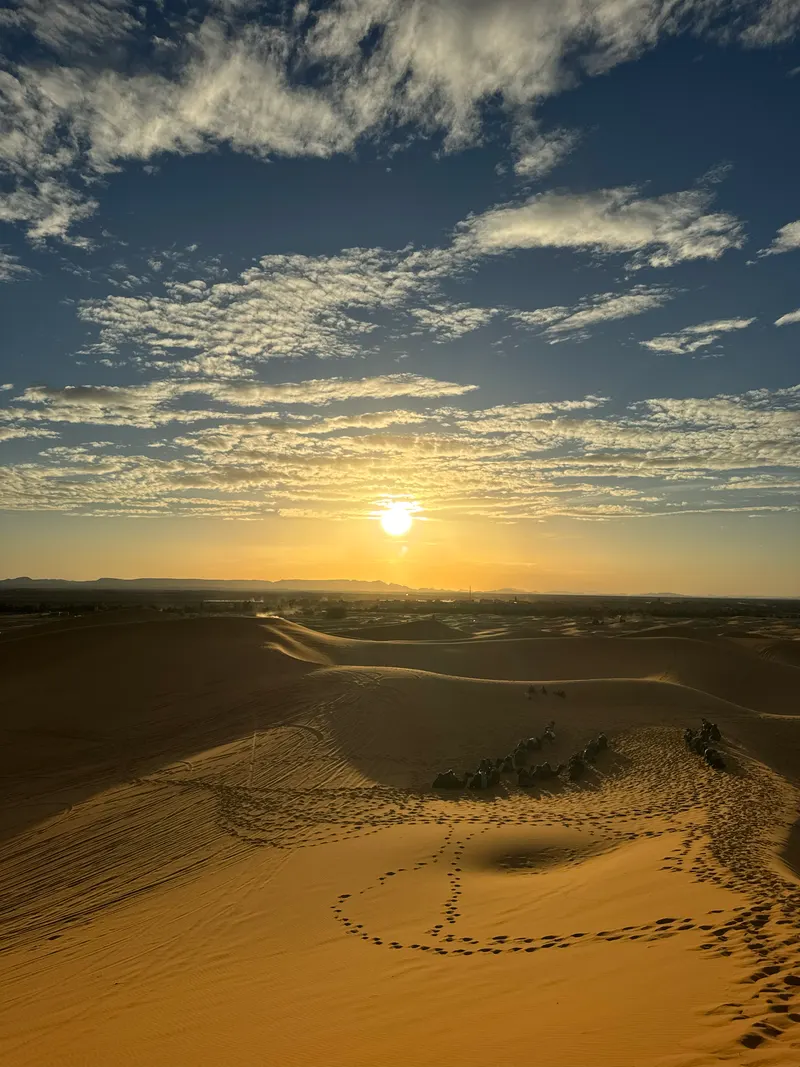
Sunset over the Merzouga dunes
Most excursions also offer sandboarding on the way. If you’re experienced, you can try standing on the board, but you can just as easily sit and let yourself go, no technique needed. The dunes here are big enough to be thrilling, if not quite as impressive as the ones in Huacachina, Peru.
With any excursion come the extra activities. I don’t think it makes a huge difference which company you book with, in most cases they’ll stop at a few local shops along the journey because they earn a commission for bringing customers in. These can include an atelier that makes paintings with tea and fire, an Amazigh carpet display, or a textile shop to pick up a turban for the desert. Don’t feel pressured to buy anything at any of these stops.
One night in the desert is enough to see both sunset and sunrise and get some stargazing in. You might stay longer if you want to connect with other travelers or book extra activities, but a single night did the trick for me. Be prepared to wake up early to catch the sunrise before heading back on your camel.
Day 6: Back to your starting point, or onward
If your flight options aren’t flexible, you can loop back all the way to where you started, Marrakech, Fes, Ouarzazate, wherever that was. In my case, I’d booked the excursion through GetYourGuide with a drop-off in Fes, so I used the desert as more of a stopover on the way north.
Day 7. Fes
Plan at least a full day for Fes. It’s one of Morocco’s imperial cities and its first capital.
The medina, Fes El Bali, is huge and is arguably the biggest pedestrian zone in the world. I didn’t find it as chaotic as I expected. It was easy enough to navigate, though I’d still recommend downloading an offline map of the city on Google Maps beforehand. Plenty of locals will offer directions, but not all of them have good intentions, some will tell you a street is closed when it isn’t. Follow your instinct, and don’t be scared to get a little lost or turn around when needed.
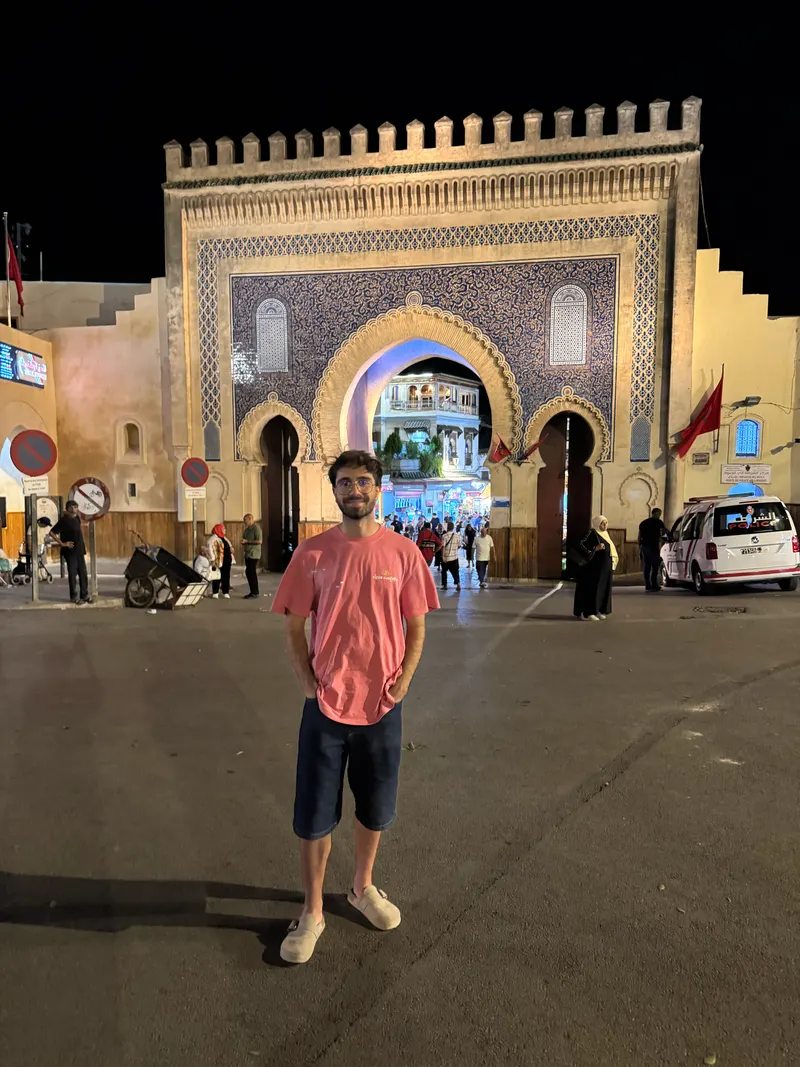
At Bab Bouljloud, Fes's main gate
Staying inside the medina is probably the better option, it’s where most tourists stay and where you’ll do most of your sightseeing. Bab Bouljloud, the ornate gate on the west side, is your main point of reference and the best place to start or end any visit.
I also particularly enjoyed the newer part of Fes, especially the Jewish quarter and the square in front of the Royal Palace. You can only see the palace from the outside, but the gates are very photogenic.
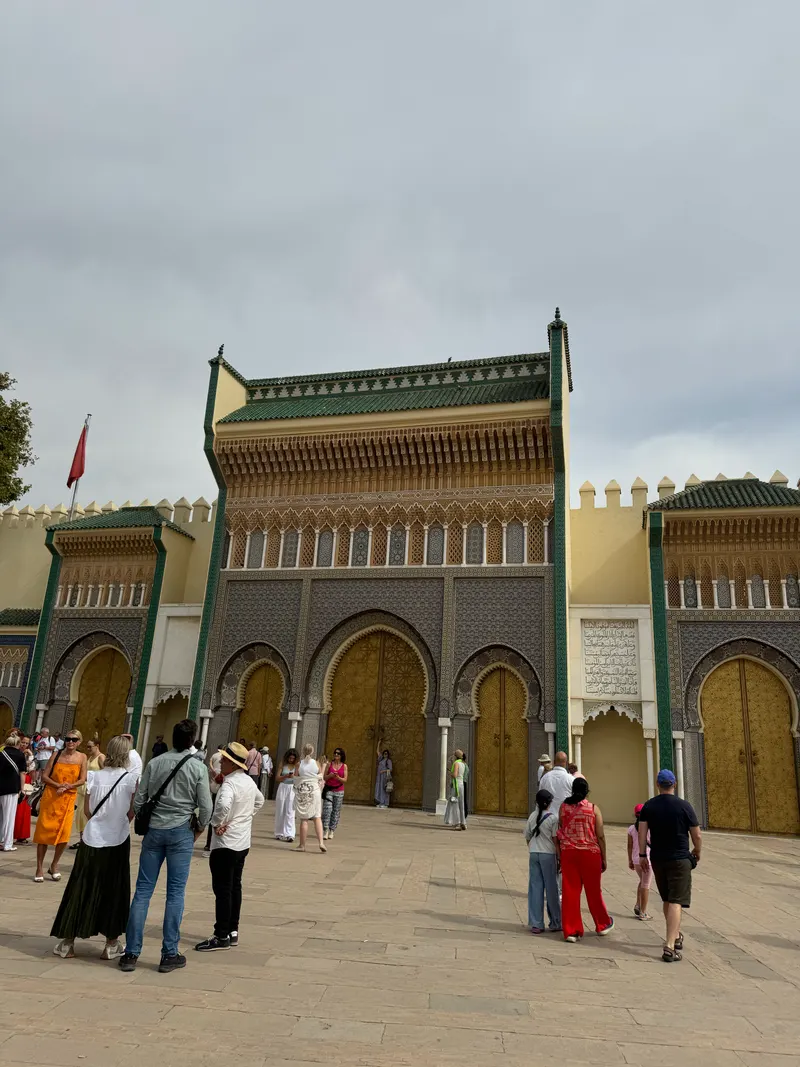
Crowds gathering for photos in front of the Royal Palace gates
Jnan Sbil, the city park, was another highlight: huge palm trees, shaded alleys, and genuinely well maintained.
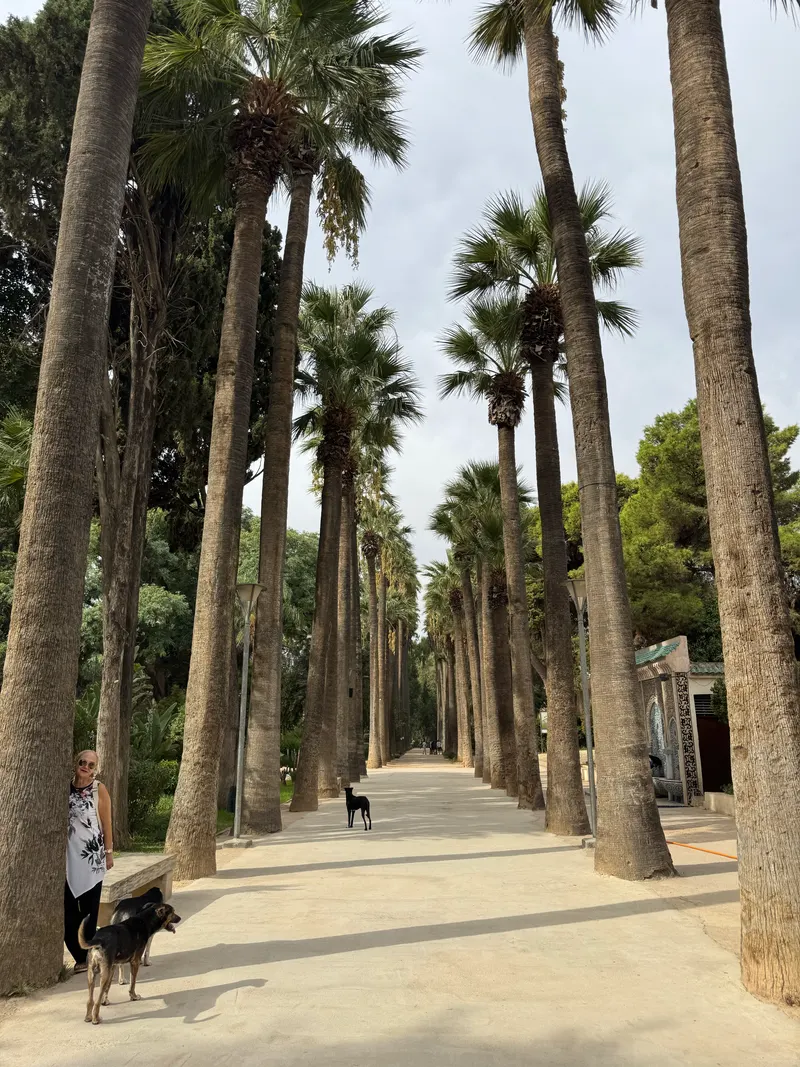
Jnan Sbil, Fes's city park
We’d heard a lot of negative reviews about the tanneries, but our experience was positive. We just stepped into one of the shops overlooking the plaza, headed up to the terrace and took our photos. Nobody chased us or pushed us to buy anything. Entering these shops is free, though it’s worth carrying a few dirham in case they expect a small tip; they all sell leather goods made on site.
There are plenty of attractions in Fes, mosques, madrasas, and the oldest continuously operating teaching institution in the world, but many of these aren’t open to non-Muslim visitors. Again, the real appeal of Fes is getting lost, working your way through the narrow streets, finding a bargain here and there, and walking the two main streets that lead back to Bab Bouljloud.
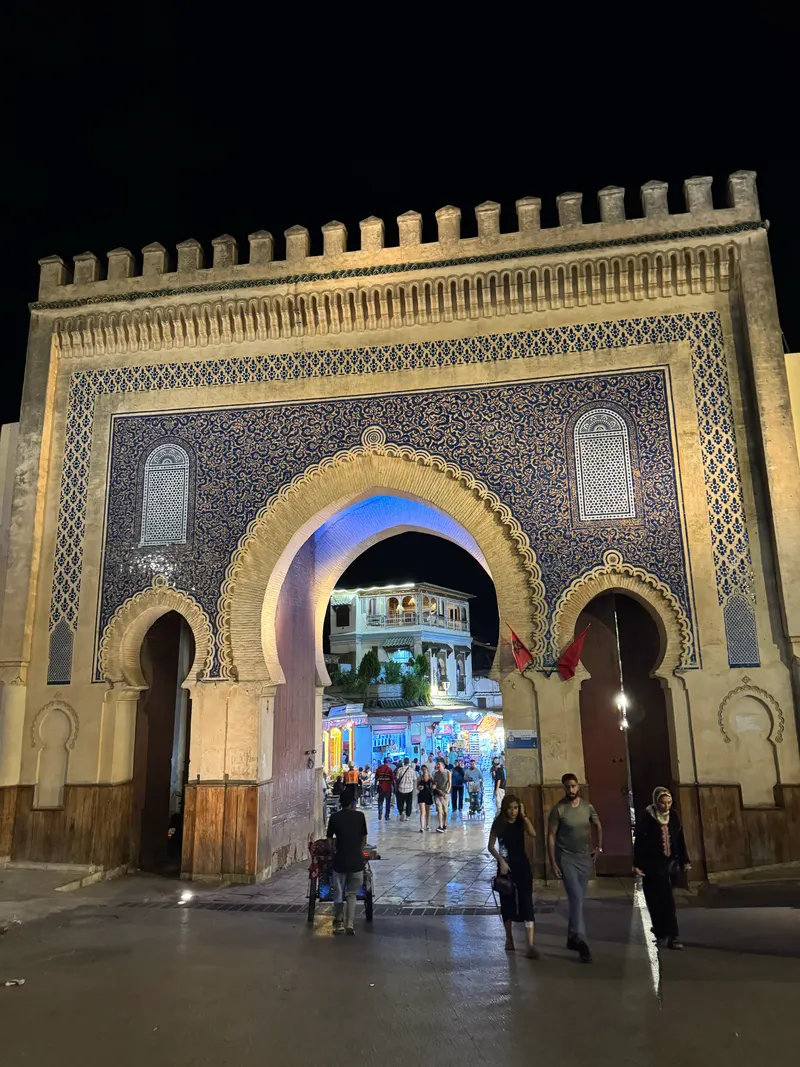
Bab Bouljloud's blue gate
In the evening, a rooftop dinner is a great way to end the day, we went to Darna, which had a lovely terrace strung with lamps.
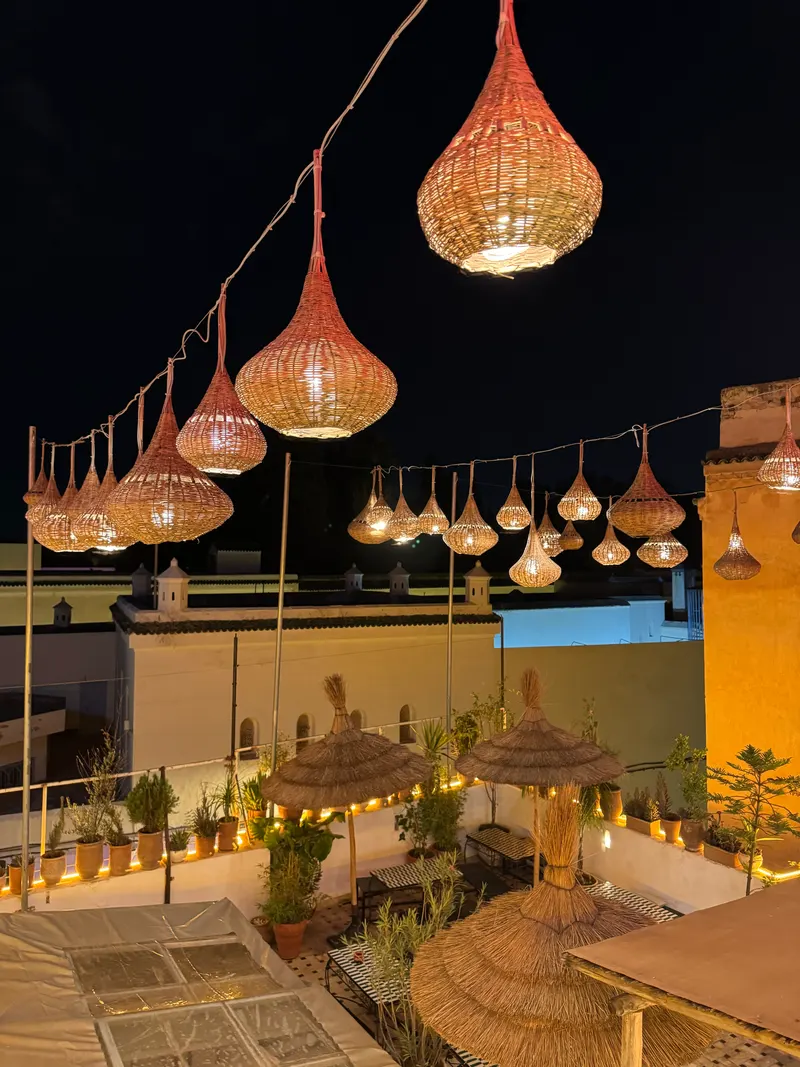
Darna's rooftop terrace
Fes is also a good strategic base, from here you can continue south or north through Morocco. We’d just come from the desert, so we booked a private transfer through GetYourGuide onward to Chefchaouen, the blue town (a post on that is coming soon).
Practical advice
Is Morocco safe?
I felt safe throughout the whole trip and found locals genuinely welcoming, in Marrakech, in the desert, and in Fes. That said, basic common sense applies: watch your belongings in crowded souks, agree on prices before getting in a taxi or buying anything, and don’t feel obligated to tip, buy, or pay for anything you didn’t ask for, whether that’s tea, a “free” gift, or unsolicited directions.
Haggling
Haggling isn’t optional in the souks, it’s expected, and part of the culture rather than something that will offend anyone. Start well below the asking price and negotiate from there.
Mosques and madrasas
Most mosques in Morocco are closed to non-Muslims. Some madrasas, like Ben Youssef in Marrakech, are open for a fee and well worth the visit. Dress modestly when visiting any religious or historic site.
Getting around
- Marrakech airport to the medina: taxi, pay by card at the machine or cash at the staffed desk, roughly 100-200 MAD (~$11-21 USD, Oct 2026).
- Marrakech to Ouzoud Falls: around 2-3 hours by car; easiest as a day tour.
- Marrakech to Merzouga (desert): typically a 3-day tour via Ait Ben Haddou, Dades Gorges and an overnight camel trek into the dunes.
- Merzouga to Fes: a long drive, usually included as the final leg of a desert tour, or bookable as a separate private transfer.
Final thoughts
Morocco packs an enormous amount of variety into a short trip: medina souks, waterfalls, Amazigh villages in the High Atlas, a night under the stars in the Sahara, and the labyrinth of Fes. Seven days is enough to get a real feel for the country without rushing, as long as you accept that you won’t see everything, and that getting a little lost is part of the experience.