Just north of the Costa Brava, the coast keeps going into France, and it changes its name to the Côte Vermeille (Costa Vermella in Catalan, Costa Bermeja in Spanish), the “vermilion coast”. It’s a short stretch of rocky coves and fishing villages between the Pyrenees and the Mediterranean, and it’s an easy day trip from the Spanish side.
This was one day of a five-day road trip through Catalonia in late October. We drove up from Cadaqués, stopped in Banyuls-sur-Mer and Collioure, headed inland to Carcassonne, and finished the day in Perpignan before crossing back into Spain the next morning. The rest of the trip (Girona, Cadaqués, Dalí’s house and museum, the medieval villages of the Garrotxa and the Pyrenees) is in the companion post: Catalonia Road Trip: Girona, Costa Brava & the Pyrenees.
The route at a glance
- Morning: Drive up the coast from Cadaqués to Banyuls-sur-Mer
- Late morning: Collioure
- Afternoon: Carcassonne
- Evening and overnight: Perpignan (Ibis Budget Center)
- Next morning: Back across the border to Figueres
Pro Tip: Carcassonne isn't actually on the coast. It's close to two hours inland from Collioure, which makes this a long day of driving. It's absolutely doable, but if you have the time, it's worth giving Carcassonne a day of its own.
Banyuls-sur-Mer
The first town after the border is Banyuls-sur-Mer, a relaxed seaside town with a curved beach backed by vineyards climbing up the hills. Those vineyards produce Banyuls, a sweet fortified wine that’s the region’s specialty, so it’s a good place to pick up a bottle.
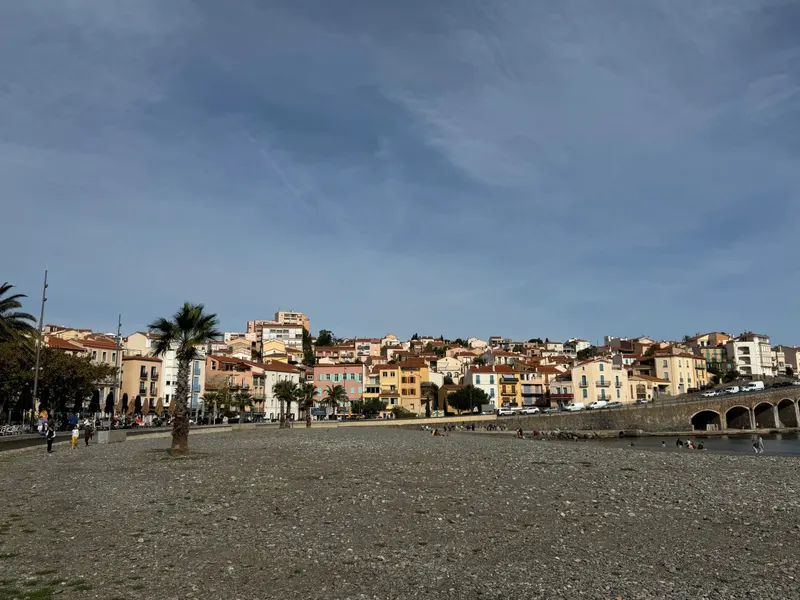
The beach at Banyuls-sur-Mer
Collioure
A short drive further up the coast is Collioure, the jewel of the Côte Vermeille. Its narrow streets are lined with houses painted in every color you can think of, pink, yellow, orange and blue, with flowers on the balconies and shutters to match. In the early 1900s, painters like Matisse and Derain came here and were so inspired by the light and color that it became one of the birthplaces of Fauvism.
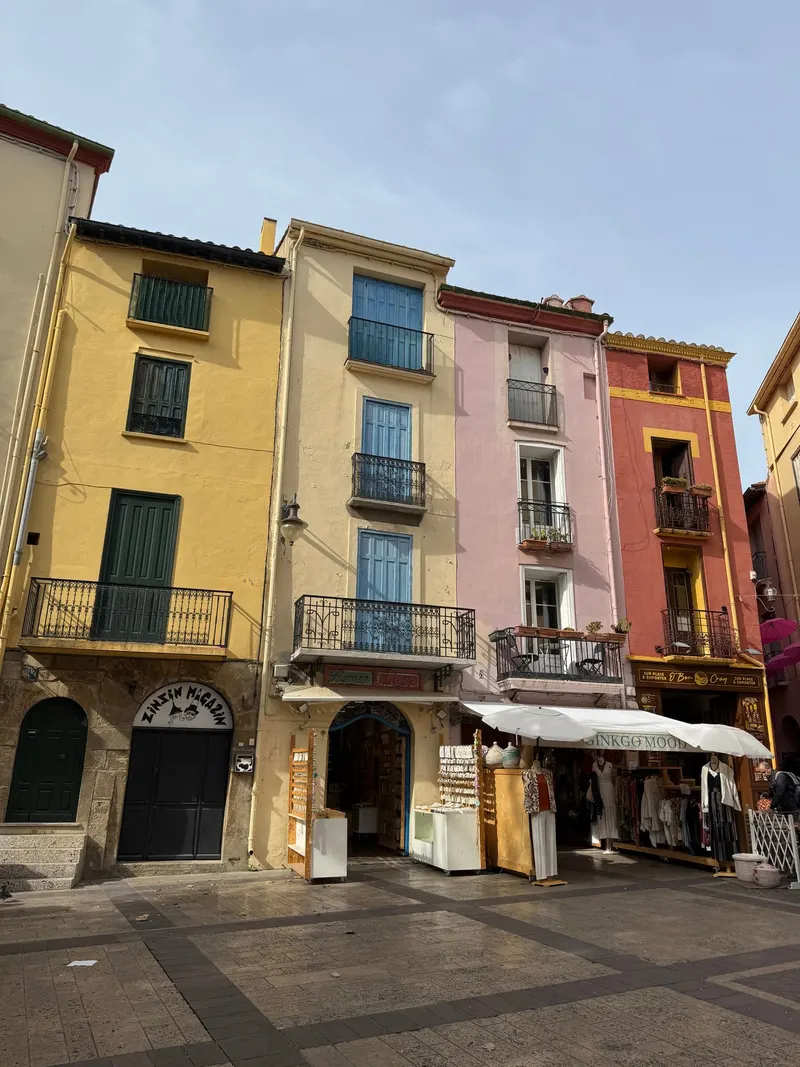
Houses in every color
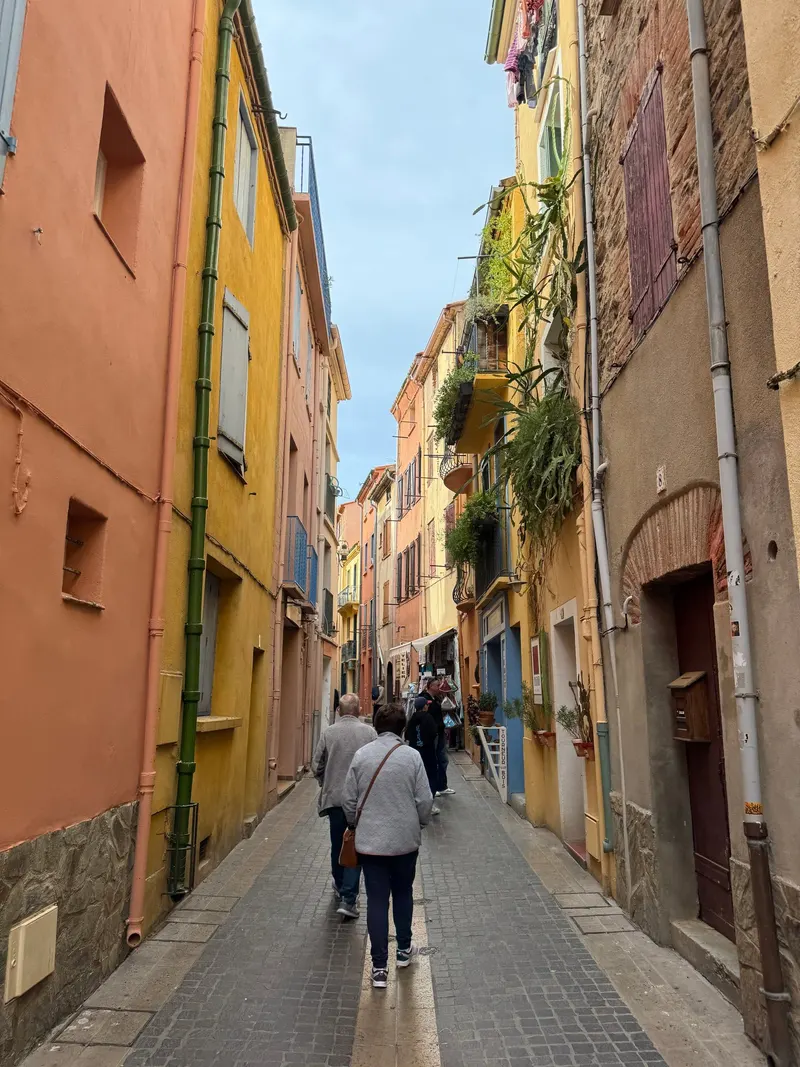
Colorful buildings in Collioure
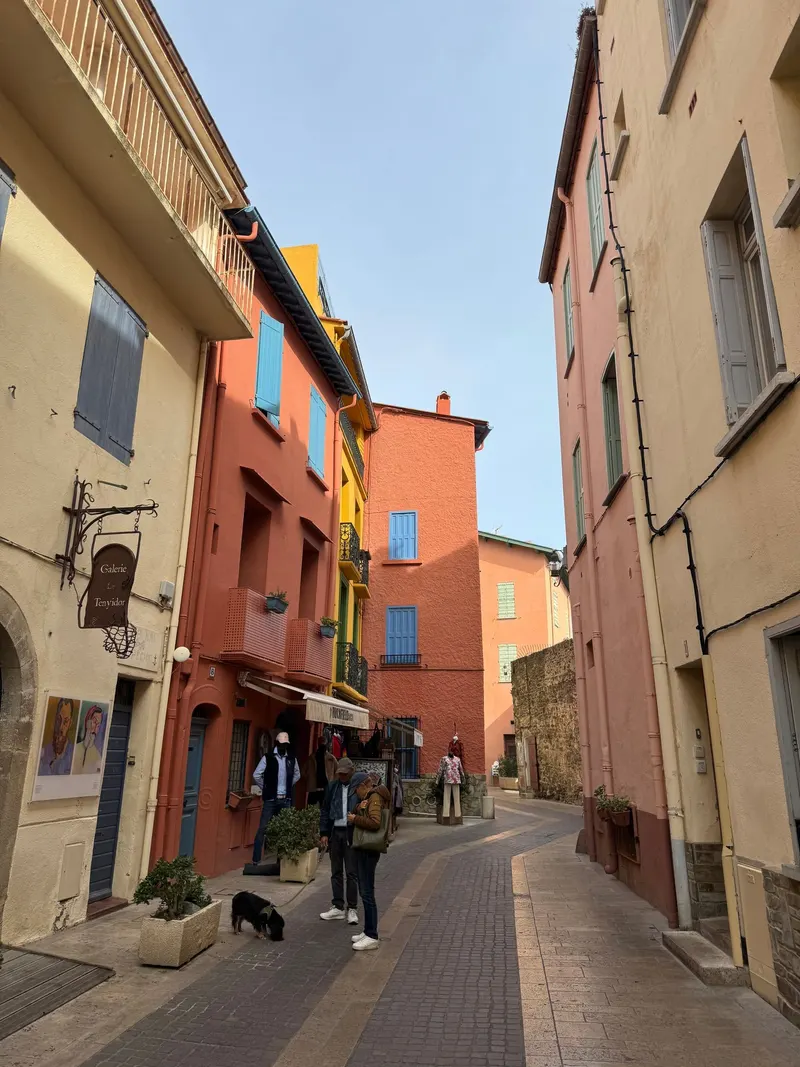
One of Collioure's colorful streets
The bay is framed by the Château Royal, a fortress that once belonged to the Kings of Majorca, on one side, and on the other the church of Notre-Dame-des-Anges, whose round bell tower, right on the water, used to double as the town’s lighthouse.
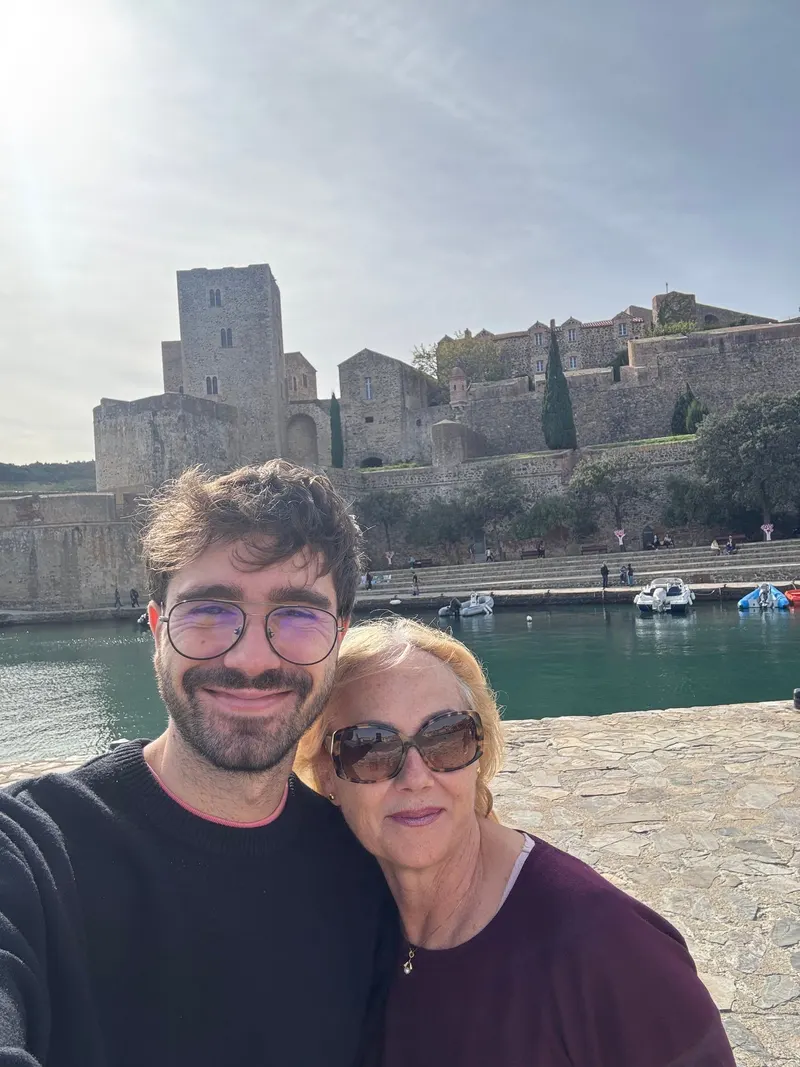
In front of the Château Royal
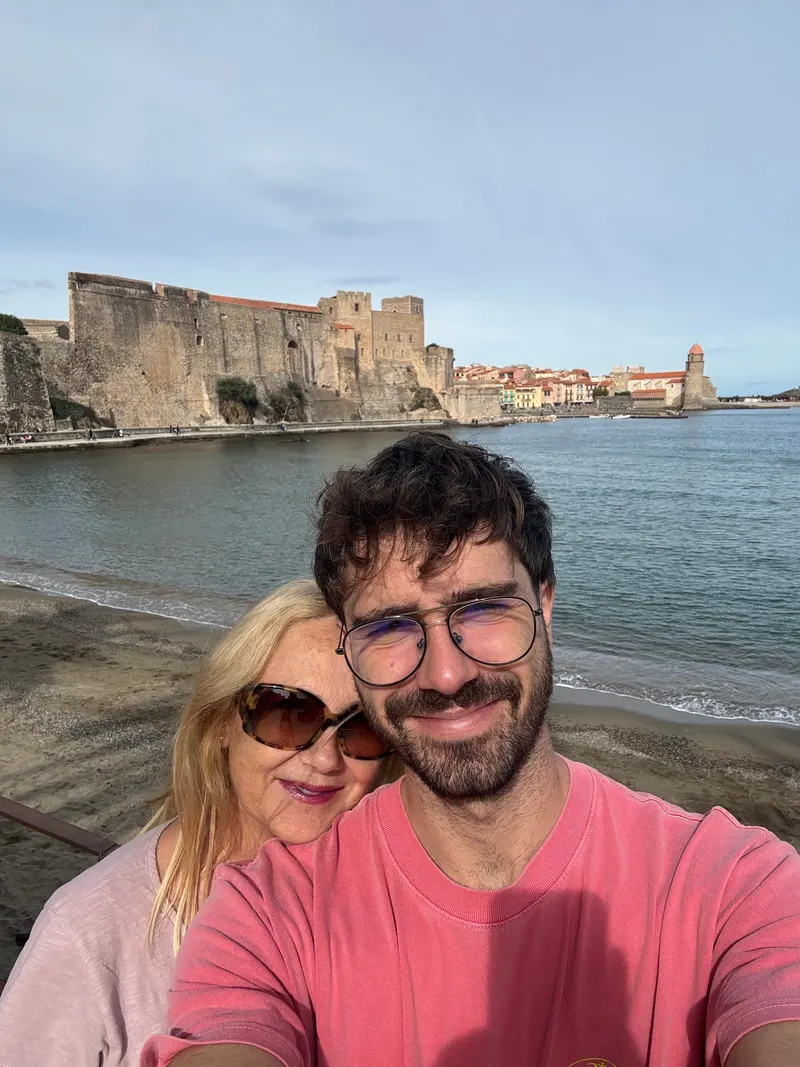
The castle and church behind
Antonio Machado’s grave
Collioure has a strong connection to Spain. The Spanish poet Antonio Machado crossed the border here in early 1939, fleeing the end of the Spanish Civil War, and died in the town just a few weeks later. He’s buried in the local cemetery, and his grave has become a place of pilgrimage. Next to it there’s a mailbox where visitors still leave letters and poems for him.
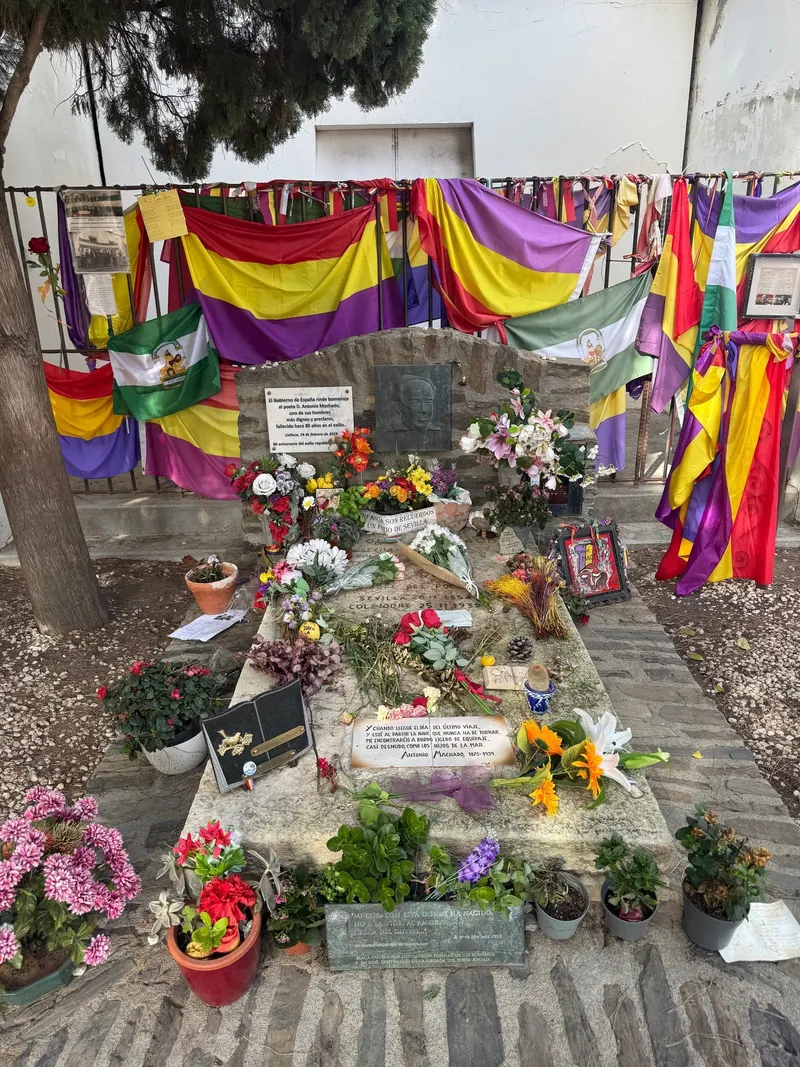
Antonio Machado's tomb
Language Tip: If you're learning Spanish, Machado is worth reading. His short, simple poems are some of the most quoted in the language, like the famous line from Proverbios y cantares: "caminante, no hay camino, se hace camino al andar" ("traveler, there is no road, the road is made by walking"). Fitting for a road trip.
Carcassonne
From the coast we headed inland to Carcassonne, and specifically to La Cité, the medieval walled city on the hill above the modern town. With its double ring of ramparts and dozens of towers, it looks like something straight out of a fairy tale, and it’s a UNESCO World Heritage Site.
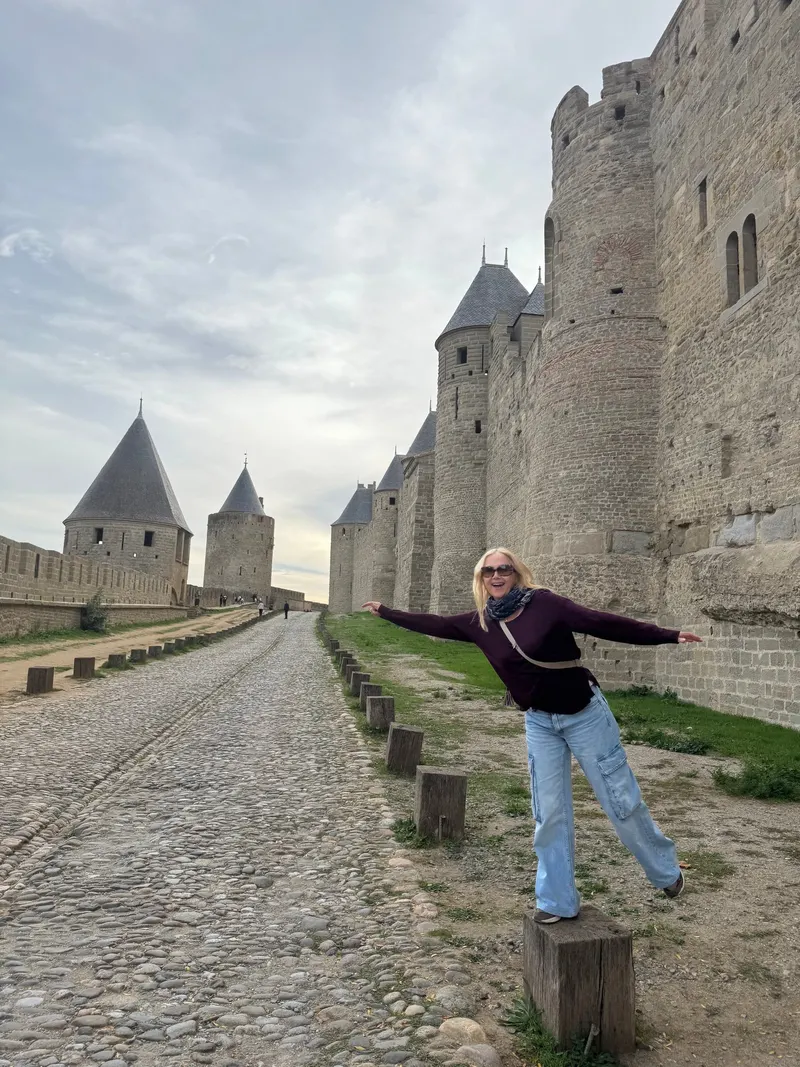
My mom next to the ramparts
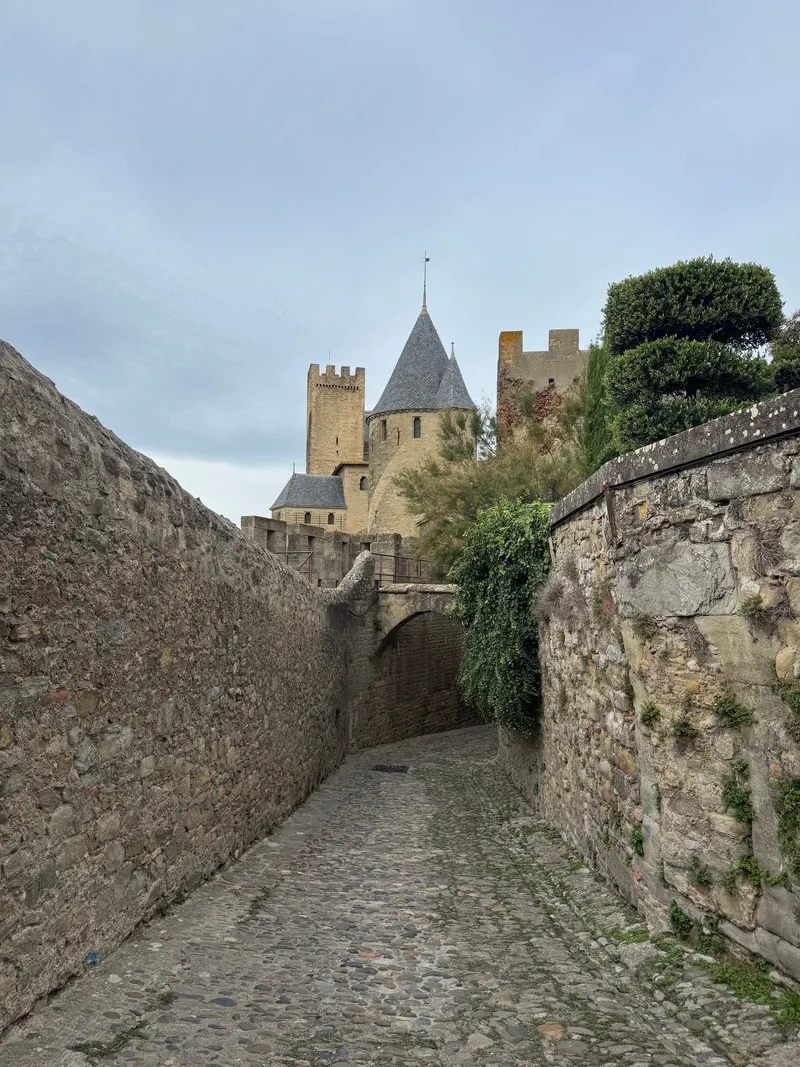
A cobblestone street inside La Cité
Inside the walls, it’s a maze of cobblestone lanes, small squares and old stone buildings, some of them completely covered in ivy.
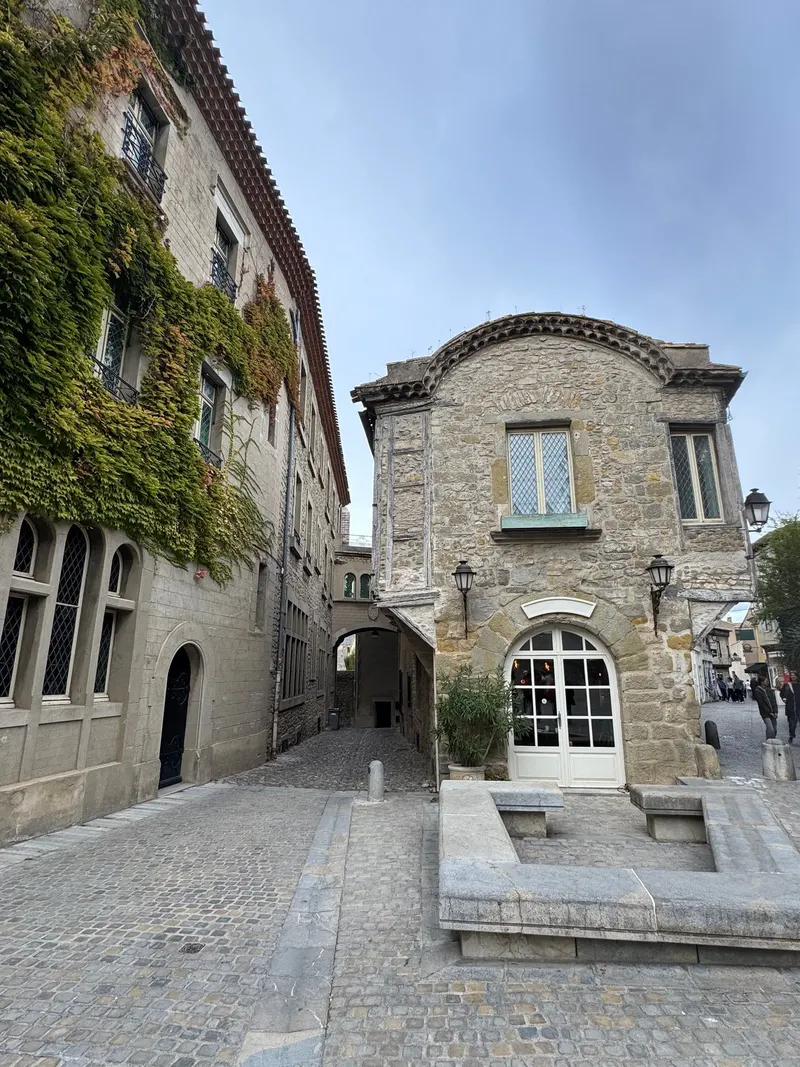
Ivy-covered buildings in Carcassonne
Pro Tip: Walking around La Cité and its outer ramparts is free. You only need a ticket for the Château Comtal (the castle inside the walls) and the walk along the inner ramparts. Park in one of the paid lots just outside the gates, cars can't go inside.
Perpignan
We ended the day back near the coast in Perpignan, and spent the night at the Ibis Budget Center, a simple, central base within walking distance of the old town.
Perpignan’s most famous landmark is the Castillet, a red-brick fortified gate from the 14th century that once formed part of the city walls. We saw it both during the day and at night, when it was lit up in pink for Octobre Rose, France’s breast cancer awareness month.
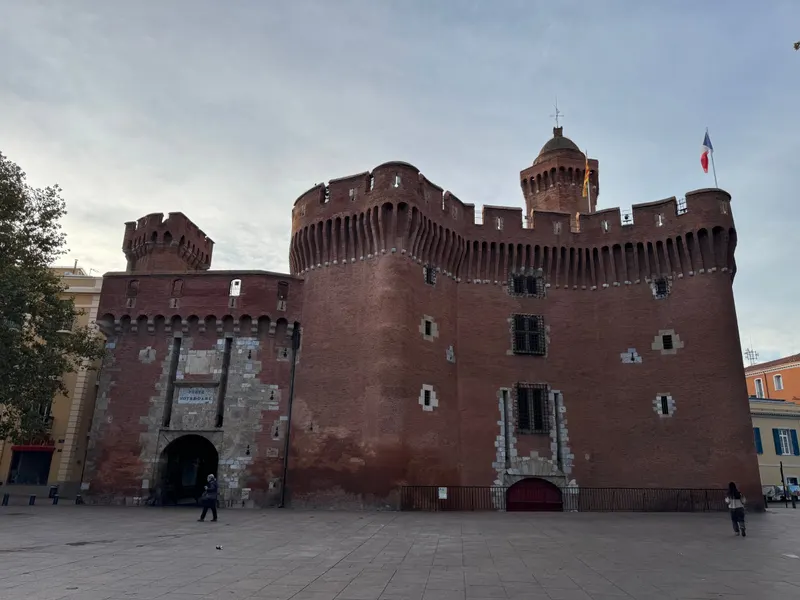
The Castillet by day
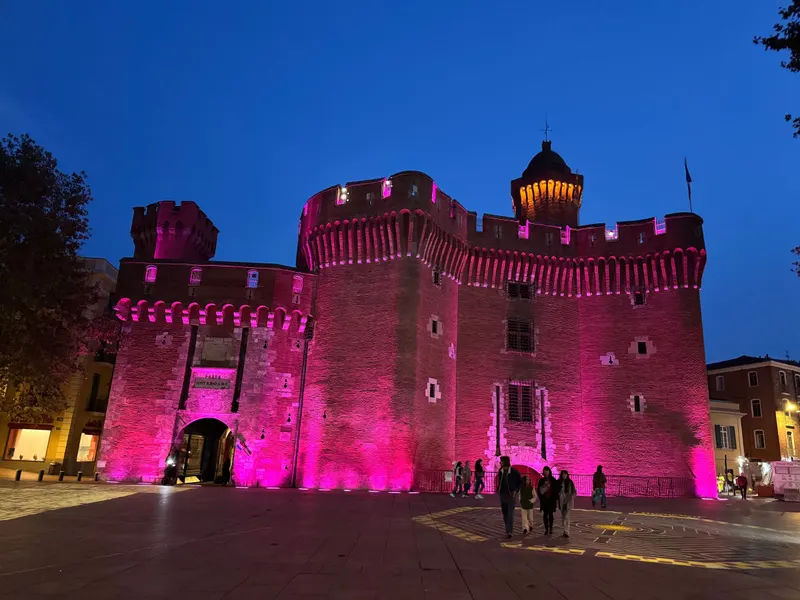
Lit up in pink for Octobre Rose
Right next to it is the Porte Notre-Dame, part of the same fortified complex. A short walk away, the Loge de Mer, a Gothic building that once housed the city’s maritime trade exchange, looks beautiful lit up in the evening.
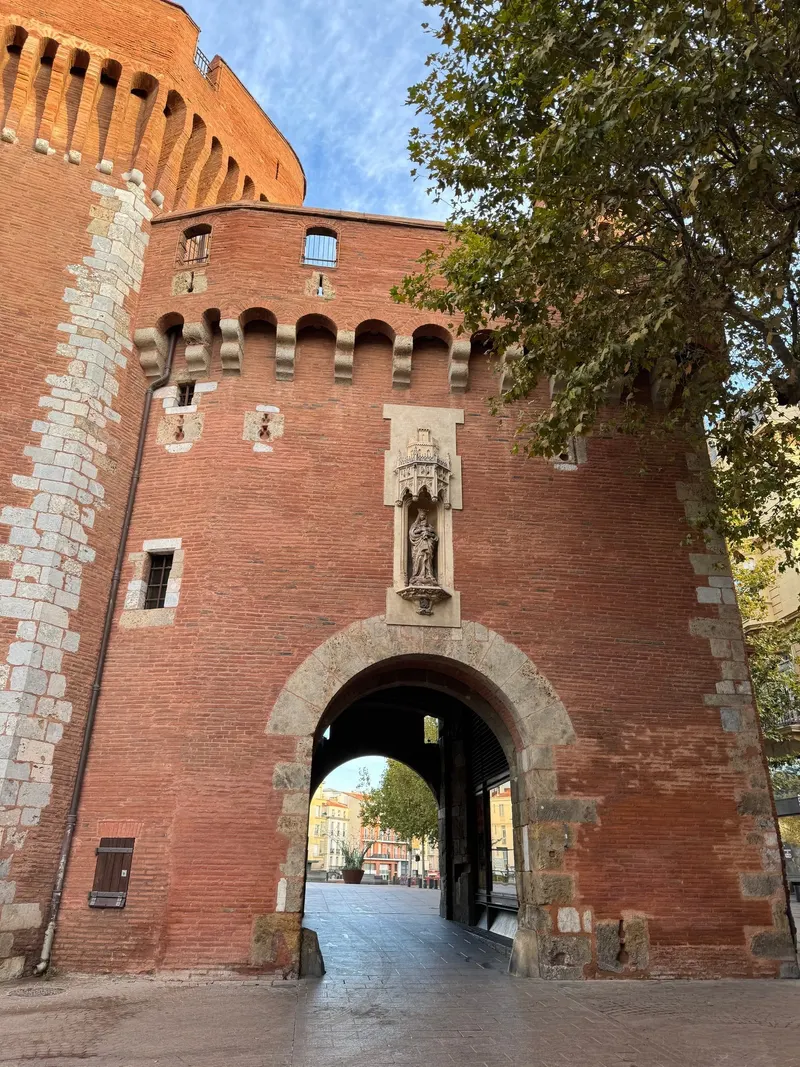
The Notre-Dame gate
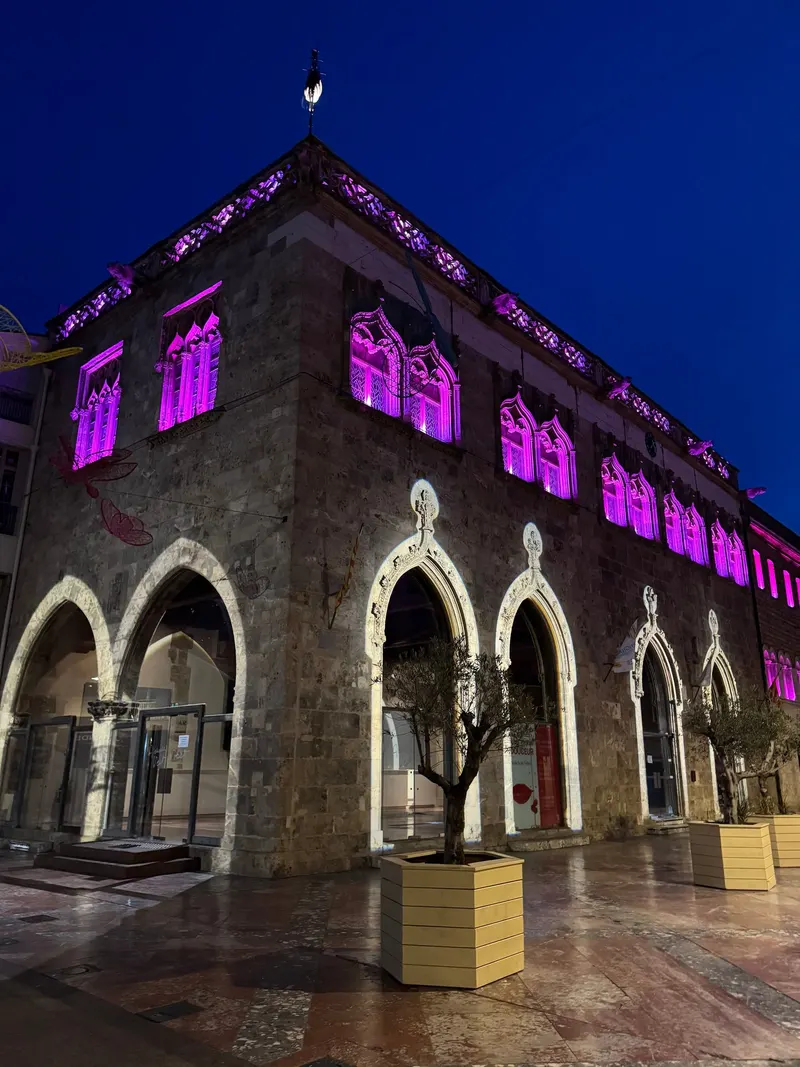
The Loge de Mer at night
Catalan in France
Perpignan was once part of the Crown of Aragon and even a capital of the Kingdom of Majorca, and it only became French in 1659. Locals still call the region Catalunya Nord (Northern Catalonia), and you’ll spot Catalan on street signs and the red-and-yellow Catalan flag all over town. If you’ve just come from Girona, it’s a fun reminder that languages don’t stop at borders.
Language Tip: French is what everyone speaks day to day here, so a bonjour when you walk into a shop is essential, it's considered rude to skip it. But if you've picked up some Catalan on the Spanish side, look out for it on signs: Benvinguts a Perpinyà means "Welcome to Perpignan".
The next morning we drove back across the border to Figueres and the Dalí Theatre-Museum, which is where the Catalonia post picks up.
Practical advice
Getting there
The Côte Vermeille starts right at the Spanish border. From Cadaqués, it’s around an hour and a half’s drive to Banyuls-sur-Mer, and from Figueres it’s even quicker via the motorway to Perpignan. There are no border checks to speak of between Spain and France, both are in the Schengen Area, but carry your ID anyway.
Getting around
A car makes this trip easy, especially if you want to fit Carcassonne in. Parking in Collioure fills up fast in summer, so arrive early or use the parking lots at the edge of town. Trains also run along the coast between Perpignan, Collioure and Banyuls-sur-Mer if you’d rather not drive.
Where we stayed
- Perpignan: Ibis Budget Center, simple and central
Final thoughts
This was only a short detour from our Catalonia road trip, but it was full of contrasts: a seaside town known for its wine, one of the most colorful villages on the Mediterranean, a poet’s grave with letters still arriving, a fairy-tale medieval city and a Catalan city that happens to be in France. If you’re exploring the Costa Brava, it’s well worth crossing the border for a day.