This trip was a loop by car through northern Catalonia in late October: a night in Girona, a night on the Costa Brava in Cadaqués, a quick hop over the border into France, and a night in the Pyrenees in Camprodon, before driving back down to Barcelona for a late flight. Five days, four hotels, and a medieval village around almost every bend.
Autumn turned out to be a great time for it. The beach crowds were long gone, the trees in the mountains were turning red and gold, and Girona was getting ready for its biggest festival of the year.
The French leg of the trip (Banyuls-sur-Mer, Collioure, Carcassonne and Perpignan) has its own post: Côte Vermeille Road Trip: Collioure, Carcassonne & Perpignan. This one covers everything on the Spanish side.
The route at a glance
- Day 1: Girona (overnight at Llegendes de Girona)
- Day 2: Monells, Roses and Cadaqués, including Dalí’s house in Portlligat (overnight at Can Pepin, Cadaqués)
- Day 3: Across the border to France (see the Côte Vermeille post)
- Day 4: Figueres, Besalú, Santa Pau and Castellfollit de la Roca (overnight at Cims de Camprodon)
- Day 5: Setcases, then Vic and Sitges on the way to Barcelona El Prat
Pro Tip: A car is really the only practical way to do a trip like this. Public transport reaches Girona, Figueres and Sitges easily, but villages like Monells, Santa Pau and Setcases have very limited bus service, and the whole point is being able to stop wherever looks good.
Day 1. Girona
Girona is the perfect first stop: compact, walkable, and with one of the best-preserved old towns in Catalonia. The classic view is from the bridges over the Onyar river, looking at the row of colorful houses hanging over the water. The red iron bridge, the Pont de les Peixateries Velles, was built by Gustave Eiffel’s company about a decade before his famous tower in Paris.
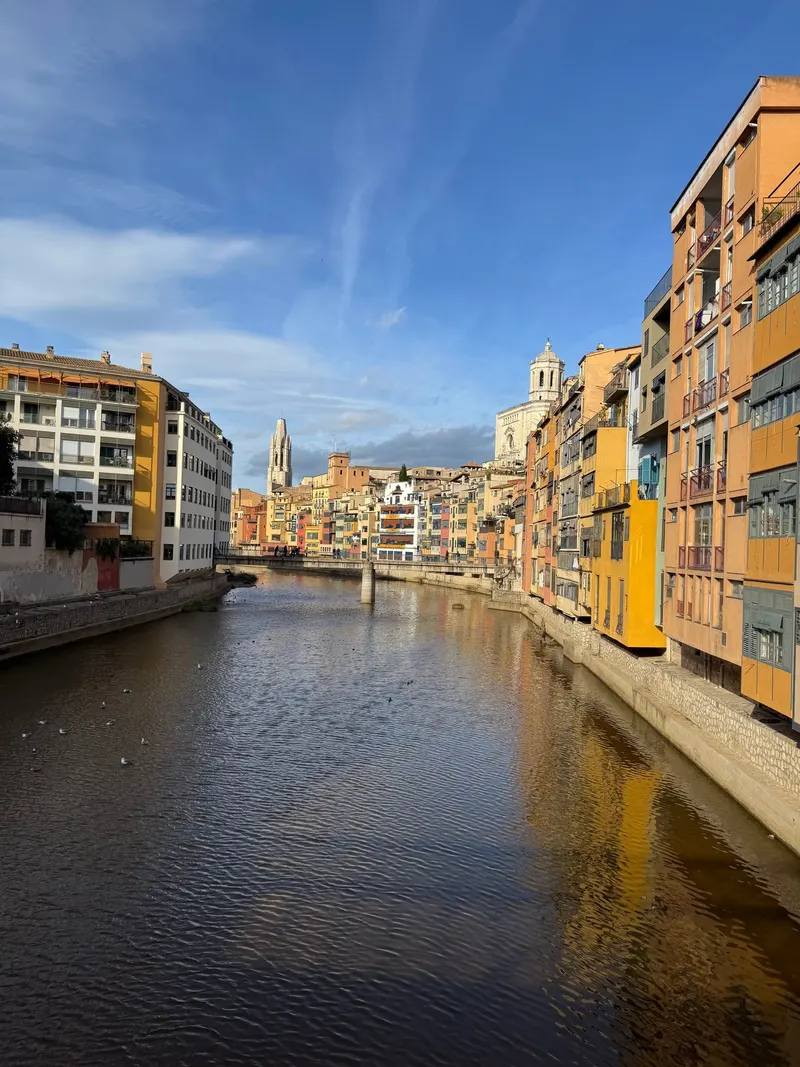
The Onyar river from the red bridge
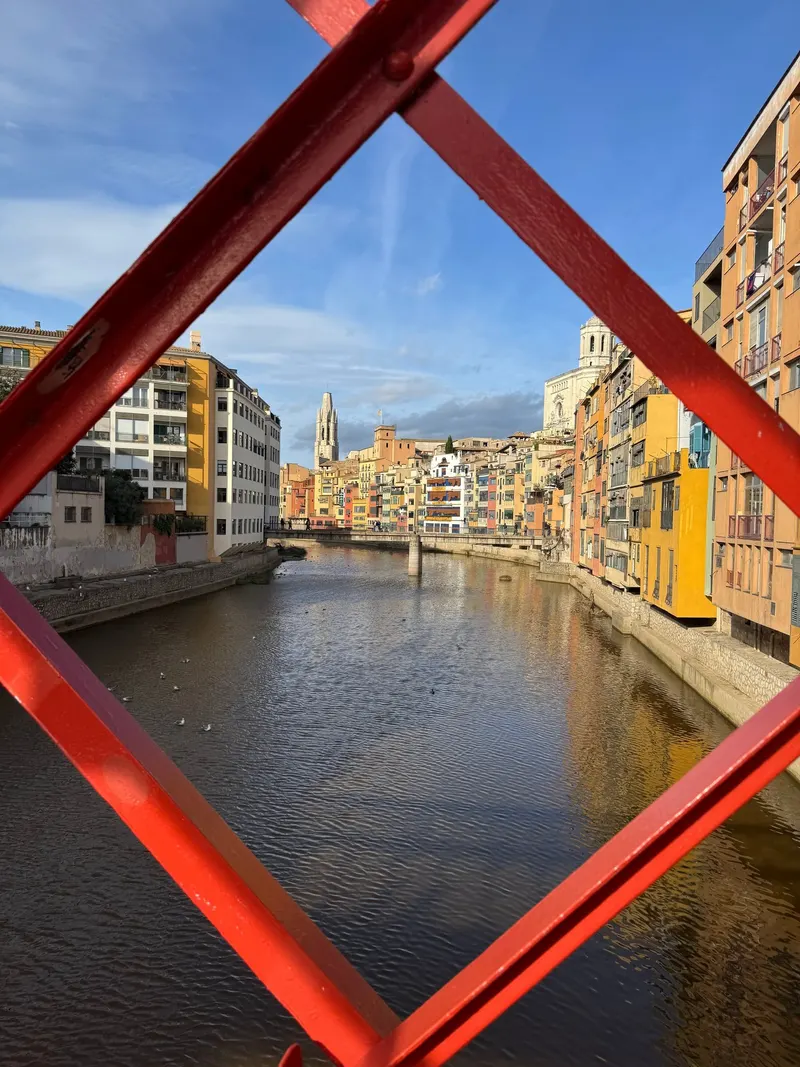
The same view, framed by the bridge
The cathedral and the Barri Vell
From the river, head up into the Barri Vell, the old quarter, a maze of cobblestone streets, stairways and arches. At the top sits Girona Cathedral, reached by a monumental staircase. If it looks familiar, that’s because it doubled as a filming location for Game of Thrones.
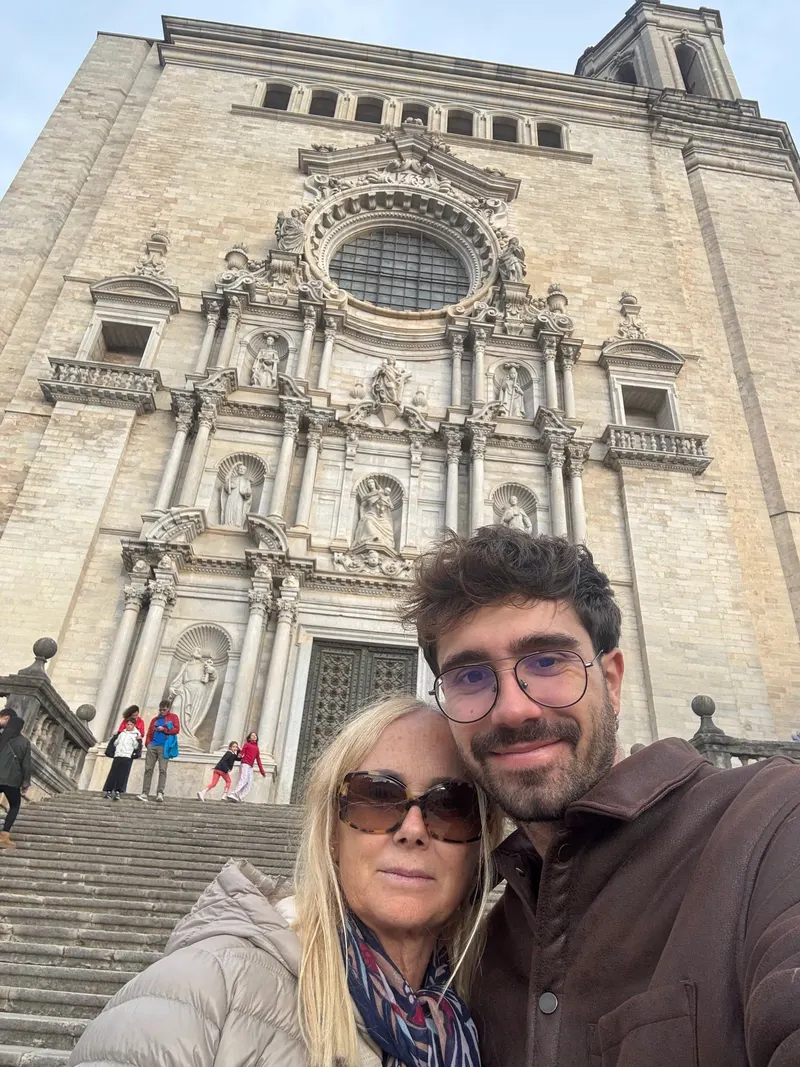
In front of Girona Cathedral
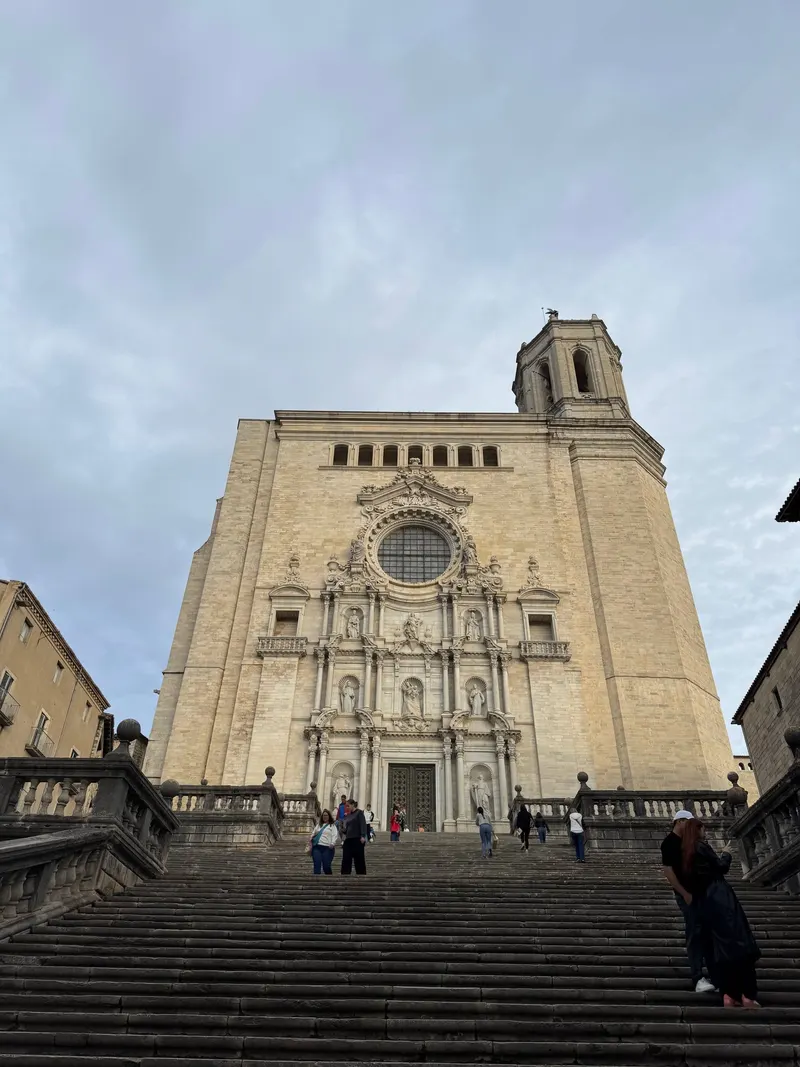
The cathedral from the bottom of the stairs
Don’t skip the view looking back down from the top of the stairs, over the steps and the rooftops of the old town.
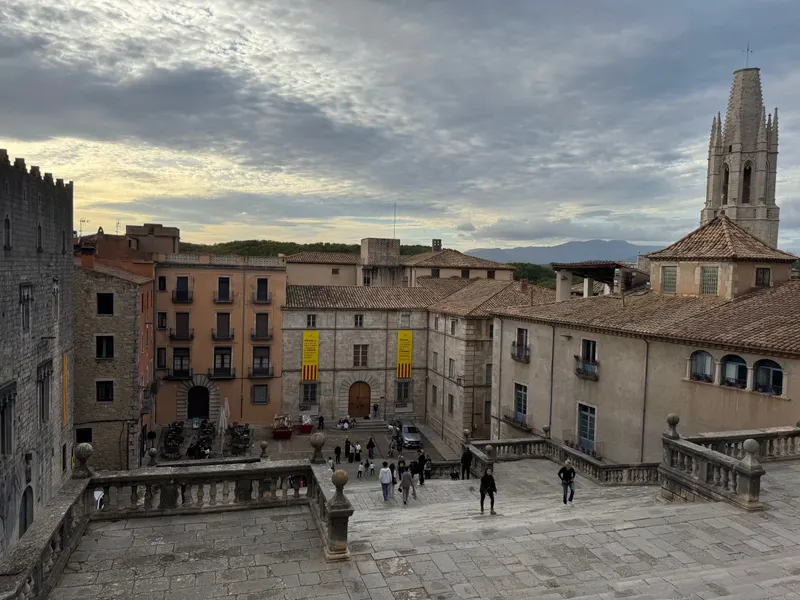
Looking down from the cathedral
A short walk from the cathedral is Sant Pere de Galligants, a Romanesque monastery that now houses part of Catalonia’s archaeology museum. Even if you don’t go in, its bell tower and stonework are worth a detour.
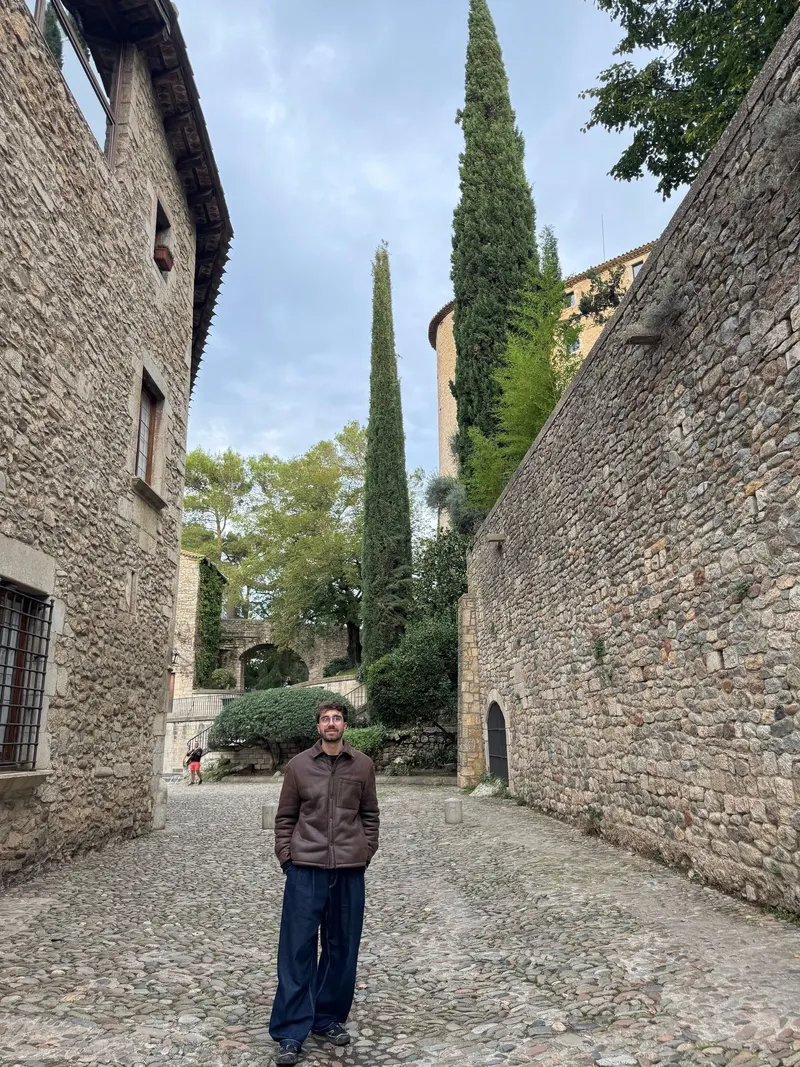
The cobblestone streets of the Barri Vell
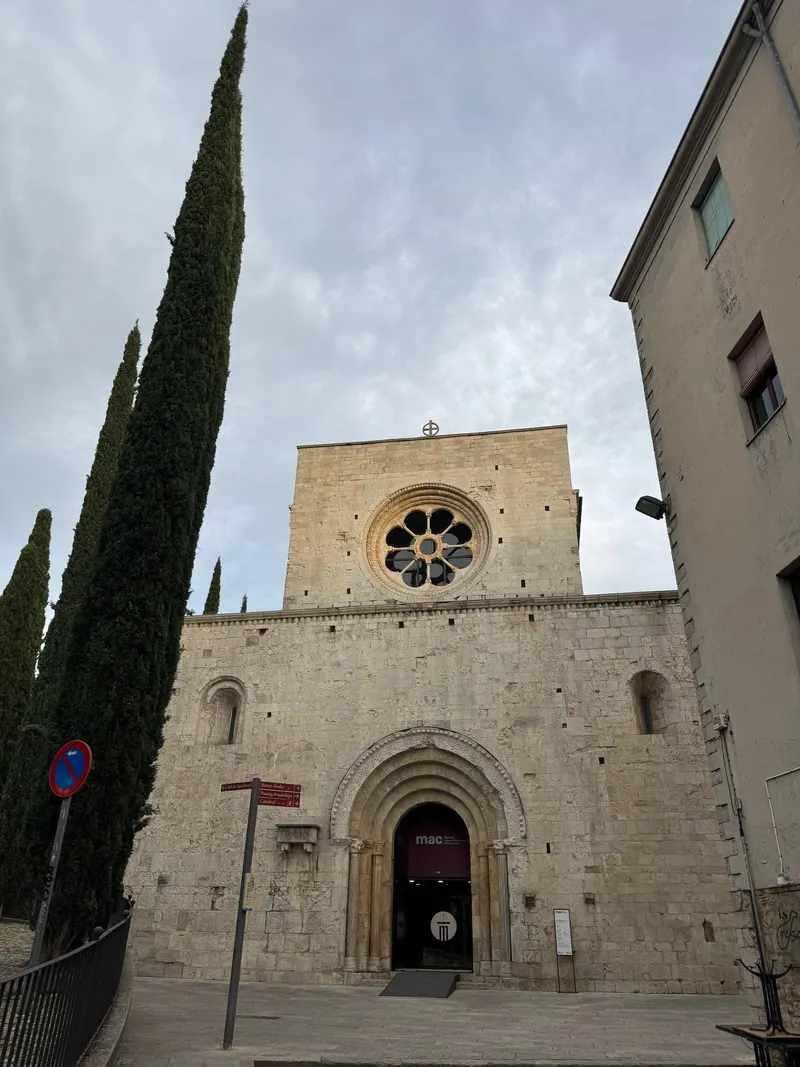
Sant Pere de Galligants monastery
The rest of the Barri Vell is best explored with no plan at all. Away from the main sights, many streets are almost empty, and you’ll stumble on old shopfronts and hidden corners like the church of Sant Martí, whose facade towers over a steep flight of steps.
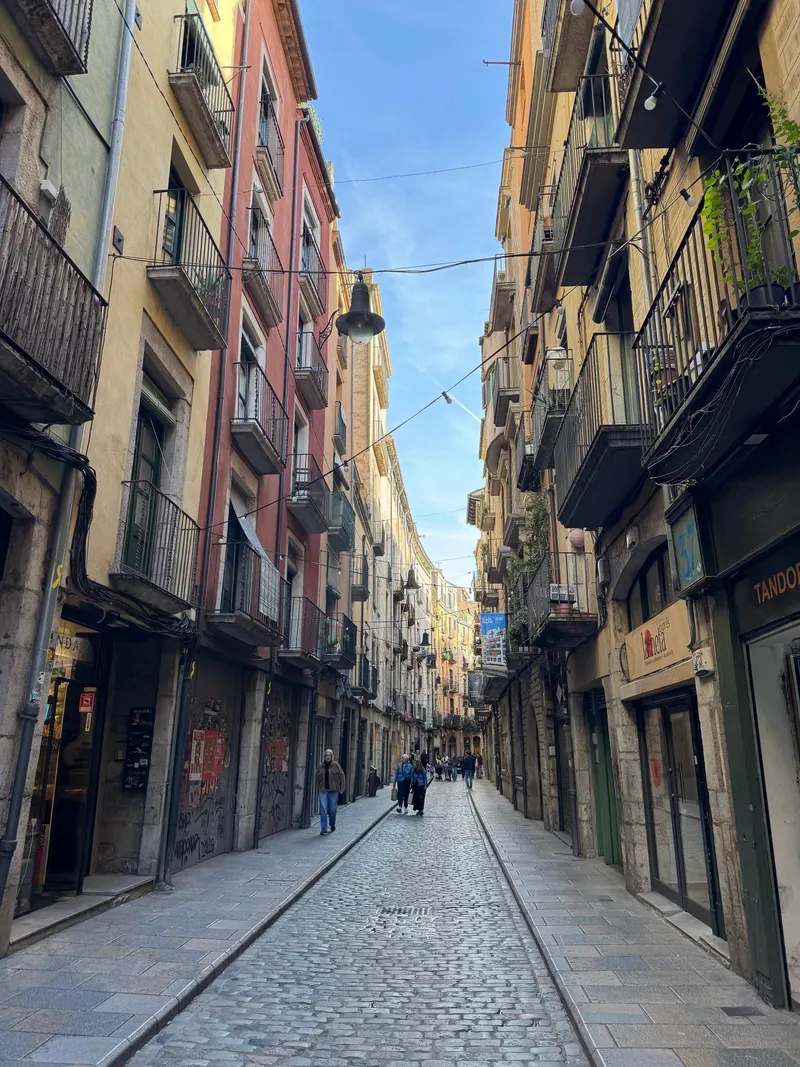
A quiet street with no tourists
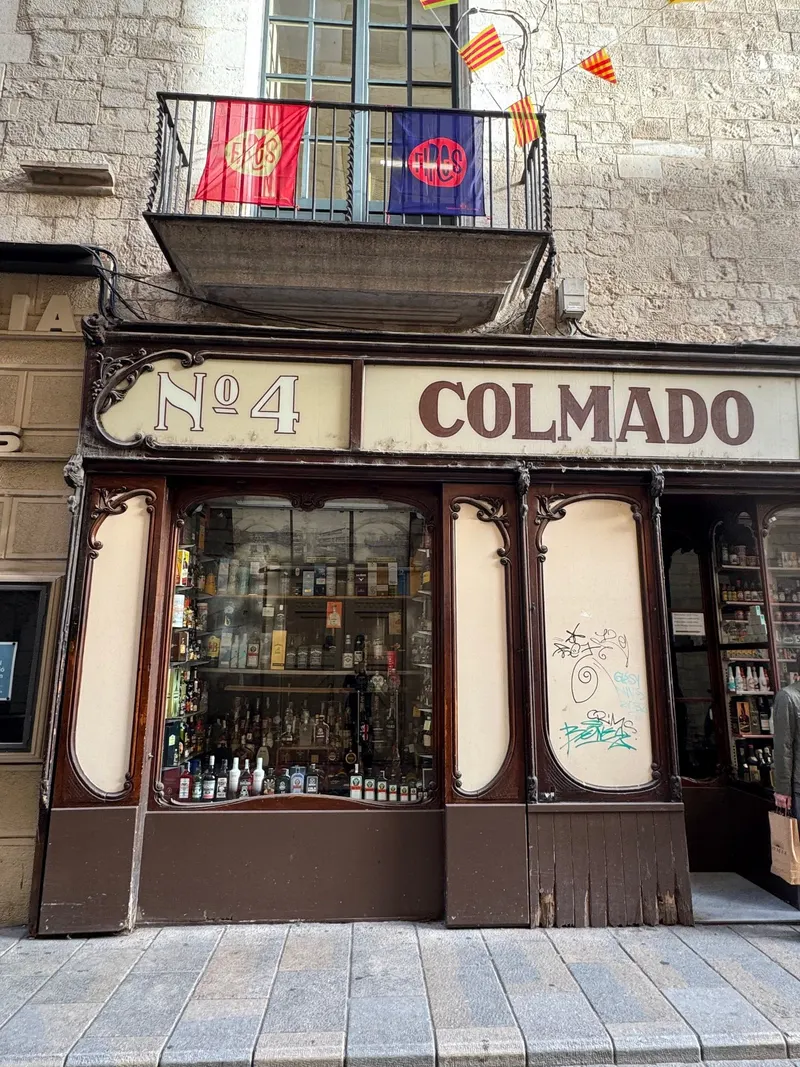
An old shop window
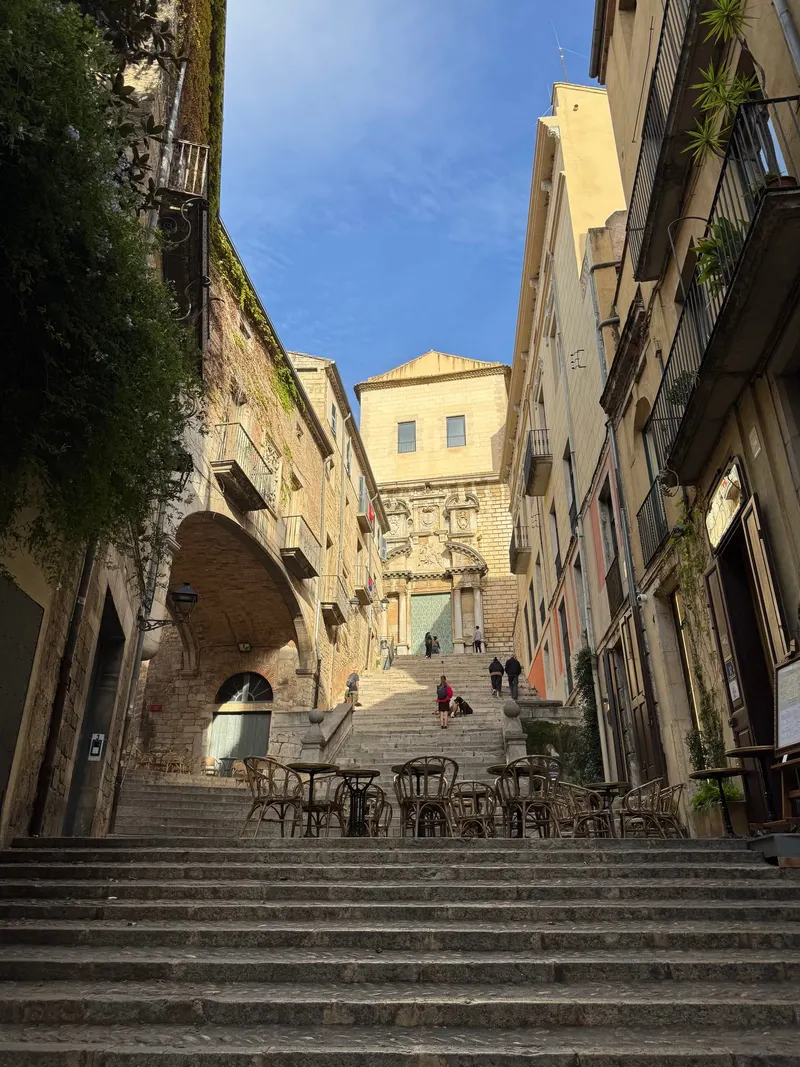
Sant Martí, seen from below
Getting ready for Sant Narcís
Late October is when Girona celebrates the Fires de Sant Narcís, the festival of its patron saint, with concerts, fairs and parades. Inside the town hall, the city’s gegants (giants) and capgrossos (big-headed figures) were lined up and ready to go out into the streets. These papier-mâché figures are a big part of festivals all over Catalonia, and each town has its own cast of characters.
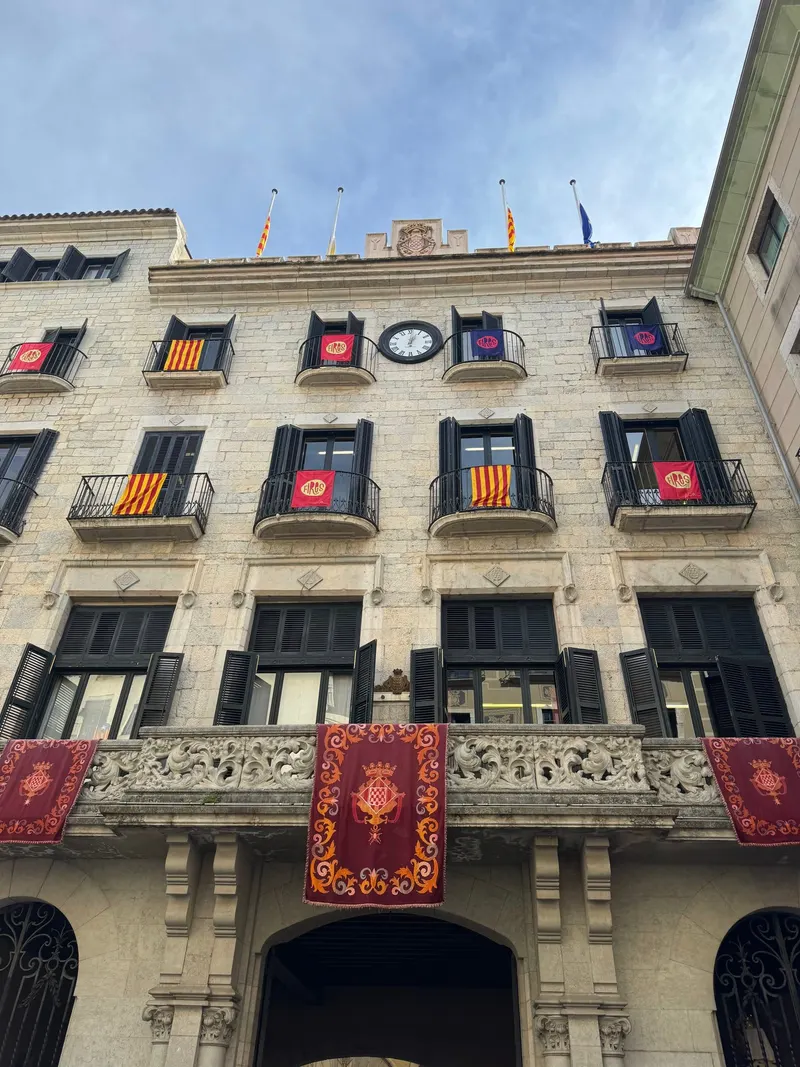
Girona's town hall
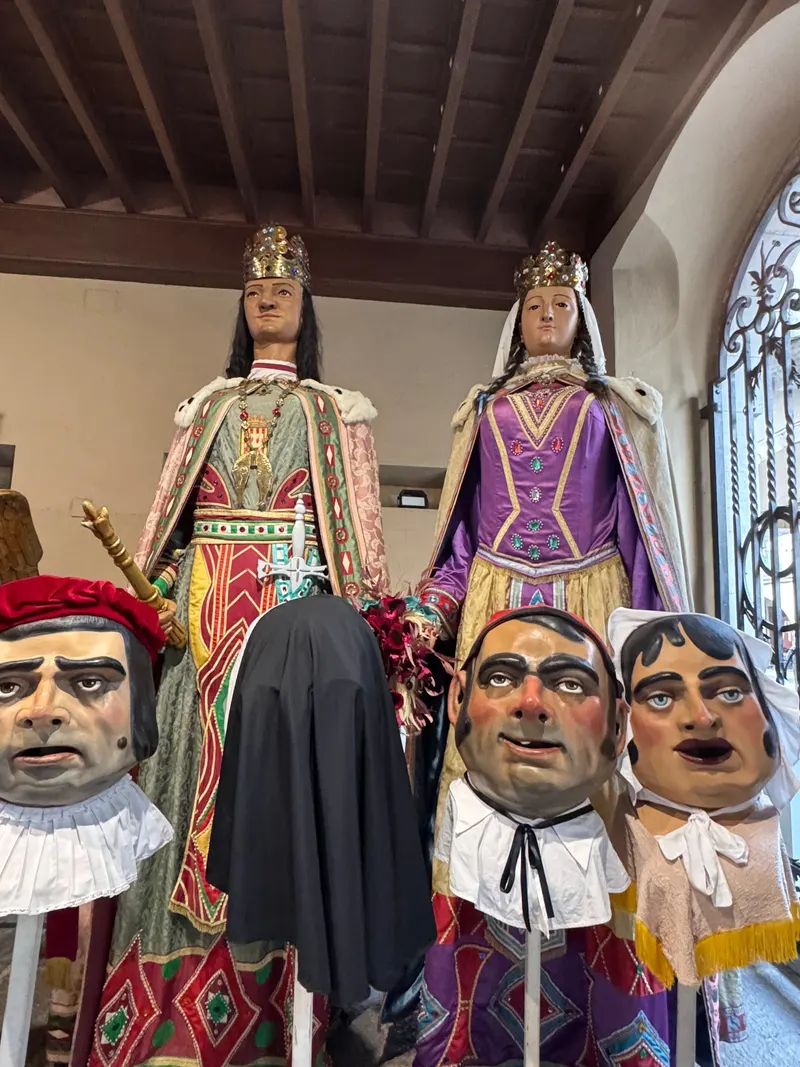
Gegants and capgrossos ready for Sant Narcís
Language Tip: In Girona, Catalan is king. It's the language of street signs, menus, shop chatter and everyday life, so a simple bon dia (good morning) or moltes gràcies (thank you very much) goes a long way and is always appreciated.
We spent the night at Llegendes de Girona, right in the old town, which makes it easy to explore on foot in the evening and early morning, before the day visitors arrive.
Day 2. Monells, Roses and Cadaqués
Monells
Half an hour from Girona, Monells is one of those medieval villages in the Empordà that feels almost too quiet to be real. Stone houses, arched passages, the odd cypress tree, and hardly anyone around. It doesn’t take long to see, but it’s a lovely, peaceful stop on the way to the coast.
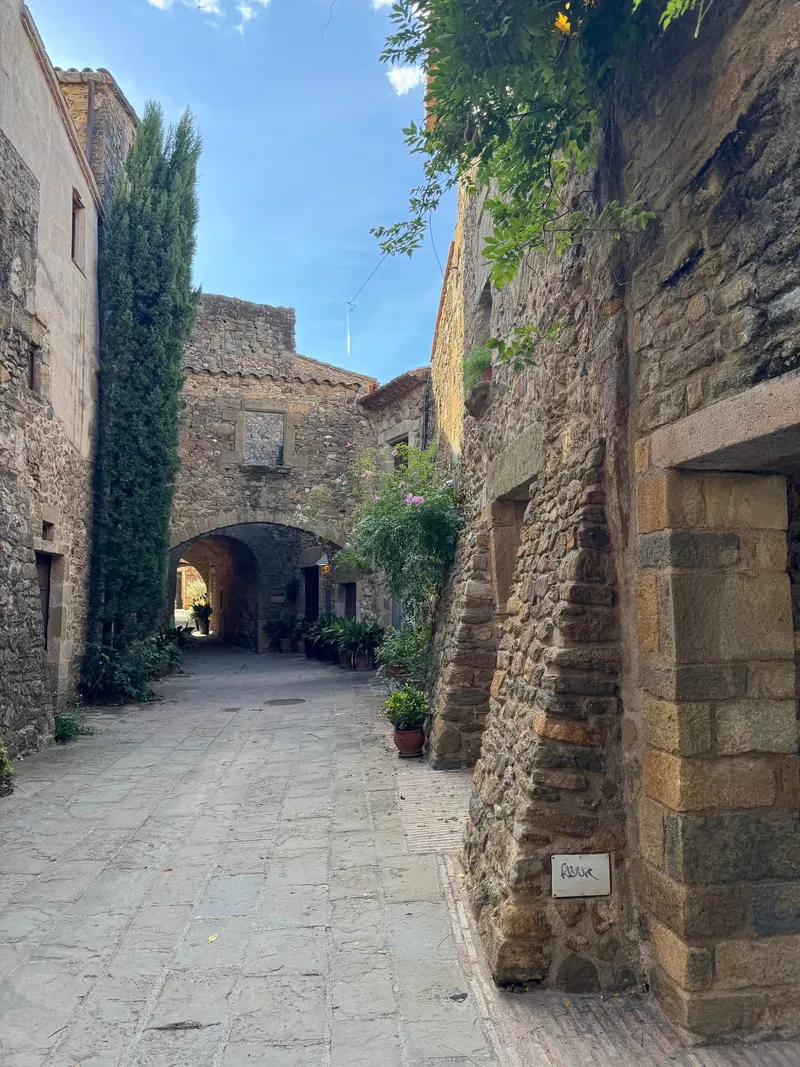
Empty streets in Monells
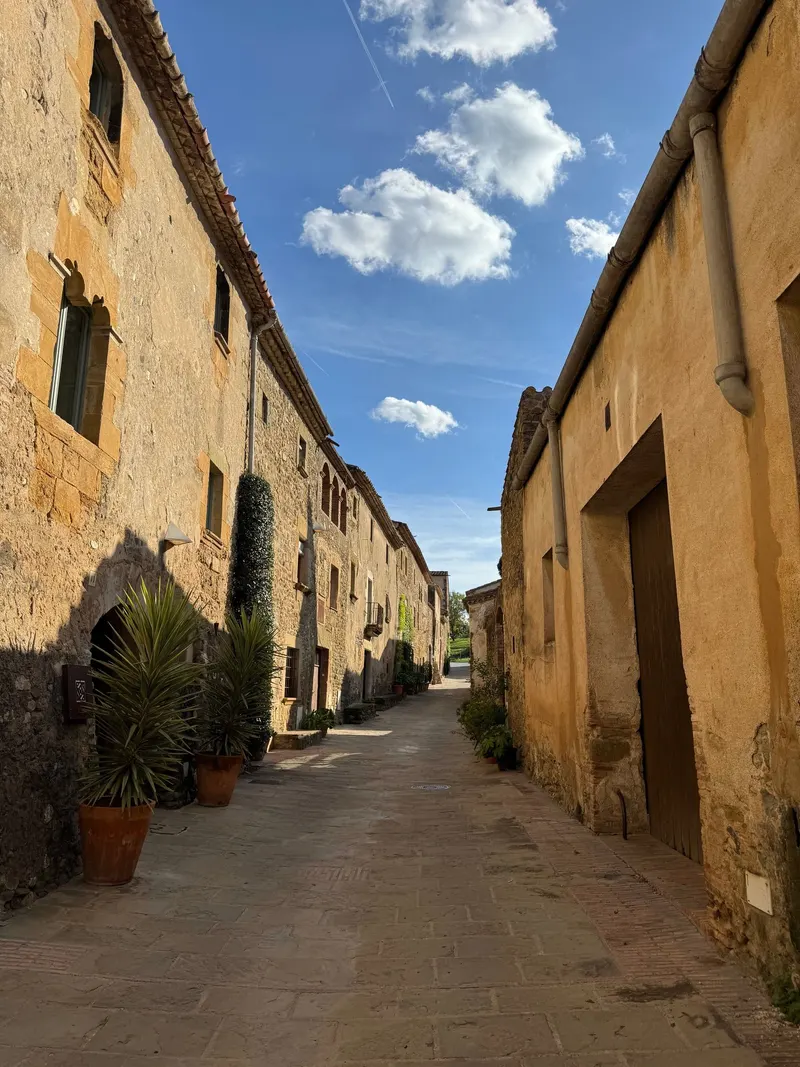
Not a soul around
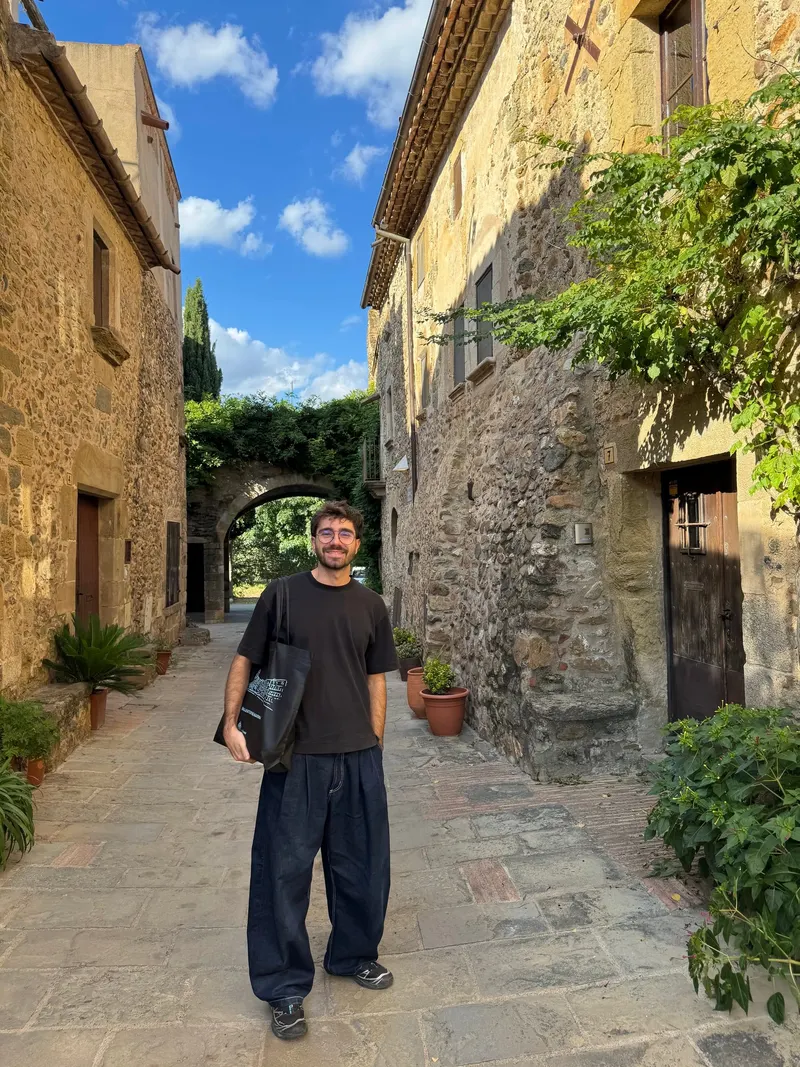
A beautiful day in Monells
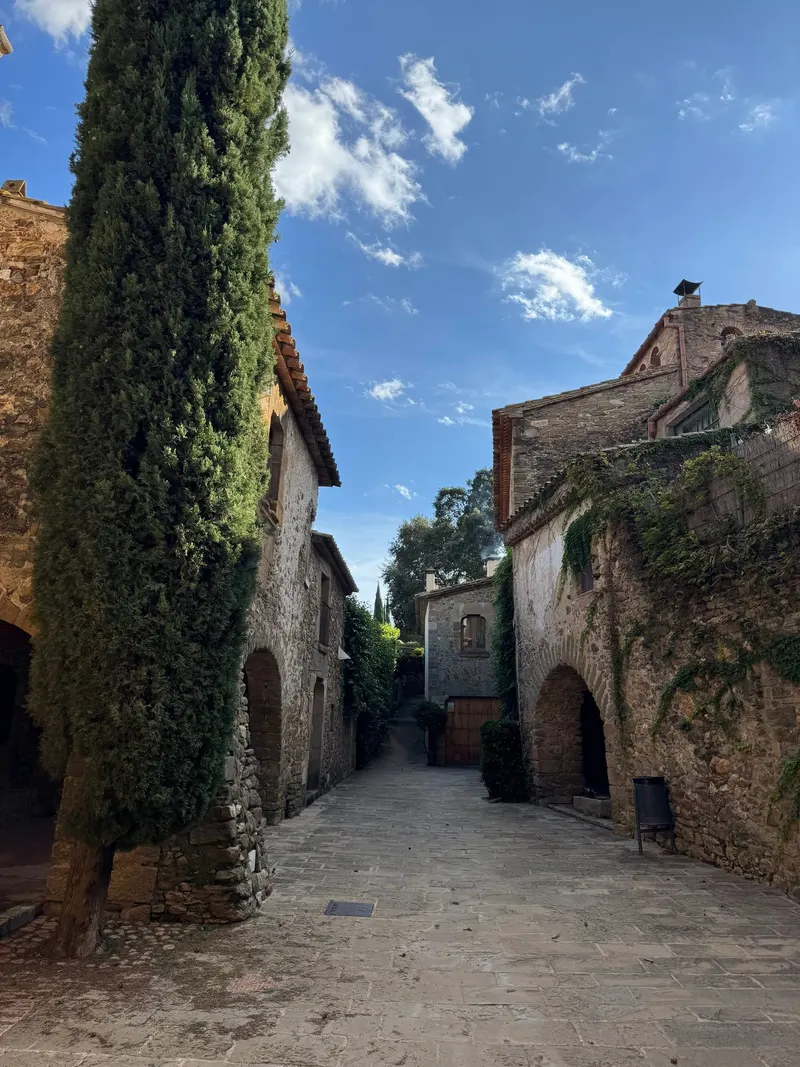
Stone houses and a cypress tree
From Monells we continued north to Roses, on its wide bay, before taking the road over the hills to Cadaqués.
Cadaqués
The road to Cadaqués winds over the mountains of the Cap de Creus peninsula, and then the village appears below: whitewashed houses piled around a bay full of small boats, with the church on top. It’s easy to see why so many artists, Dalí above all, fell in love with it.
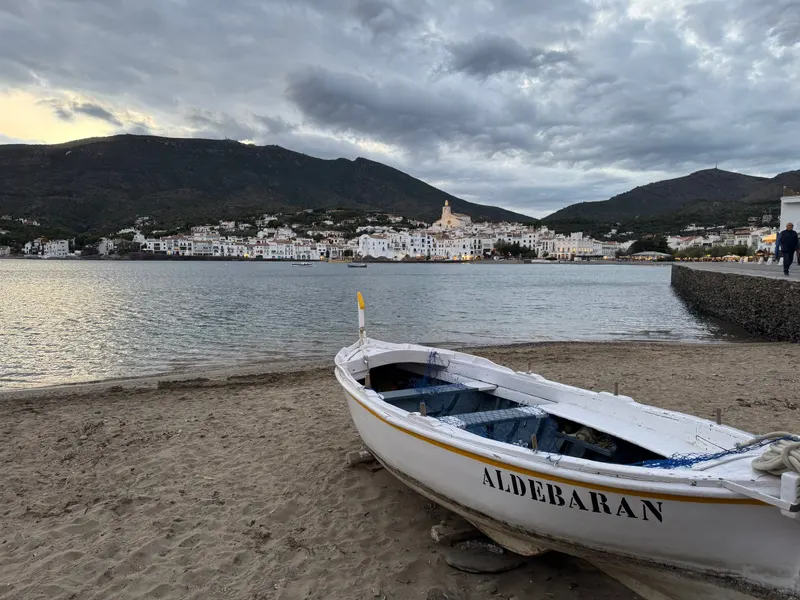
Cadaqués across the bay
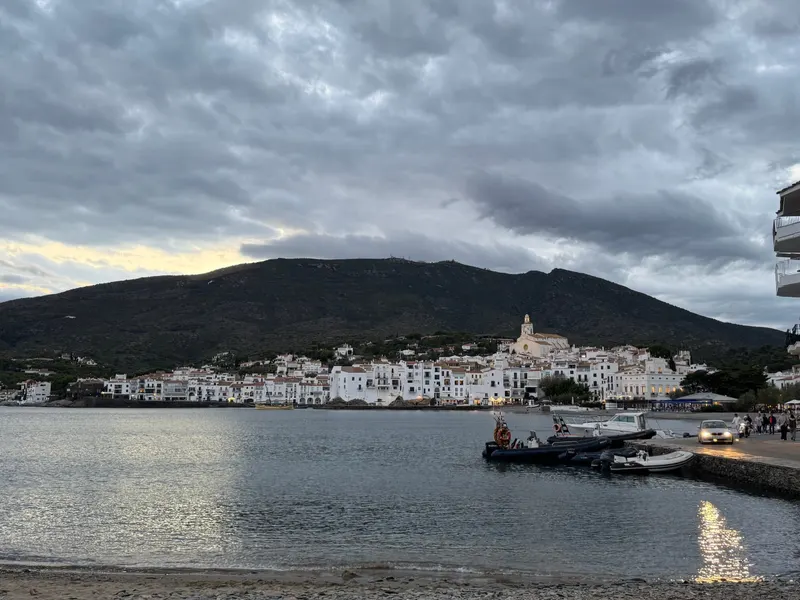
Cadaqués after sunset
Wander along the seafront, past Casa Serinyana, and find a spot on the pebbly beach to take in the view.
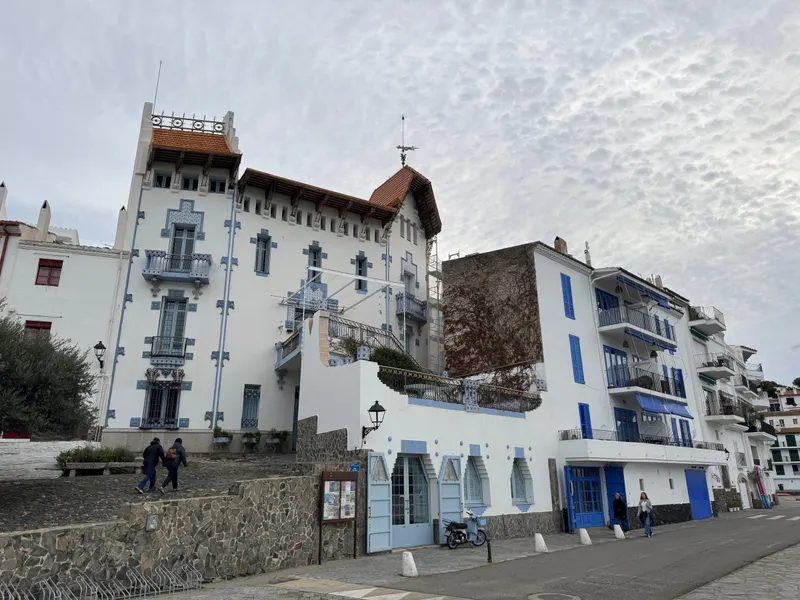
Casa Serinyana
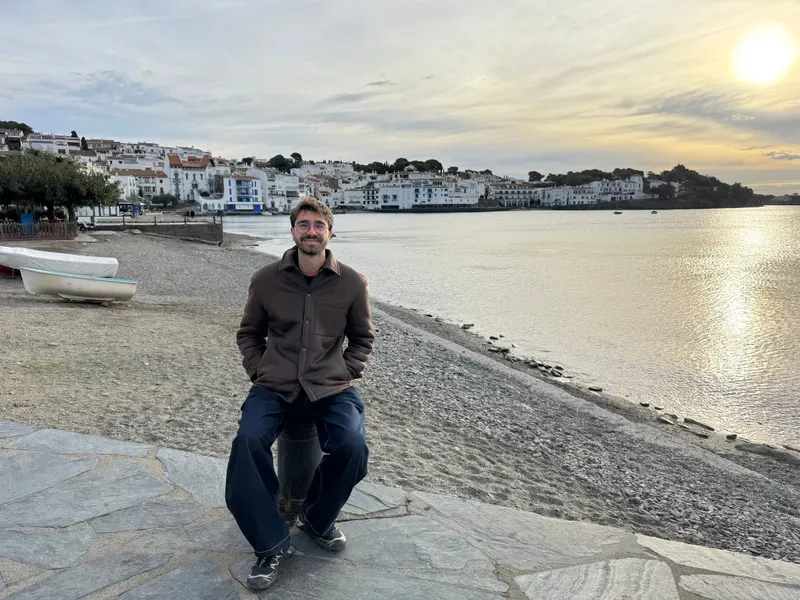
On the beach, with Cadaqués behind
Then climb the narrow streets up to the church of Santa Maria. It looks simple from the outside, but inside there’s a huge, intricately carved Baroque altarpiece.
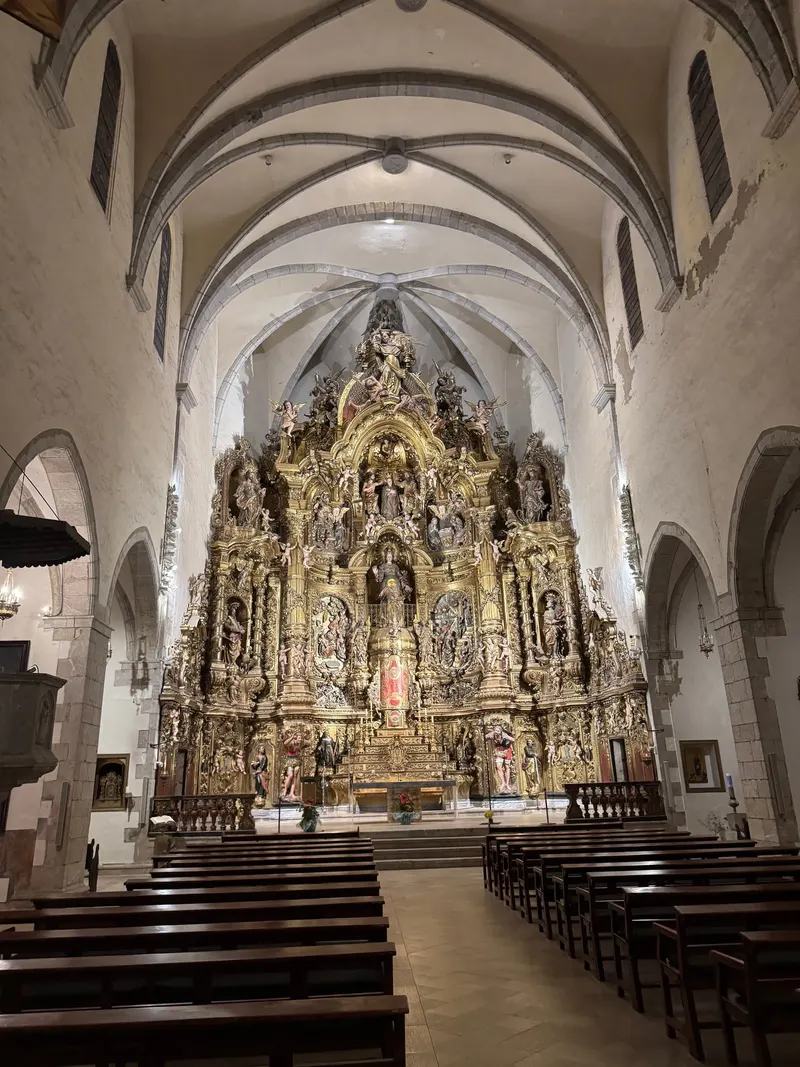
The altarpiece inside the church
Dalí’s house in Portlligat
Just over the hill from Cadaqués is Portlligat, a tiny cove where Salvador Dalí lived and worked for decades. His house, a cluster of old fishermen’s cottages joined together, is easy to spot thanks to the giant eggs on the roof.
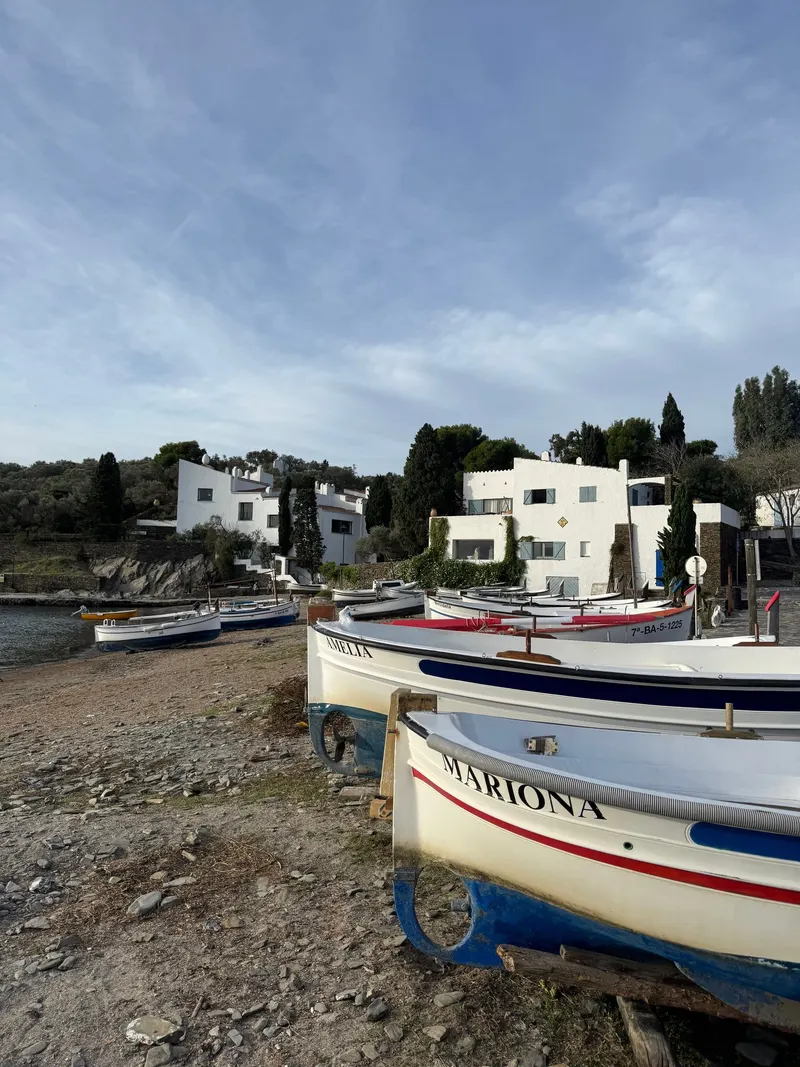
Portlligat, with Dalí's house in the back
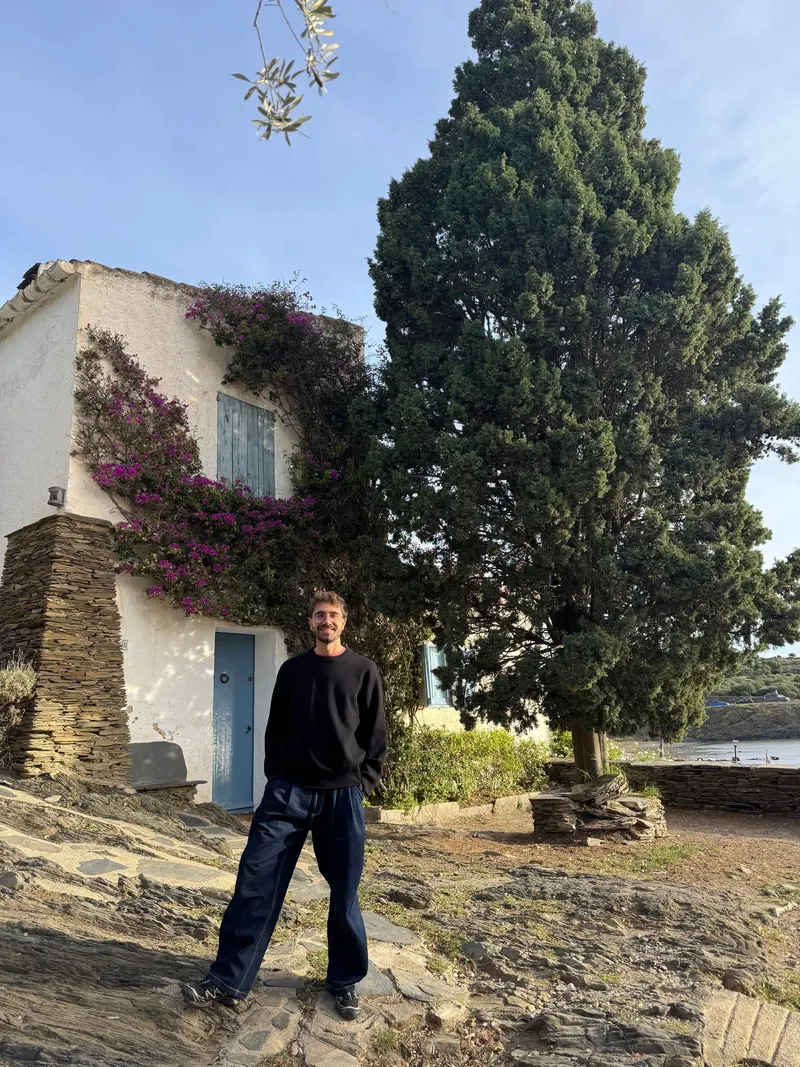
In front of Dalí's house
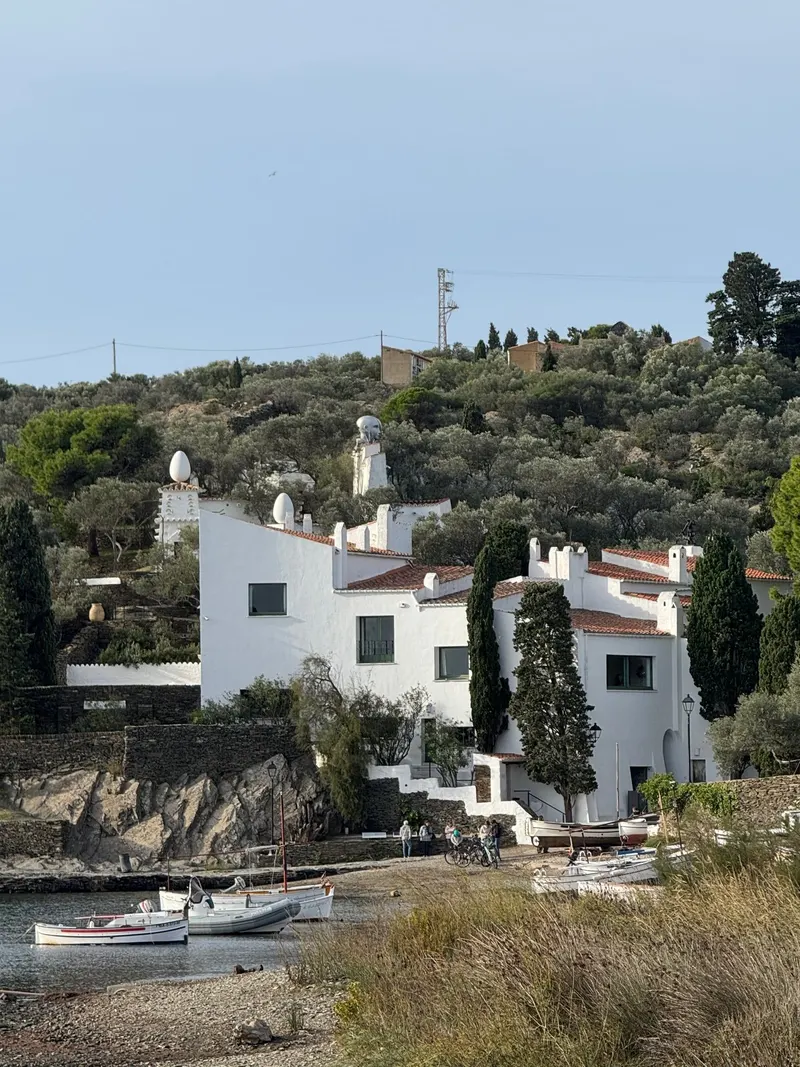
The famous eggs on the roof
Pro Tip: Visits inside the Portlligat house run in small groups at set times and sell out well in advance, especially in high season. Book online before you go if you want to see the interior.
We spent the night in Cadaqués at Can Pepin. Staying overnight is worth it: once the day-trippers leave, the village gets very calm, and you get to see the bay after sunset.
Day 3. A detour into France
From Cadaqués, the coast road heads straight north across the border, where the Costa Brava turns into the Côte Vermeille. We spent the day in Banyuls-sur-Mer, Collioure and Carcassonne, and the night in Perpignan. All of that is in the companion post: Côte Vermeille Road Trip: Collioure, Carcassonne & Perpignan.
Day 4. Figueres, Besalú, Santa Pau and Castellfollit de la Roca
The Dalí Theatre-Museum in Figueres
Back in Spain, the first stop was Figueres, Dalí’s hometown, and the Dalí Theatre-Museum, which he designed himself in an old theater. You know you’ve arrived when you see the red walls studded with fake loaves of bread, and the giant eggs sitting right on top of the roof. It’s the perfect follow-up to Portlligat: the house shows where he lived, the museum shows how his mind worked.
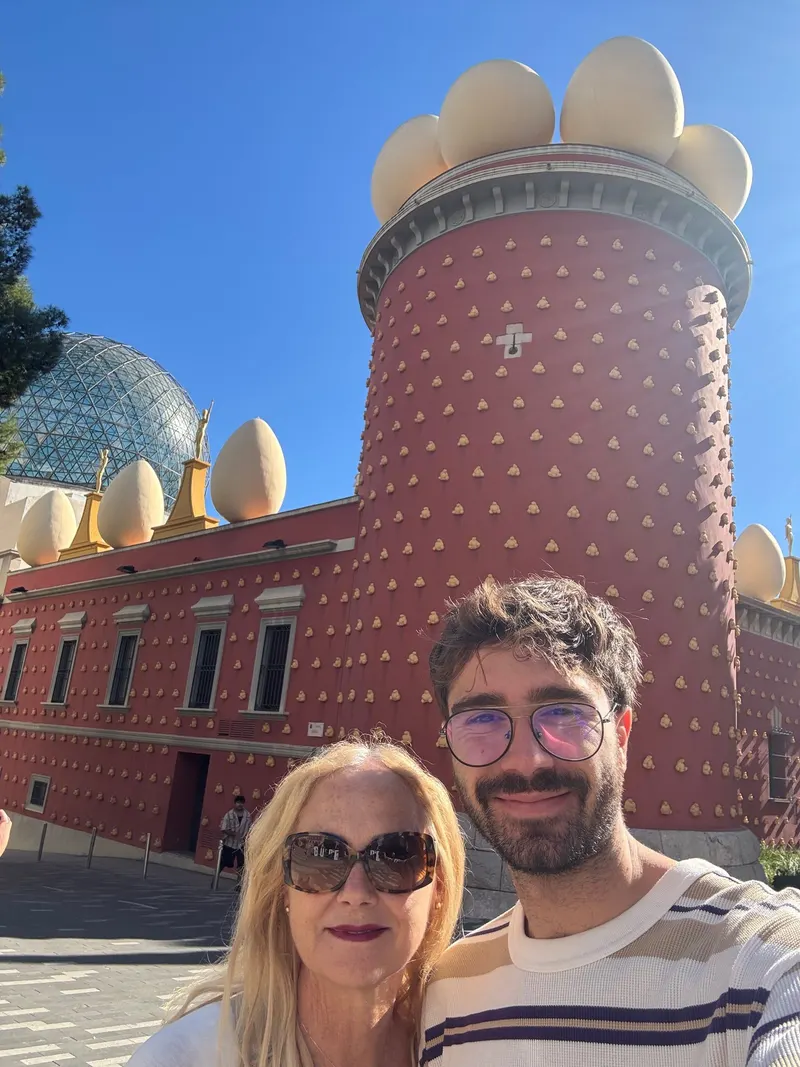
At the Dalí Theatre-Museum
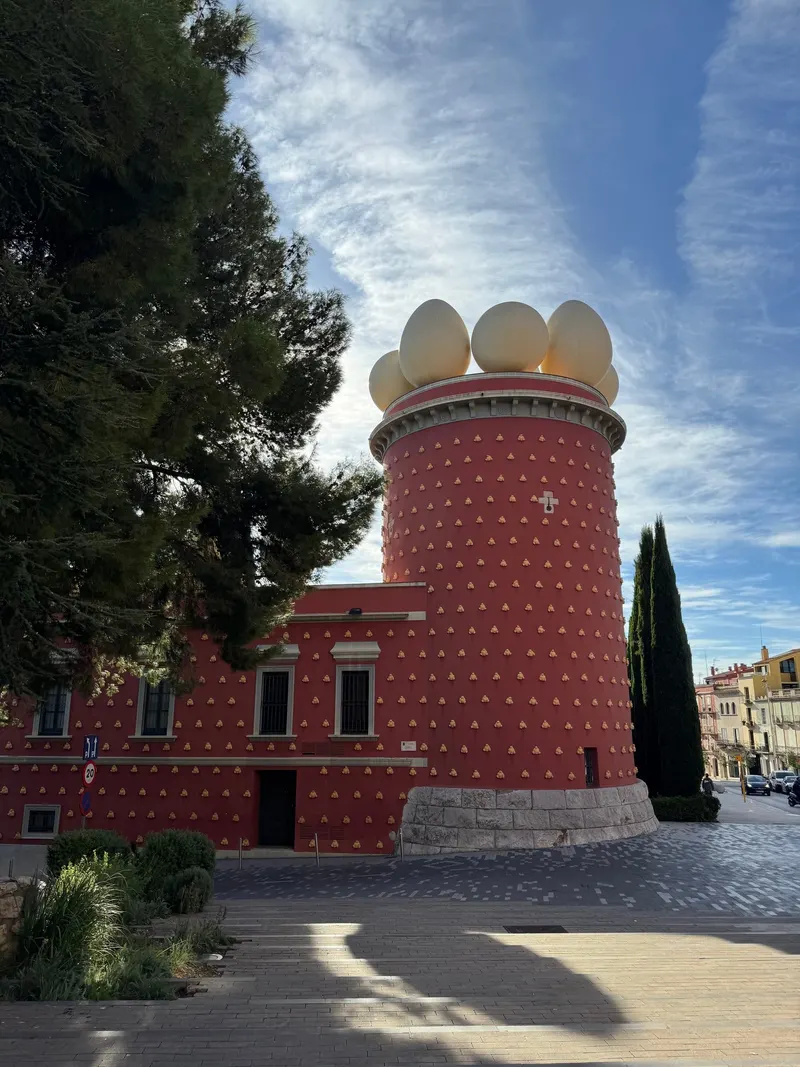
Bread on the walls, eggs on the roof
Inside, it’s as surreal as you’d expect: a glass dome over the old stage, mannequins hanging from the balconies of the inner courtyard, and rooms full of optical illusions and paintings.
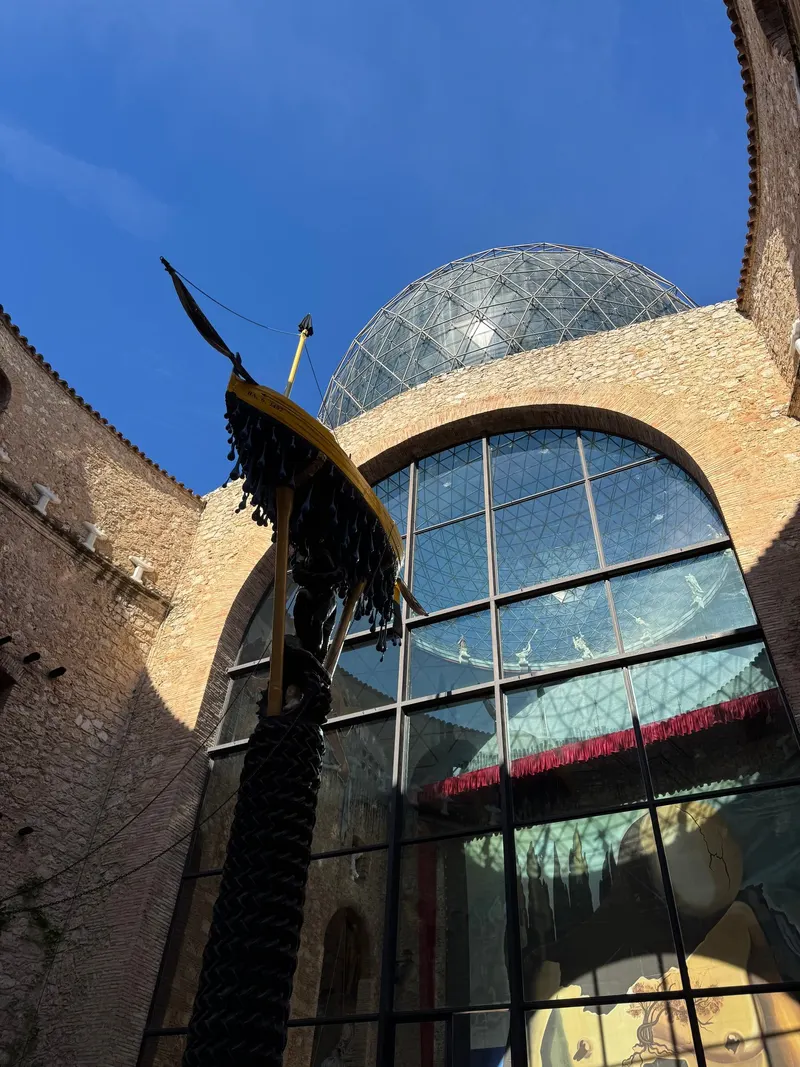
The glass dome
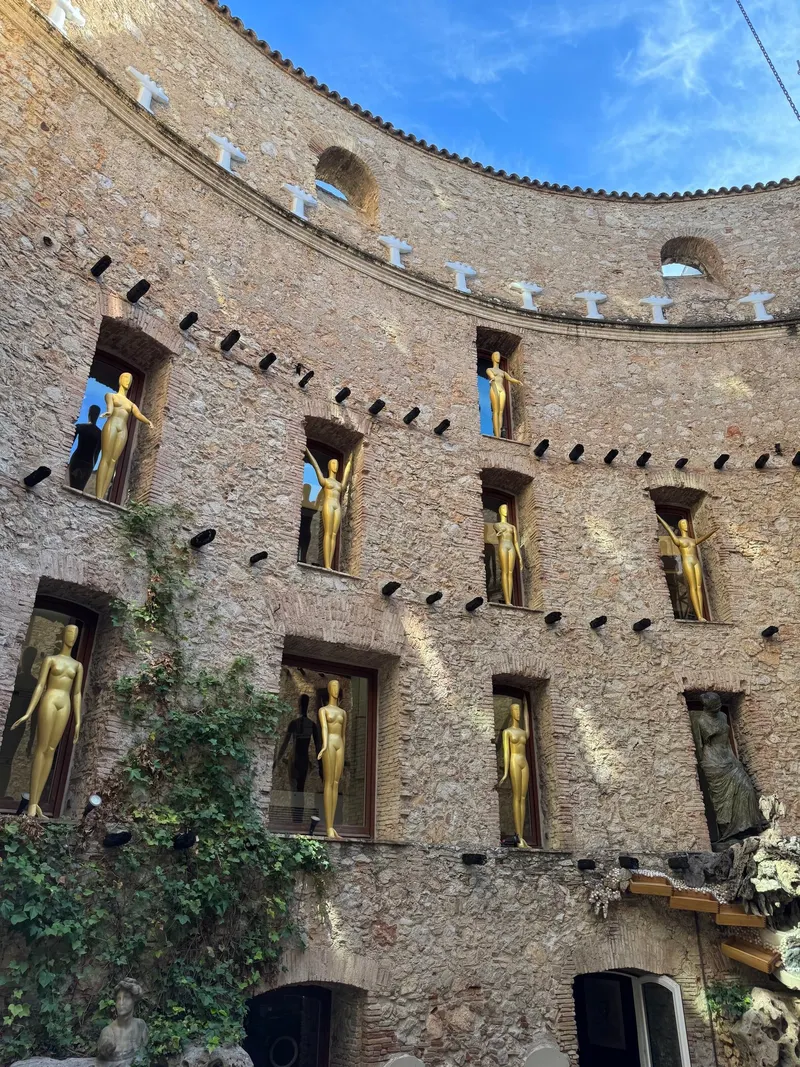
Mannequins on the inner balconies
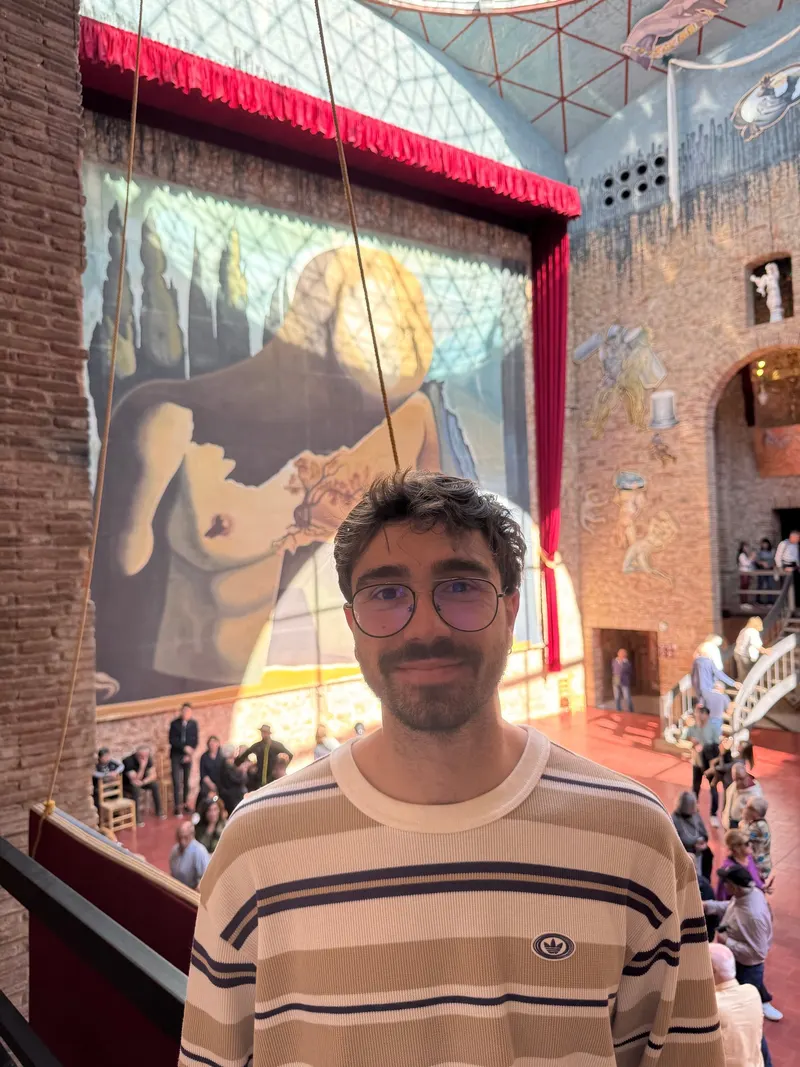
One of the paintings inside
Besalú
Next came Besalú, and one of the most photogenic views in Catalonia: the fortified Romanesque bridge over the Fluvià river, with the old town rising behind it. Cross the bridge through its gate and you’re straight into the medieval streets, including the old Jewish quarter.
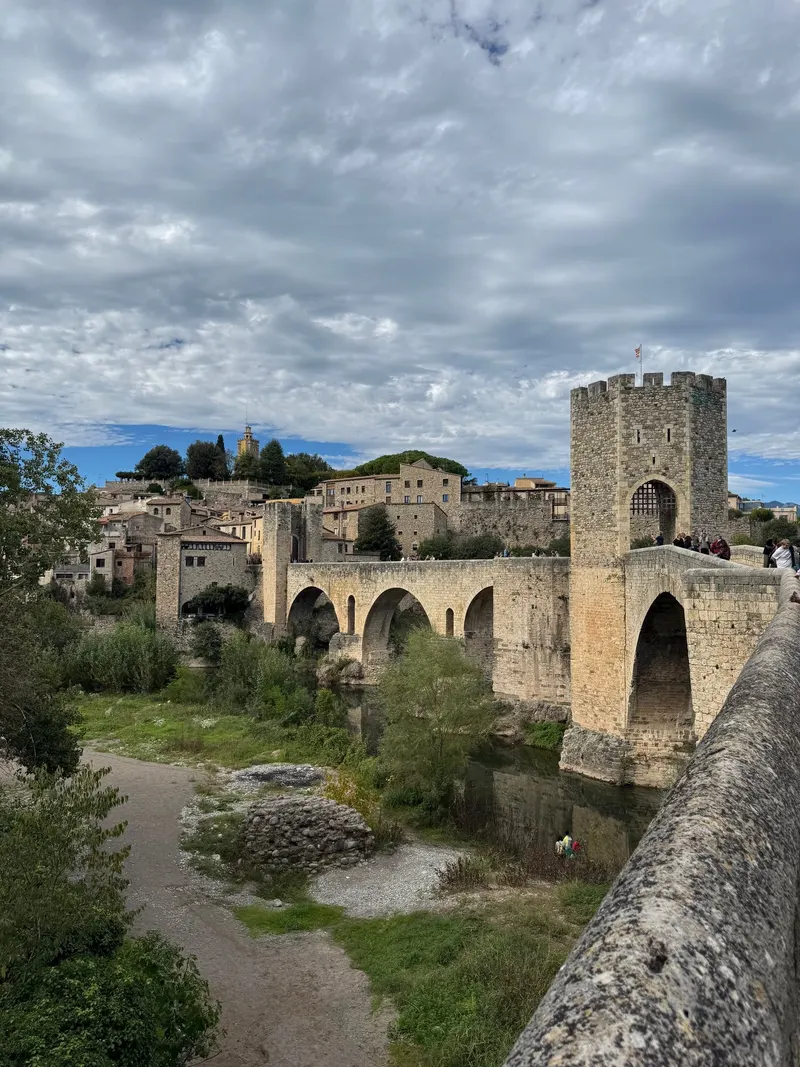
Besalú's medieval bridge
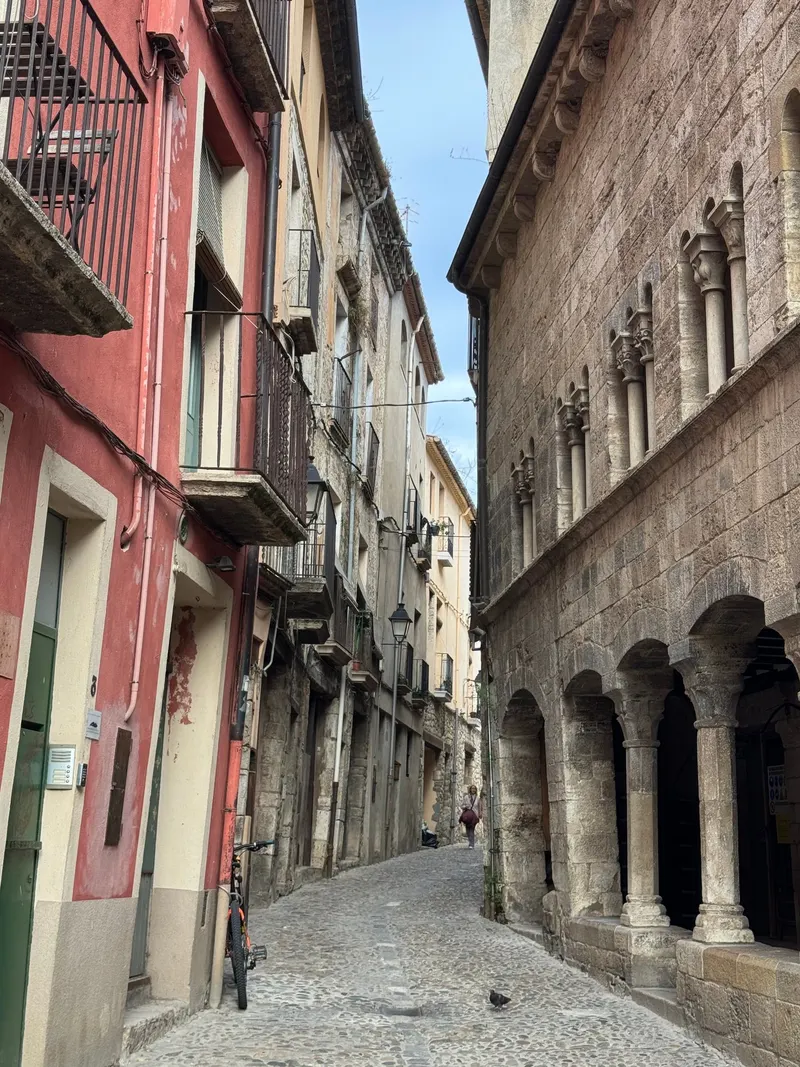
The old streets of Besalú
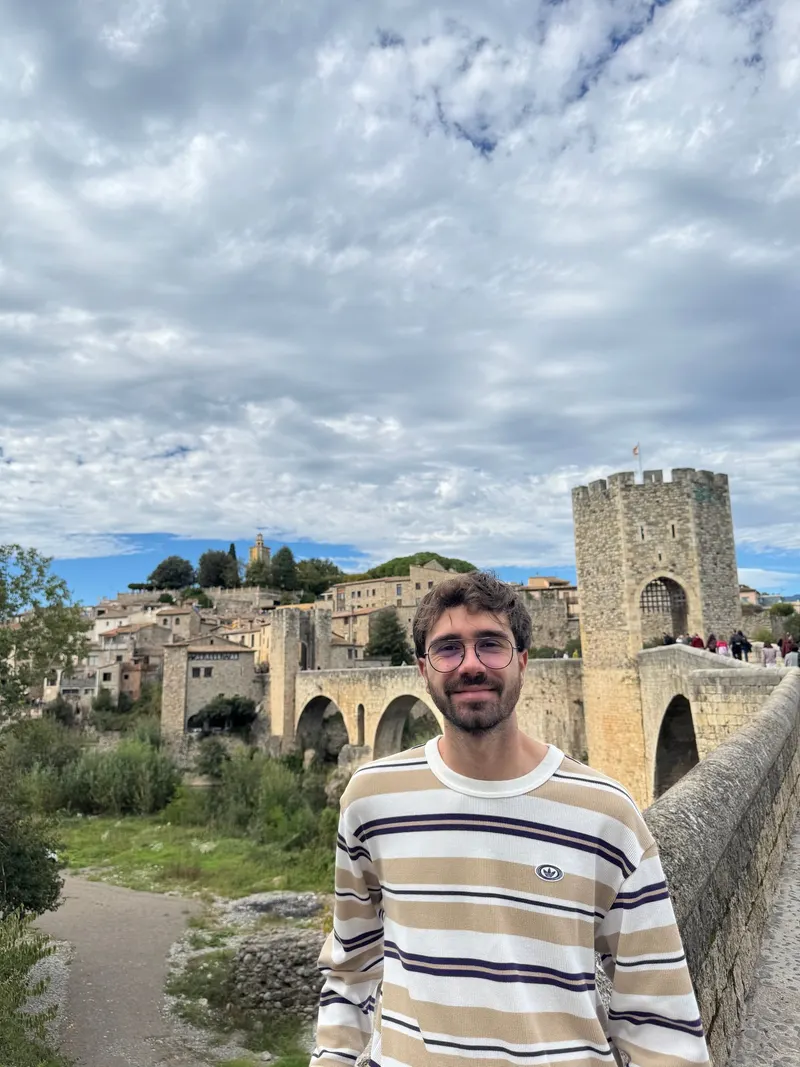
With the bridge behind
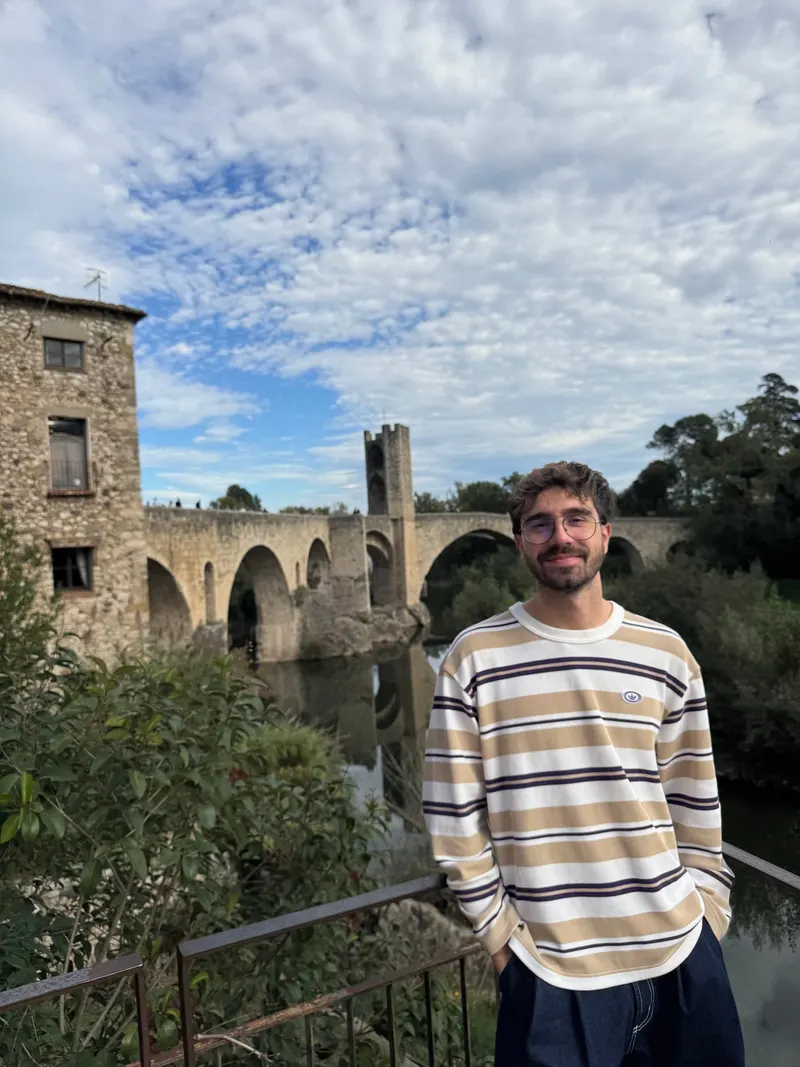
One more from the riverbank
Pro Tip: The best views of the bridge are from the riverbank on the far side, not from the bridge itself. Walk down before crossing.
Santa Pau
From Besalú we headed into the Garrotxa, Catalonia’s volcanic region, to Santa Pau, a small medieval town in the middle of the volcanic natural park. Its arcaded main square, surrounded by old stone houses, is the highlight.
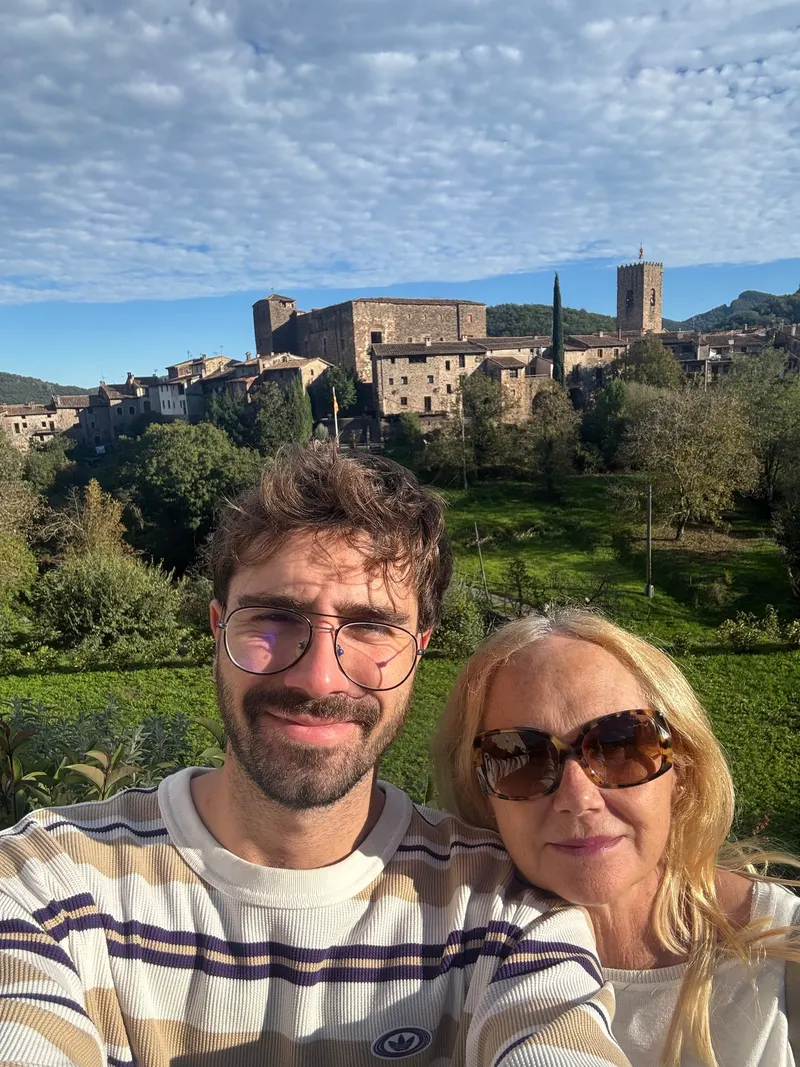
With my mom in Santa Pau
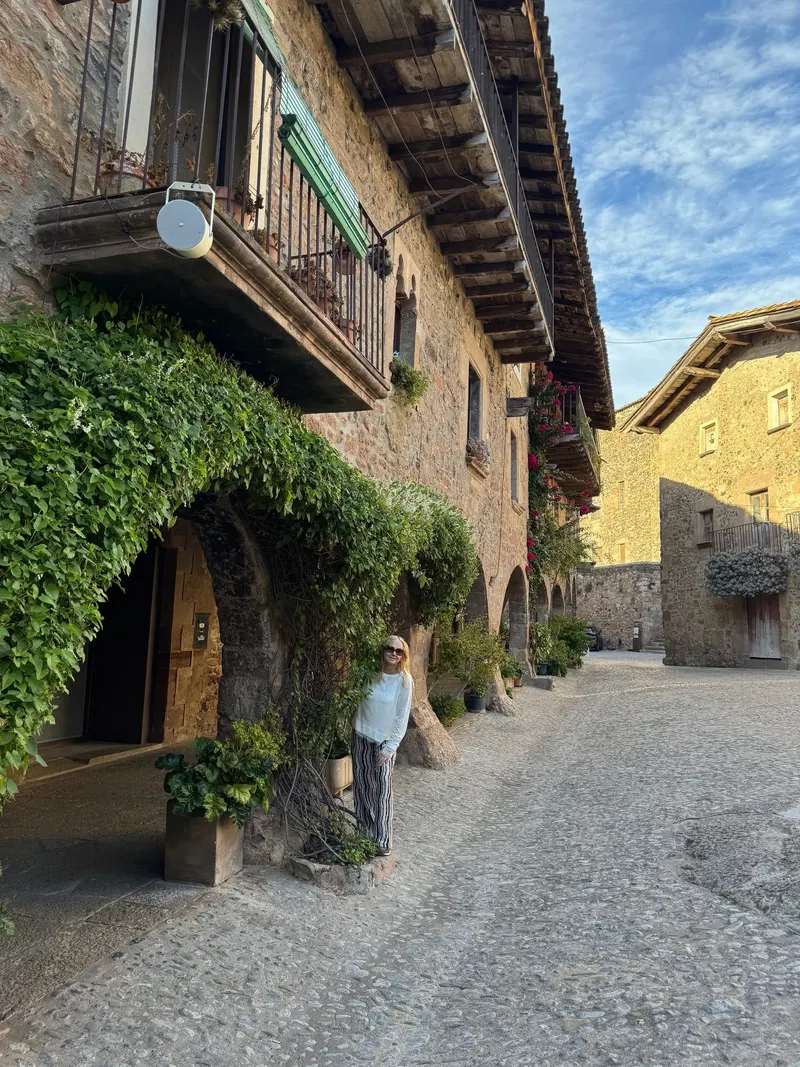
A house with arches
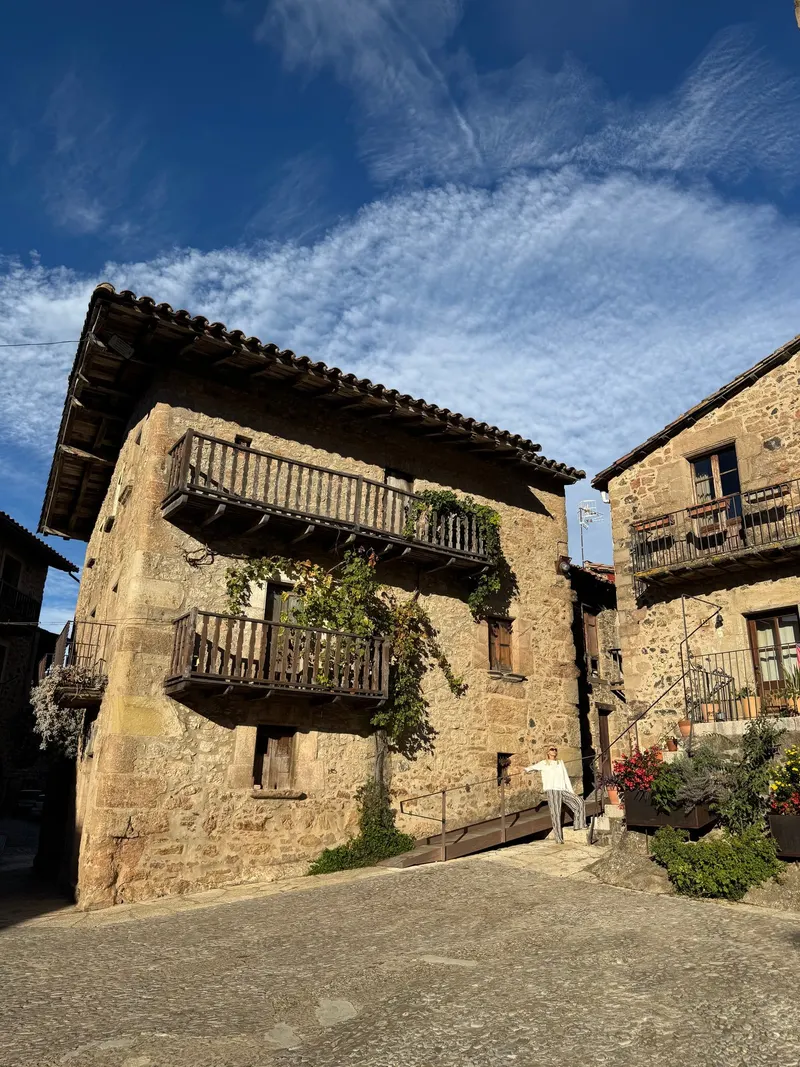
Santa Pau's main square
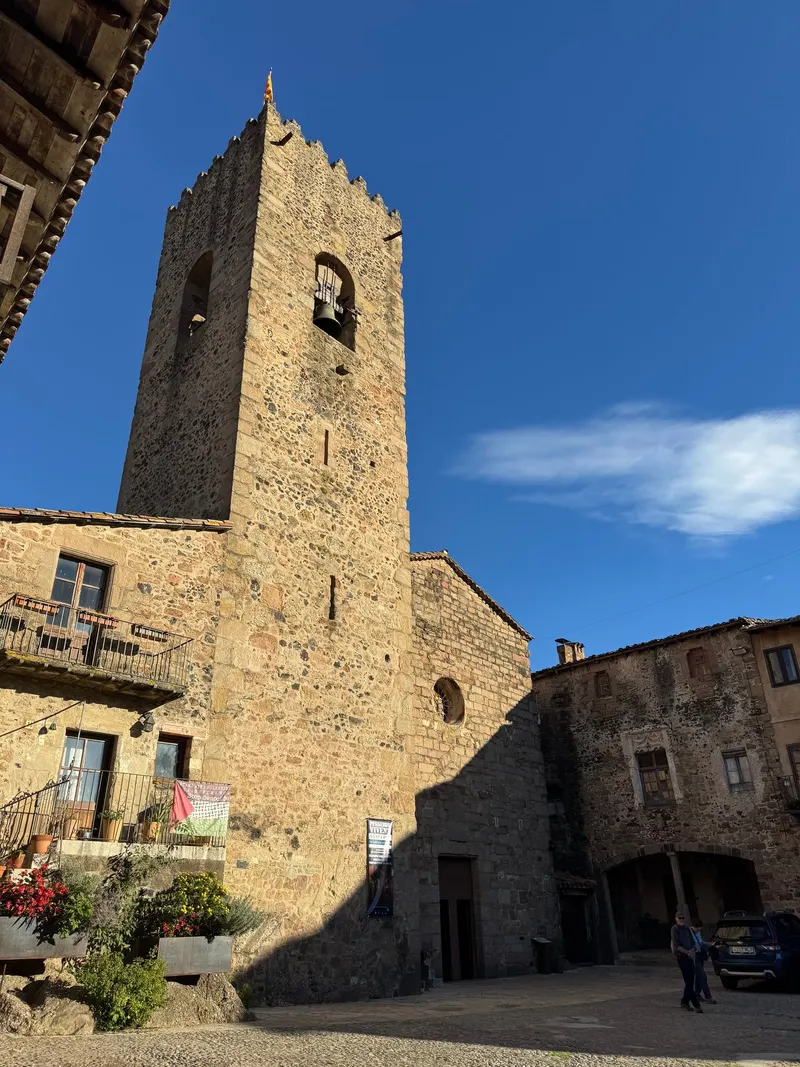
The church on a beautiful day
Castellfollit de la Roca
Then came one of the most striking sights in Catalonia: Castellfollit de la Roca, a village built right on the edge of a basalt cliff, with the houses and church lined up along the top. The best view isn’t from the village itself, it’s from the road that runs parallel to the cliff below.
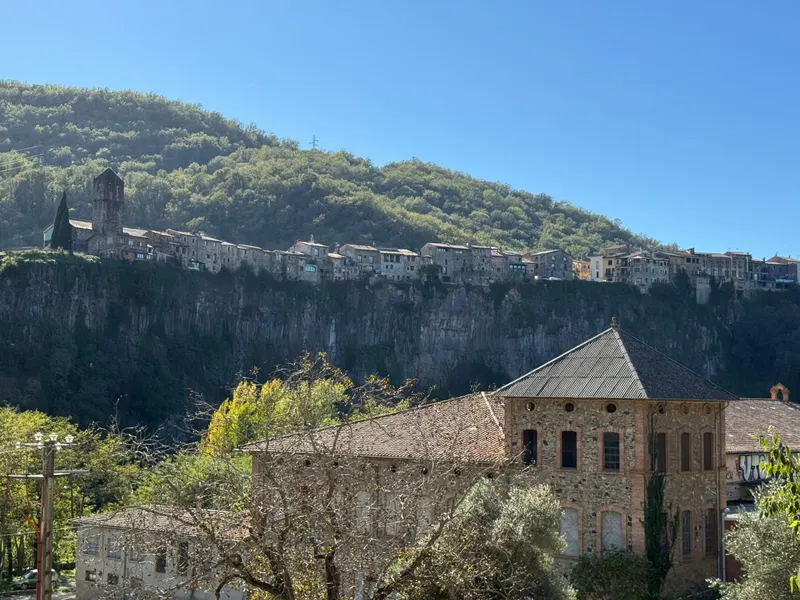
Castellfollit de la Roca from the road below, the best view
Up in the village, the streets are lined with houses built from the same dark volcanic stone.
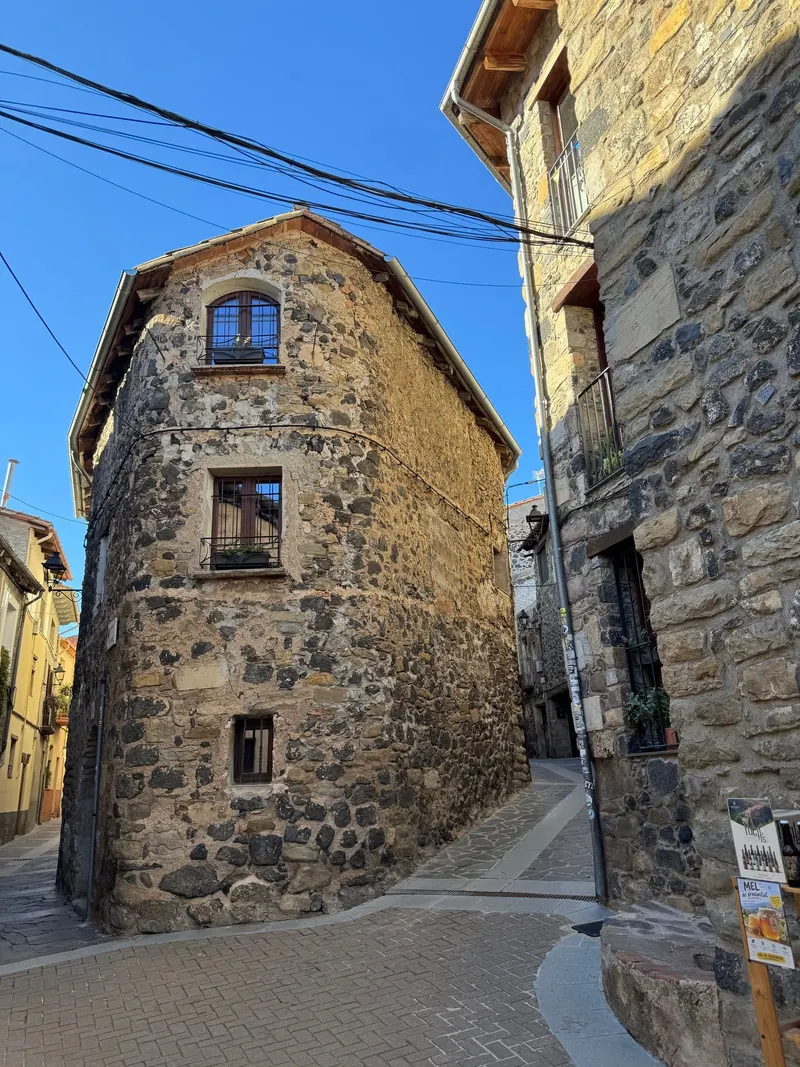
Stone houses in the village
Camprodon
We finished the day in Camprodon, in the Pyrenees, where we stayed at Cims de Camprodon. The town’s symbol is its medieval bridge over the Ter river, and it’s lovely at every time of day: at golden hour, in full daylight, and lit up at night.
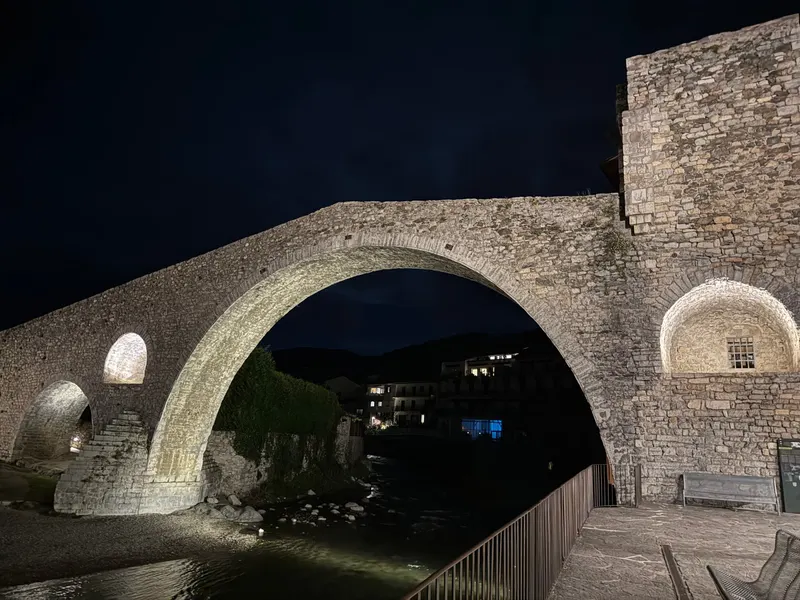
The bridge lit up at night
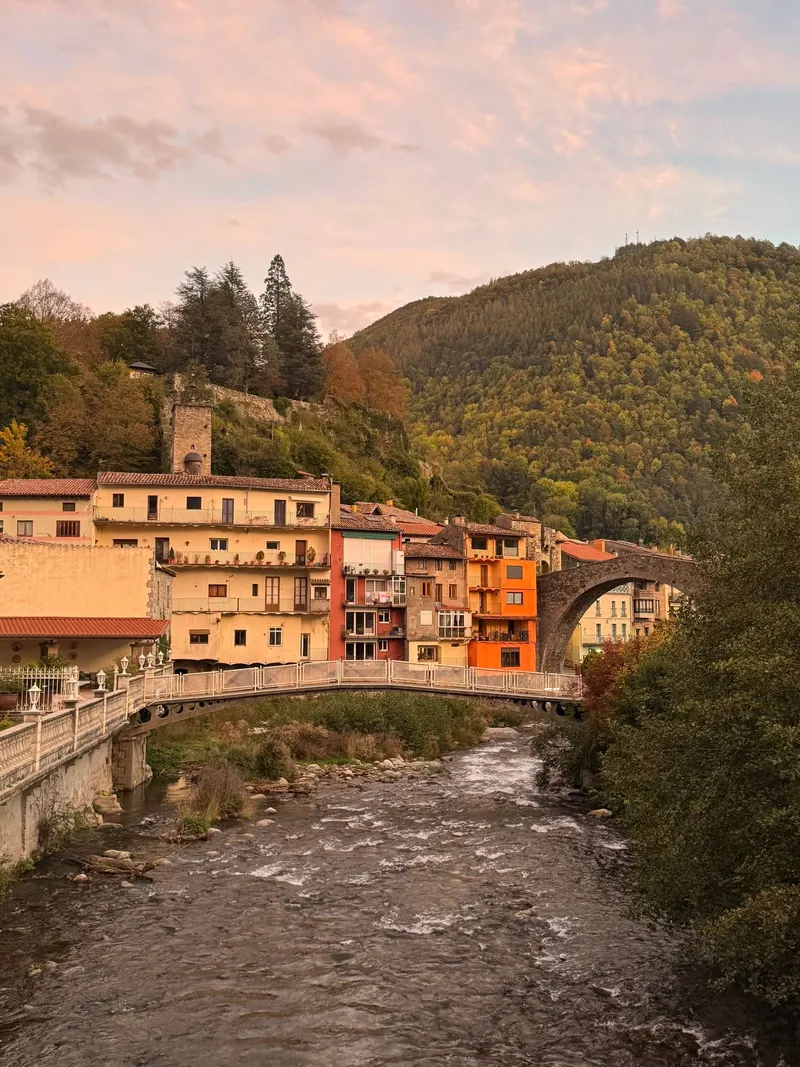
Bridge, river and clock tower at golden hour
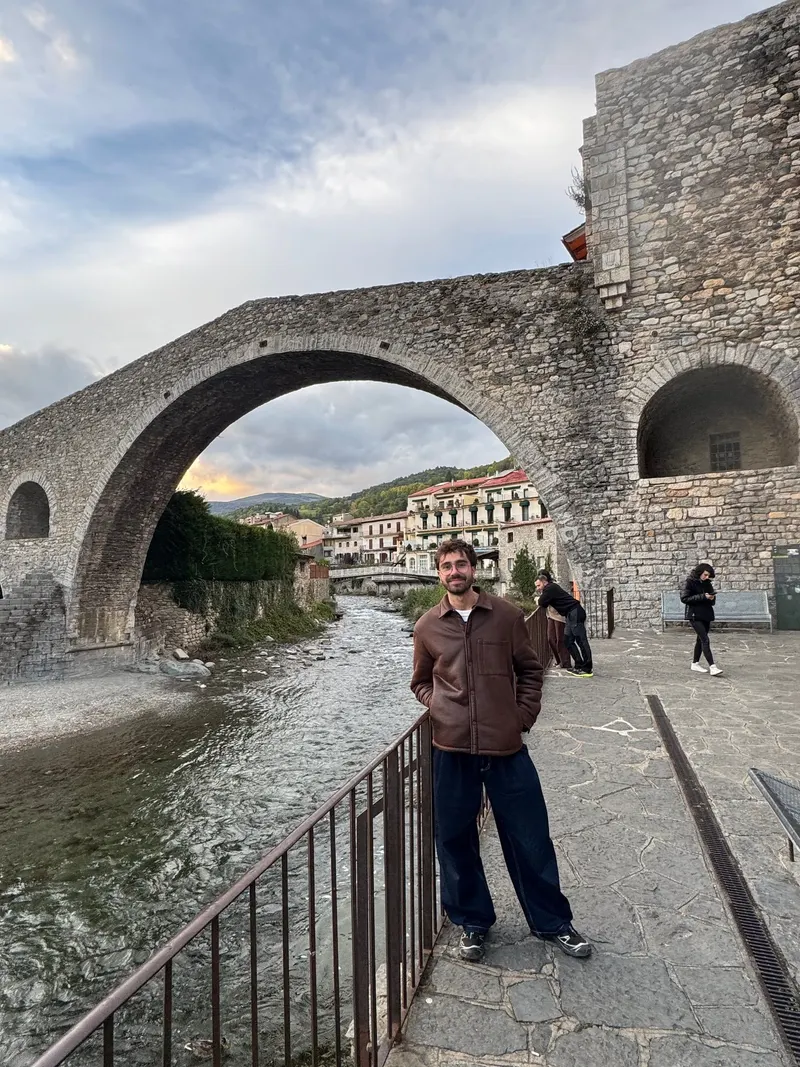
The bridge by day
In autumn, the tree-lined avenue in town turns golden.
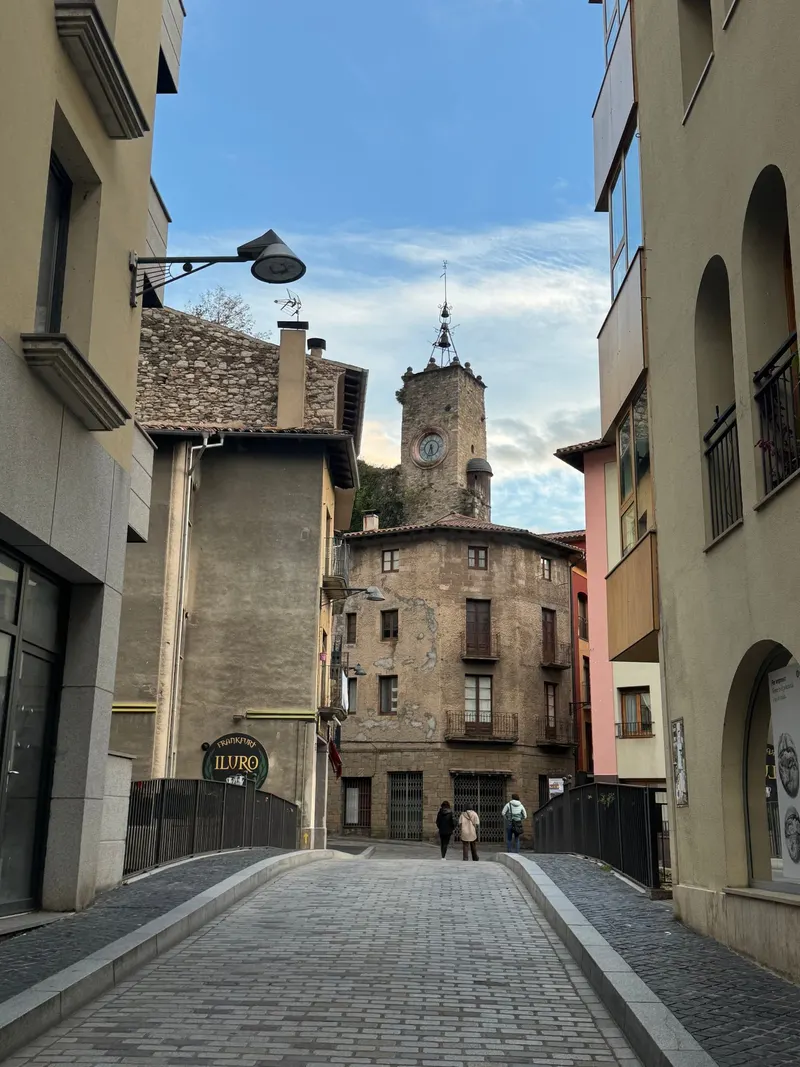
Camprodon's clock tower
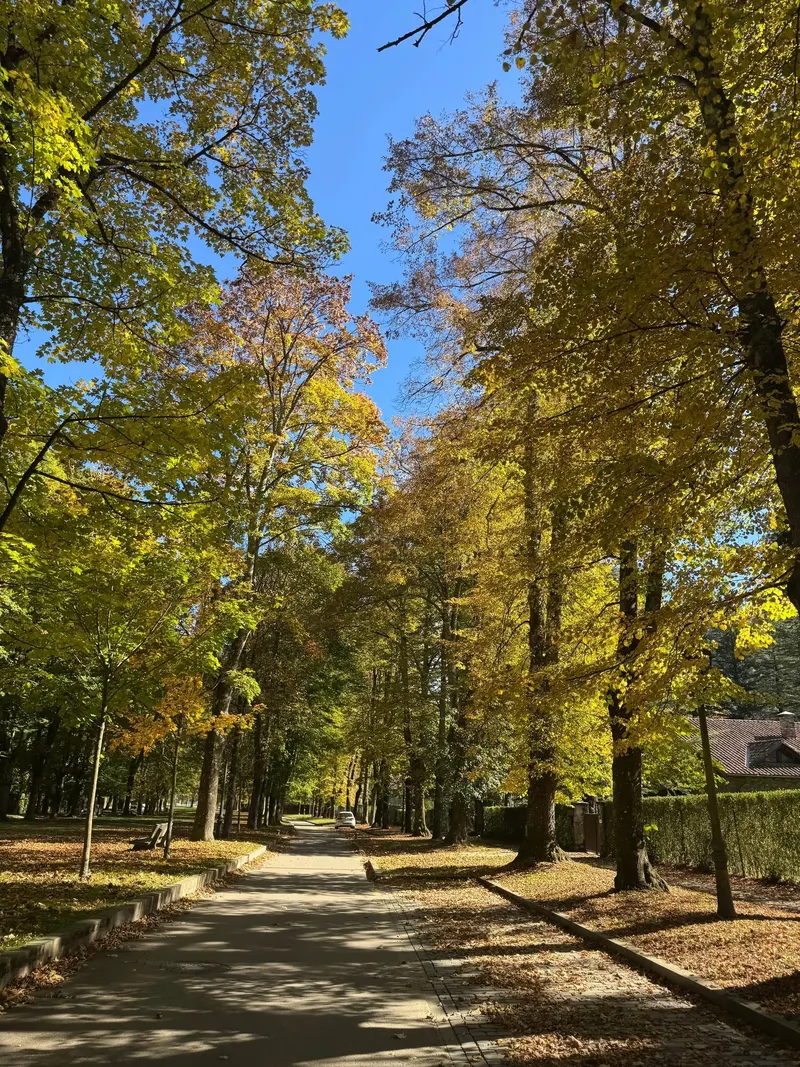
A tree-lined avenue in the fall
Camprodon is also known for its cured meats, so don’t leave without trying some traditional Catalan cold cuts, like fuet and llonganissa.
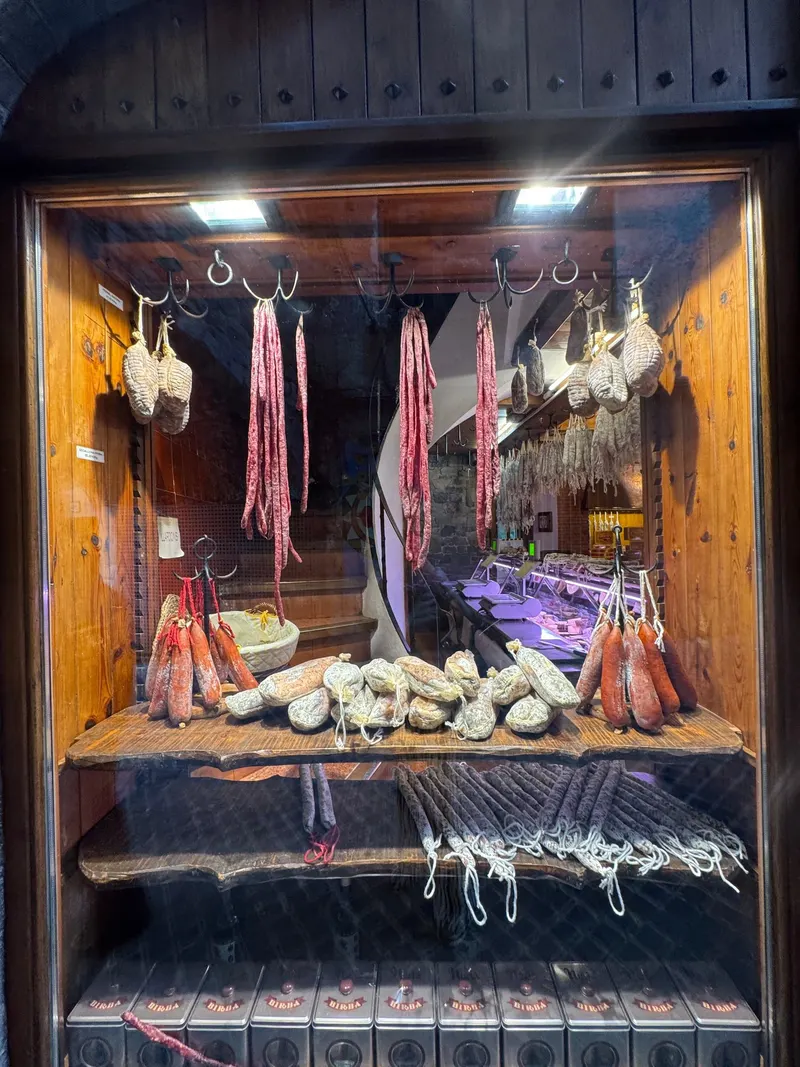
Traditional Catalan cold cuts
Day 5. Setcases, Vic and Sitges
Setcases
Before leaving the mountains, we drove up the valley to Setcases, a tiny high-mountain village of stone houses and slate roofs near the Vallter ski area. In late October, the bushes around the village were bright red.
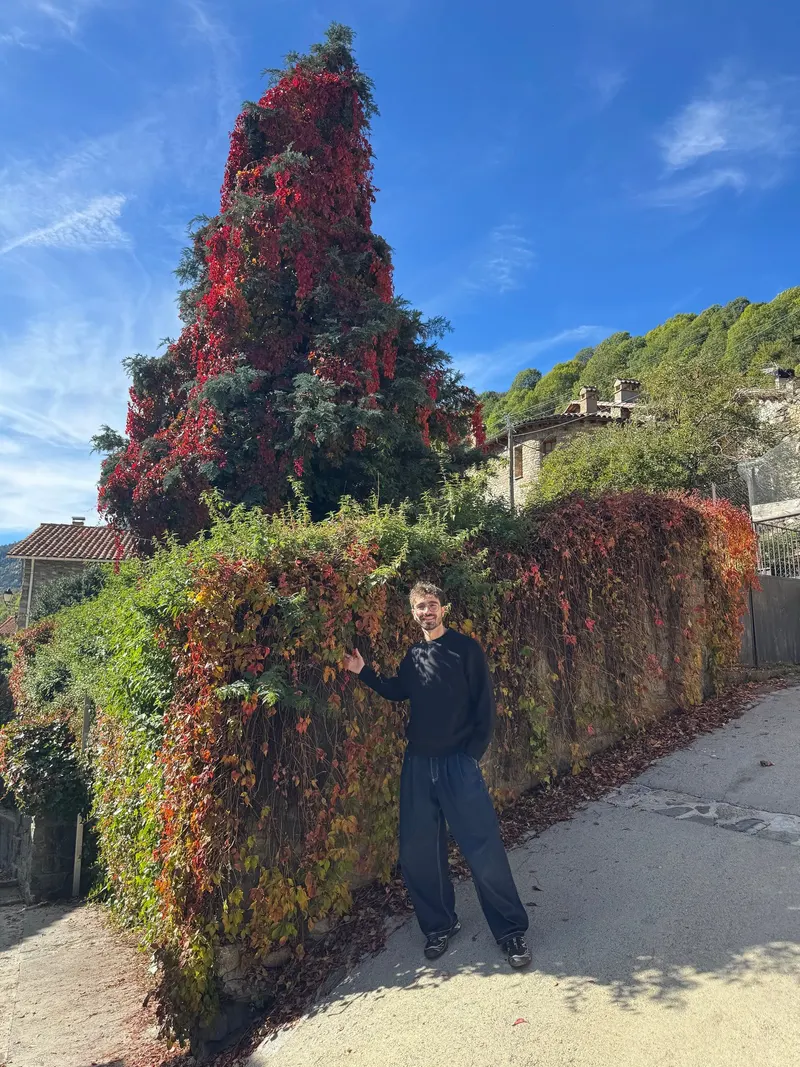
Autumn colors in Setcases
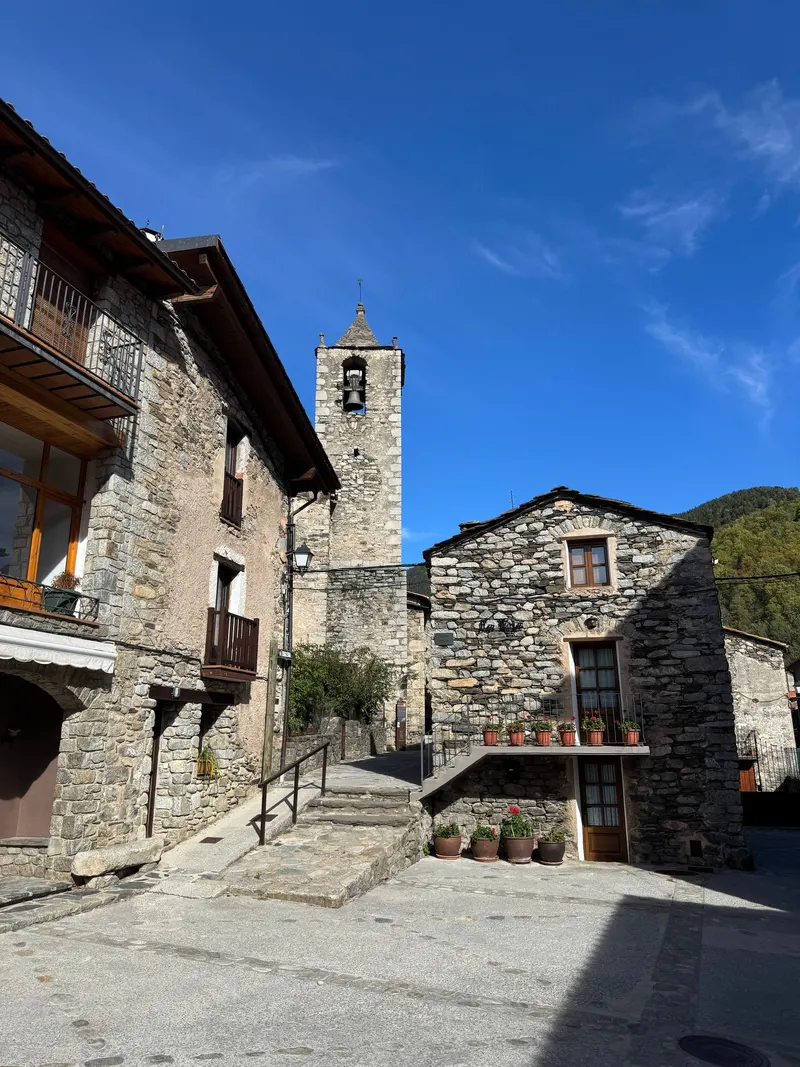
The church and main square
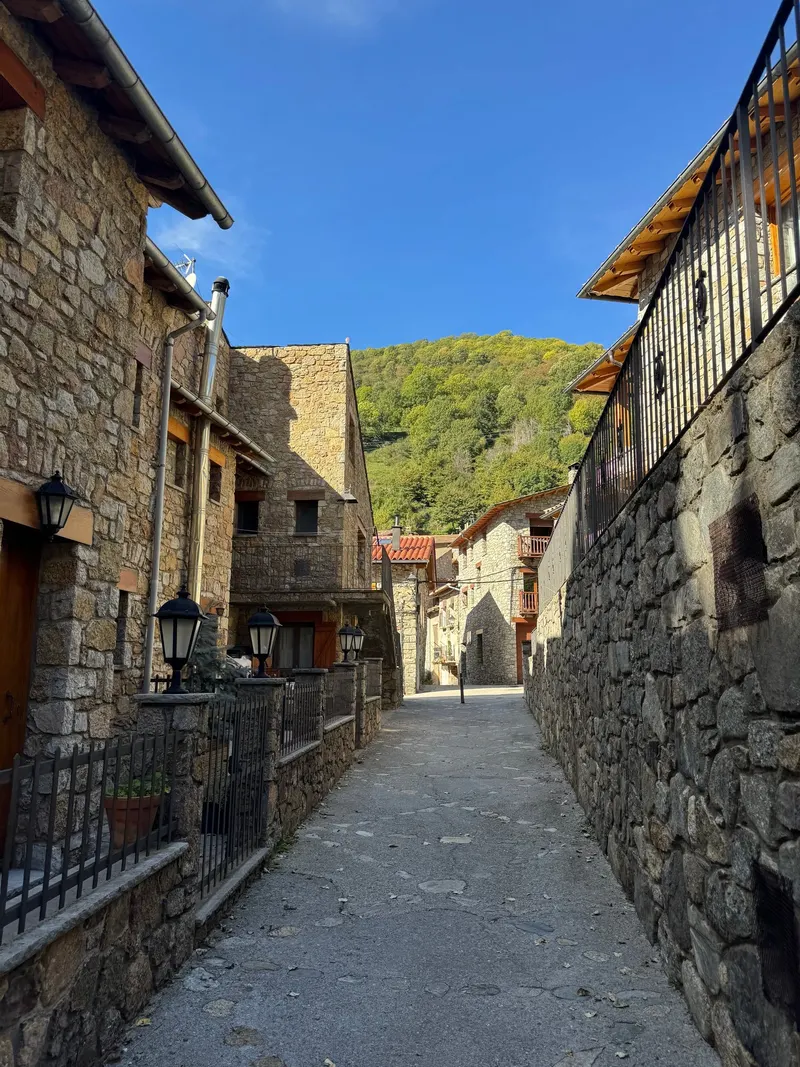
Stone houses in Setcases
Vic
We had a late flight from Barcelona El Prat, so we broke up the drive south with two stops. The first was Vic, whose huge arcaded Plaça Major is one of the most impressive squares in Catalonia. Hidden among the old town’s streets is a surprisingly well-preserved Roman temple.
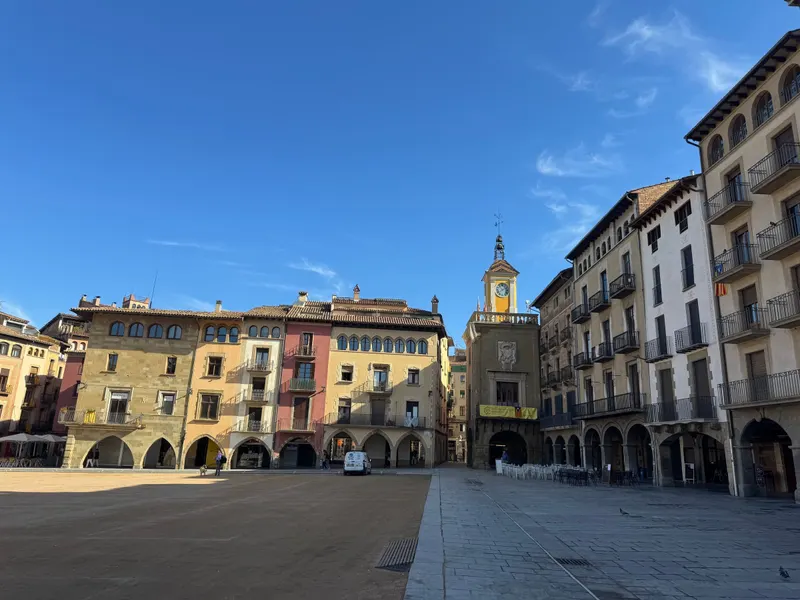
Vic's Plaça Major
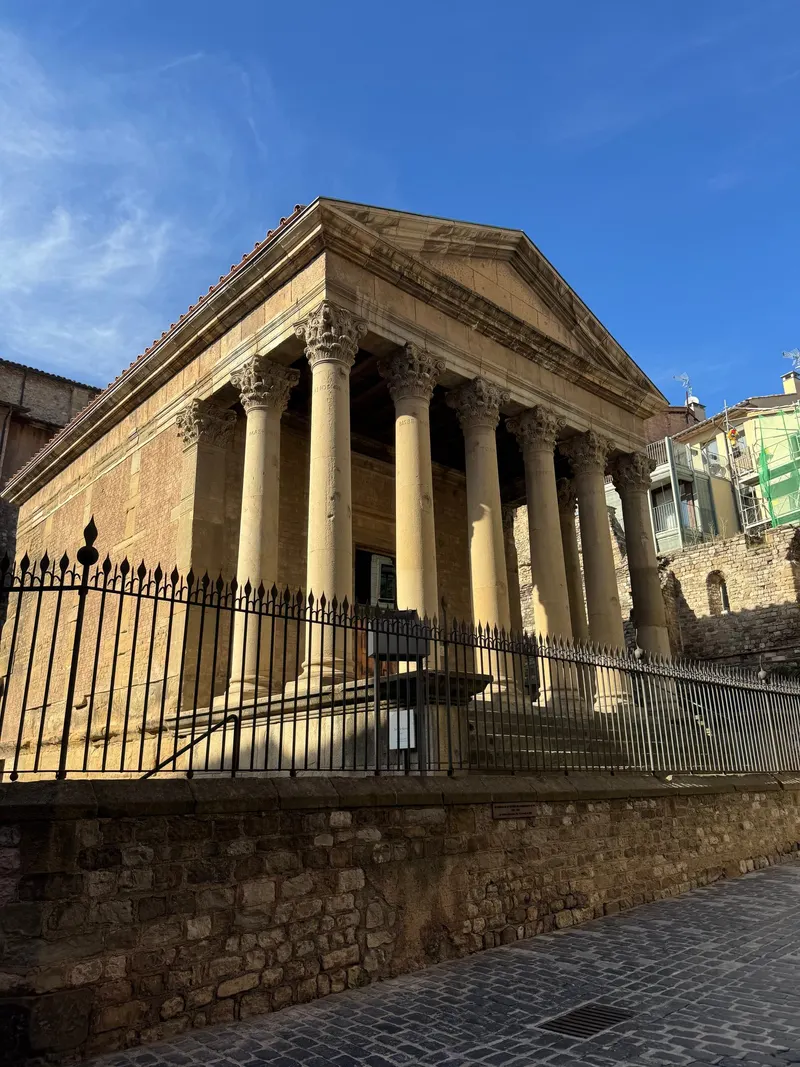
The Roman temple
Sitges
The last stop was Sitges, on the coast south of Barcelona and an easy drive from the airport. We got there at golden hour, the perfect time to see its church on the promontory above the sea, framed by palm trees, and the elegant Palau de Maricel right next to it.
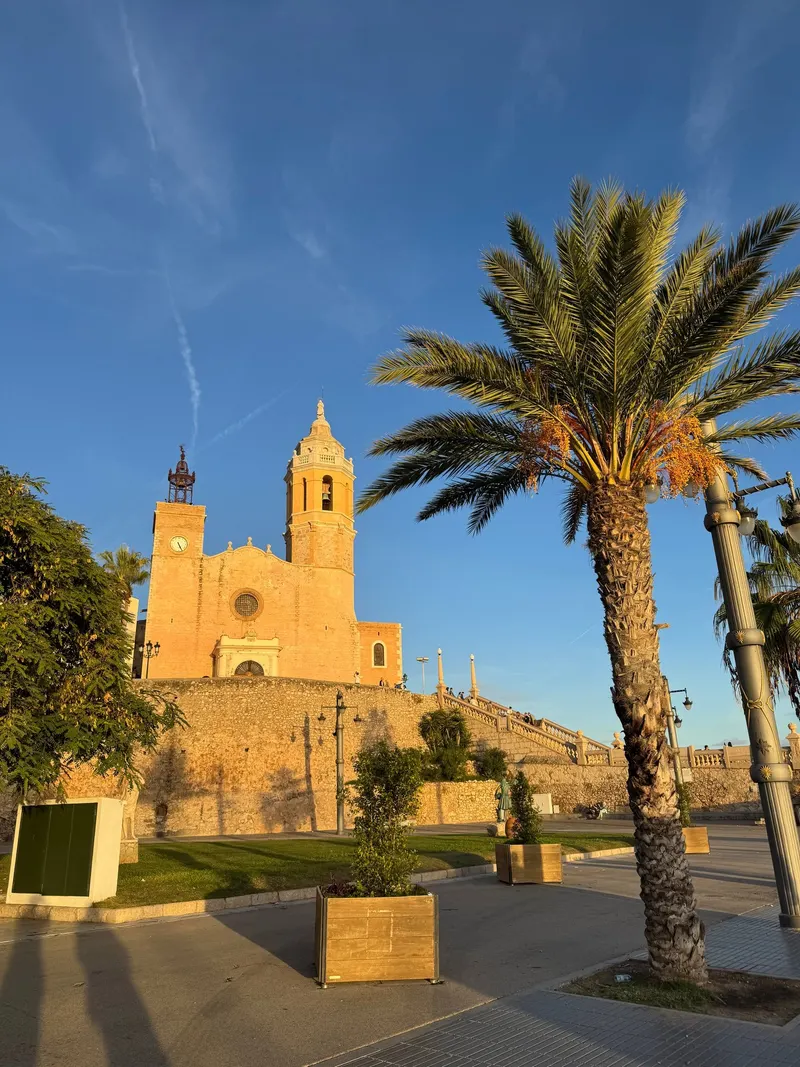
Sitges church at golden hour
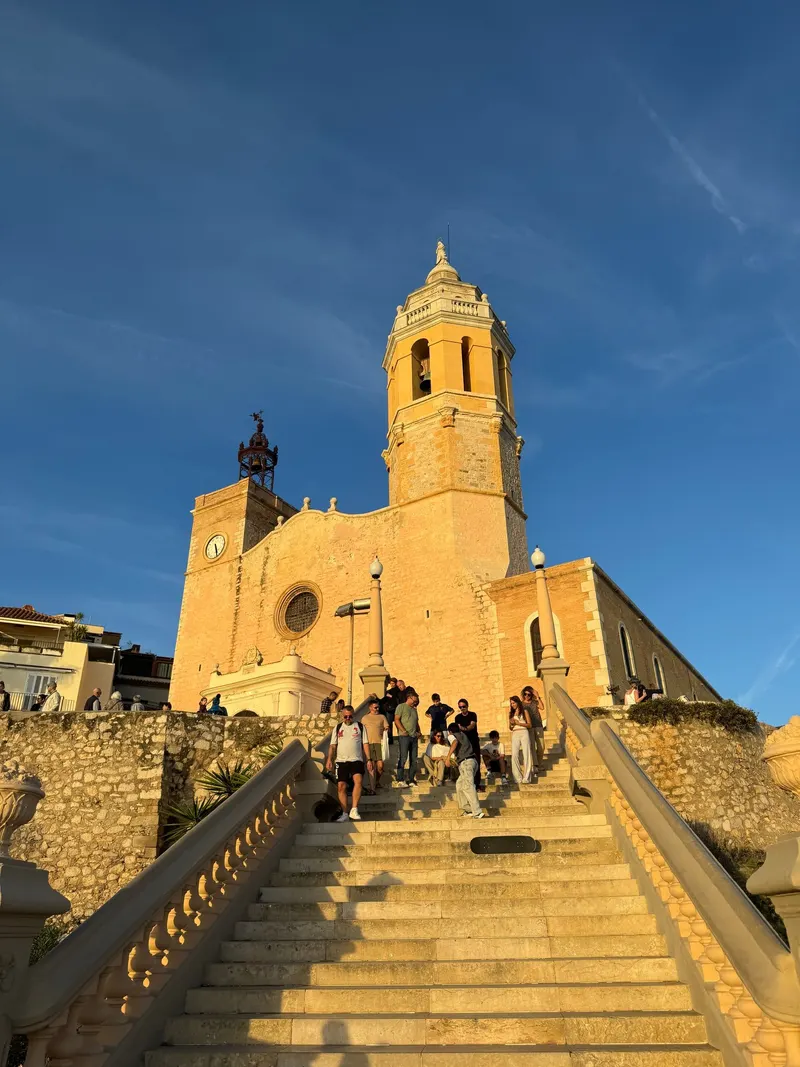
The stairs up to the church
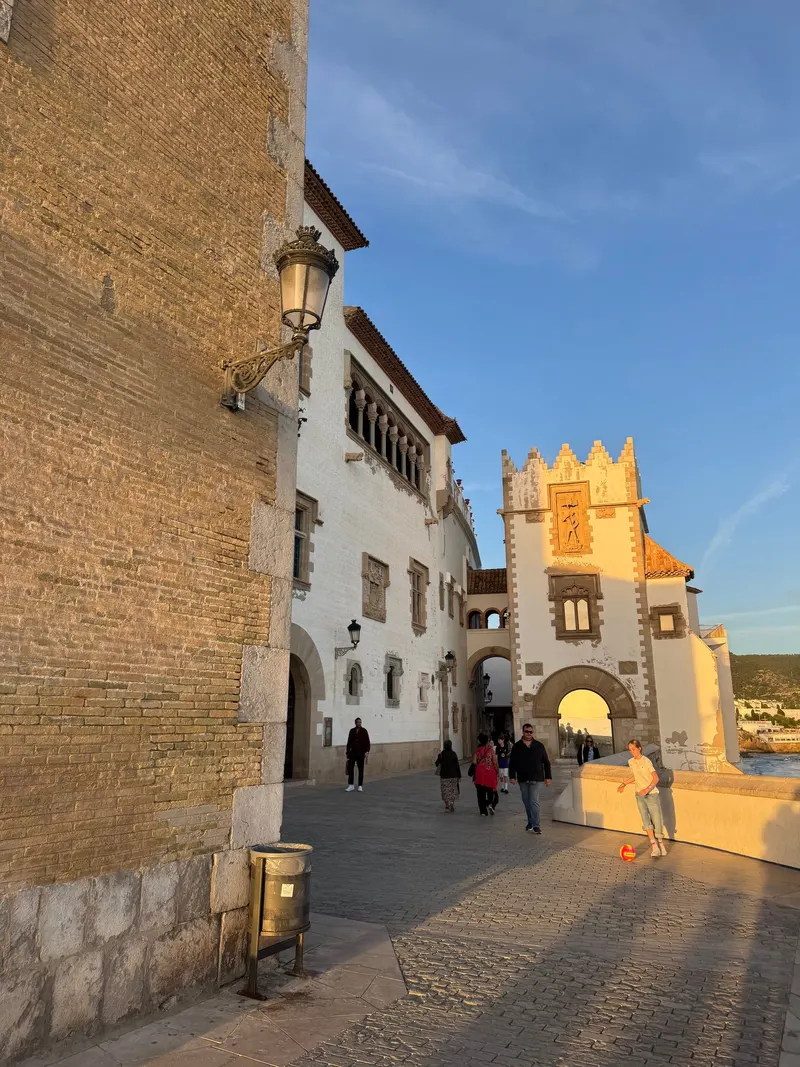
Palau de Maricel
Pro Tip: If you're flying out of Barcelona in the evening, Sitges is an ideal last stop: it's around half an hour from El Prat, so you can enjoy the sunset by the sea without cutting it too close.
Practical advice
Where we stayed
- Girona: Llegendes de Girona, in the old town
- Cadaqués: Can Pepin
- Perpignan (France): Ibis Budget Center (see the Côte Vermeille post)
- Camprodon: Cims de Camprodon
Getting around
Rent a car. Most of the places on this route are small villages that are hard or slow to reach by public transport, and the drives themselves, over the Cap de Creus hills and up into the Pyrenees, are part of the experience.
When to go
Late October worked really well: mild weather, quiet villages, autumn colors in the mountains, and the Sant Narcís festival in Girona. Summer is beach season on the Costa Brava, so expect much bigger crowds and higher prices in places like Cadaqués.
Catalan is king
Catalan is the language of this whole route. It’s on every sign, every menu and every town hall, and it’s what you’ll hear in the streets and squares, from Girona and Cadaqués to the villages of the Garrotxa and the Pyrenees. Learning a few words before you go is the best way to connect with locals. And it’ll come in handy on the French side of the border too, where Catalan is still part of the local identity around Perpignan.
Final thoughts
This road trip packed in a bit of everything: a beautiful city, a whitewashed fishing village, two of Dalí’s most personal places, medieval villages, a town on a volcanic cliff and the first autumn colors of the Pyrenees. Five days was enough to see it all without rushing, and staying in a different place each night meant waking up somewhere new every morning.